
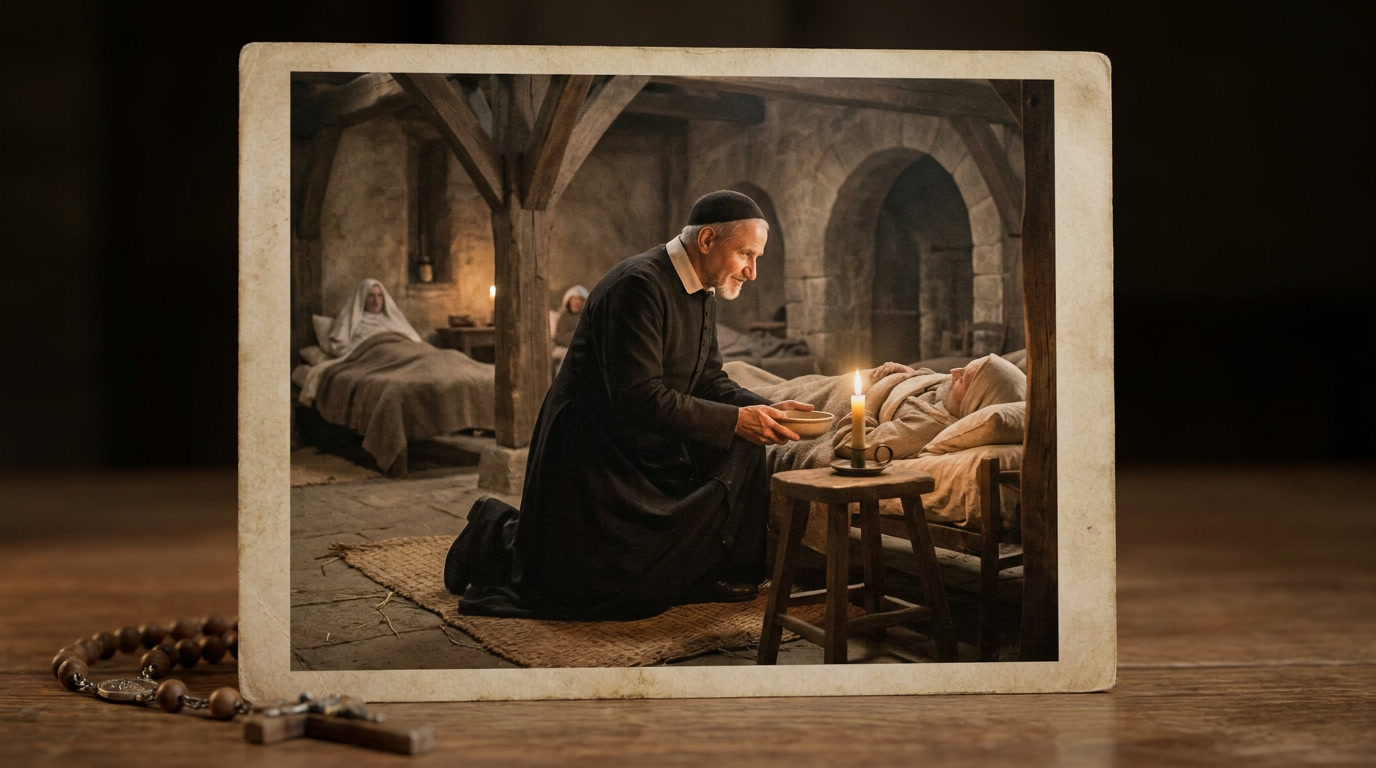
"It is our duty to prefer the service of the poor to everything else and to offer such service as quickly as possible. If a needy person requires medicine or other help during prayer time, do whatever has to be done with peace of mind. Offer the deed to God as your prayer."
Saint Vincent de Paul understood the heart of Christ that moves with pity for the abandoned. When Jesus looked upon the crowds "troubled and abandoned, like sheep without a shepherd," He saw what Vincent would spend his life serving — the forgotten poor whose suffering demands immediate response.
Born to peasant farmers in 1581, Vincent knew poverty firsthand. After ordination, he initially sought comfort and status. A spiritual awakening changed everything. He discovered that encountering Christ meant encountering the poor, the sick, the abandoned whom society overlooked.
Seeing Christ in the Abandoned
Vincent's genius lay in recognizing that the "troubled and abandoned" of today's Gospel were not abstract concepts but real people with names and faces. The galley slaves he served as chaplain. The foundlings left to die. The elderly without family. The mentally ill cast aside.
"The poor are our masters," he taught his followers. This radical perspective transformed charity from condescending alms-giving into reverent service. When Jesus gave His disciples "authority over unclean spirits to drive them out and to cure every disease," Vincent understood this mission extended beyond the Twelve to all who follow Christ.
Organizing Mercy Through Prayer and Action
Vincent never separated prayer from service. His Lectio Divina practice grounded him in Scripture's call to justice. Like the apostles who received their mission directly from Christ, Vincent organized systematic responses to suffering — hospitals, orphanages, seminaries, missions.
He founded the Daughters of Charity, telling them: "Your convent will be the house of the sick, your cell a hired room, your chapel the parish church, your cloister the streets of the city or the wards of hospitals." This was apostolic life lived in the modern world.
The Urgency of the Harvest
When Jesus declared "the harvest is abundant but the laborers are few," Vincent took this seriously. He trained priests, organized laypeople, and created structures that would outlast any individual. The Society of Saint Vincent de Paul continues his work today in 153 countries.
Vincent's wisdom for contemporary Catholics remains sharp: privilege exists to serve the powerless. Comfort should disturb us toward action. Prayer without service to the poor remains incomplete.
Pray in the Spirit of Saint Vincent de Paul
Begin by asking Christ to show you who among your neighbors remains "troubled and abandoned." Vincent taught that we find Jesus most clearly in the poor. Where does your community need laborers for the harvest of mercy? What gifts has God given you to serve those society forgets?
Consider Vincent's practice of Lectio Divina as foundation for service. Let Scripture form your heart for the poor, then let that heart move your hands toward action.
Frequently Asked Questions
What is Saint Vincent de Paul most known for?
Saint Vincent de Paul is most known for his revolutionary work with the poor and abandoned. He organized systematic charity through the Daughters of Charity and Congregation of the Mission, establishing hospitals, orphanages, and relief programs. His feast day is September 27.
How did Saint Vincent de Paul serve the poor?
Saint Vincent de Paul served the poor through direct care and organizational innovation. He ministered to galley slaves, established foundling hospitals, organized food distribution during famines, and trained both clergy and laypeople for service. He emphasized treating the poor as "our masters" rather than objects of pity.