
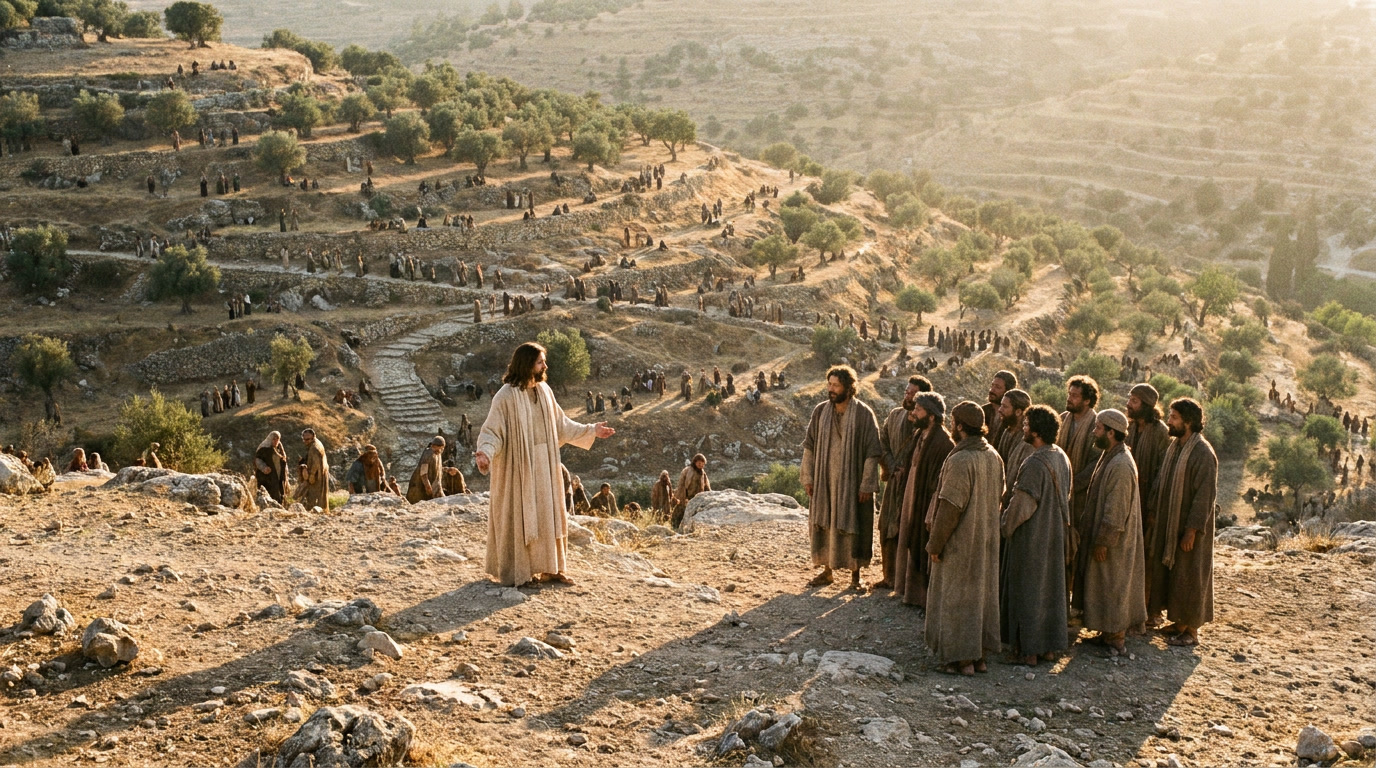
At the sight of the crowds, Jesus' heart was moved with pity for them because they were troubled and abandoned, like sheep without a shepherd. Then he said to his disciples, "The harvest is abundant but the laborers are few; so ask the master of the harvest to send out laborers for his harvest." Then he summoned his twelve disciples and gave them authority over unclean spirits to drive them out and to cure every disease and every illness.— Matthew 9:36—10:8
Christ's gaze falls upon the multitudes, and his sacred heart responds with compassion. The Gospel reading from Matthew 9:36-10:8 reveals the divine response to human suffering: not distant sympathy, but active mercy that empowers others to heal and serve.
The Shepherd's Heart That Sees and Responds
Jesus perceives what others might overlook. The crowds appear successful, busy, engaged in daily life. Yet Christ sees deeper—souls "troubled and abandoned," wandering without direction or care. This divine compassion, splanchnizomai in Greek, describes a visceral response that moves from the depths of being.
Saint John Chrysostom reflects that Christ's pity springs not from weakness but from love's strength. The Good Shepherd recognizes his scattered flock and responds immediately. His heart moves, then his hands act.
The metaphor of sheep without a shepherd echoes throughout Scripture, from Ezekiel's prophecy to David's psalms. God's people have always needed guidance, protection, and care that only divine love can provide.
The Abundant Harvest and Few Laborers
Christ's agricultural imagery shifts from shepherding to harvesting, revealing the urgency of salvation's work. The harvest stands ready—souls prepared to receive grace—yet workers remain scarce. This paradox challenges comfortable discipleship.
The prayer Jesus commands—"ask the master of the harvest to send out laborers"—becomes both petition and preparation. Those who pray for workers often find themselves called to labor. Saint Thérèse of Lisieux understood this principle, offering her hidden sacrifices for missionaries she would never meet.
Notice that Jesus calls this prayer before commissioning the apostles. Prayer precedes mission. Contemplation enables action. The sequence matters deeply in spiritual formation.
Authority Given and Authority Received
The naming of the twelve apostles marks a pivotal moment in salvation history. These ordinary men—fishermen, a tax collector, a zealot—receive extraordinary authority over sickness, demons, and death itself. Peter leads the list despite his future denial. Judas concludes it, labeled already by his betrayal.
Christ's authority flows not through human merit but divine choosing. The apostles receive power "without cost" and must give "without cost." This principle of gratuitous grace shapes all Christian ministry. What God freely gives, we freely share.
Saint Augustine notes that Christ's authority over unclean spirits demonstrates his divine nature. Only God commands demons. Only divine love heals completely. The apostles participate in this power through union with their Master.
The Mission of Mercy
Jesus sends the twelve specifically to "the lost sheep of the house of Israel," limiting their initial mission geographically but not their ultimate calling. This focused beginning prepares them for worldwide evangelization after the resurrection.
The apostolic works—curing sickness, raising the dead, cleansing lepers, driving out demons—mirror Christ's own ministry. They become extensions of his mercy, instruments of divine compassion in a wounded world.
The command to give freely what they have freely received establishes the Church's fundamental principle: grace cannot be bought, sold, or earned. It flows from God's inexhaustible love through willing human vessels.
Pray With This Reading
This Gospel passage invites deep contemplation through Ignatian Contemplation. Place yourself among the crowds, experiencing Christ's compassionate gaze. Feel his pity transform into purposeful action. Watch the calling of the apostles unfold, sensing your own vocation stirring.
Let Christ's heart of mercy awaken response in your own heart. Ask what harvest surrounds you. Consider how divine authority might work through your willing hands.
Frequently Asked Questions
What does it mean that Jesus' heart was moved with pity?
The Greek word splanchnizomai describes deep, visceral compassion that moves from the core of one's being. Christ's response to human suffering engages his entire divine-human nature, compelling immediate action rather than mere sympathy.
Why did Jesus limit the apostles' mission to Israel initially?
This focused beginning allowed the apostles to learn ministry principles within familiar cultural contexts before extending to all nations. It also fulfilled God's covenant promise to offer salvation to the chosen people first, as Paul later explains in Romans.
How can modern Christians participate in Christ's harvest?
Every baptized person receives a share in Christ's mission through prayer, service, and witness. Like the apostles, we give freely what we have received—whether through direct ministry, financial support, or hidden sacrificial prayer that supports others' work.