
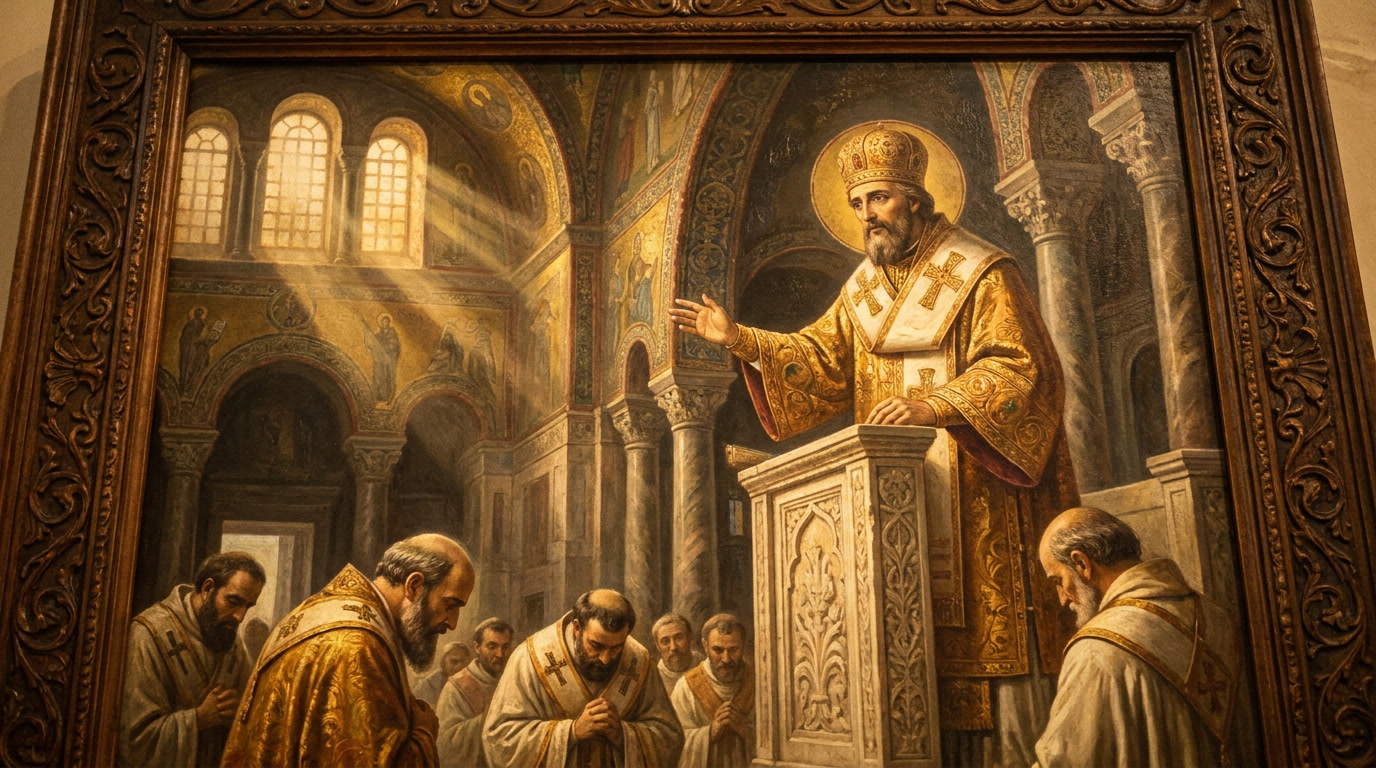
"When you are about to be angry, consider that the soul is made to the image of God, and you will quench your anger."— Saint John Chrysostom
Saint John Chrysostom understood the weight of words. His own preaching earned him the title "Golden-Mouthed," yet he warned constantly about the damage careless speech inflicts. Today's Gospel from Matthew echoes this ancient wisdom: our words reveal the state of our hearts, and our relationships determine our readiness to approach God's altar.
The Golden-Mouthed Doctor of the Church
John Chrysostom served as Archbishop of Constantinople in the fourth century. His eloquent homilies drew crowds, but his fearless criticism of corruption made him enemies. The imperial court exiled him twice. His writings reveal a pastor who understood human nature deeply — particularly how pride and anger poison both speaker and listener.
Born into wealth in Antioch, he chose the ascetic life before reluctantly accepting ordination. This tension between worldly success and spiritual authenticity shaped his preaching. He spoke as one who knew the temptations of both comfort and power.
When Words Become Weapons
Chrysostom's homilies frequently addressed the sin Jesus condemns in today's Gospel: the progression from anger to insult to destruction. "Raqa" — the Aramaic term for "empty-headed" — represents the moment when frustration becomes personal attack. Chrysostom observed how quickly Christians moved from disagreement to character assassination.
The saint taught that harsh words wound the soul more deeply than physical violence. They linger in memory, poisoning relationships for years. When Jesus warns about calling someone a fool, He reveals how verbal cruelty separates us from God's mercy. Chrysostom knew this firsthand — his own sharp tongue sometimes alienated allies who might have protected him from his enemies.
Reconciliation Before the Altar
The Gospel's instruction to leave one's gift at the altar until reconciliation occurs struck Chrysostom as revolutionary. In his time, religious duty often substituted for moral responsibility. People assumed temple worship covered personal failings. Jesus demands the opposite: relationships must be mended before worship becomes authentic.
Chrysostom preached that approaching the Eucharist while nursing anger makes a mockery of Christ's sacrifice. The Mass calls us into unity with the Body of Christ — impossible when we remain severed from our brothers and sisters. This wisdom connects naturally to contemplative prayer practices that soften the heart and prepare us for genuine encounter with others.
Consider exploring Ignatian Contemplation to reflect on moments when your own words have built walls instead of bridges.
Pray in the Spirit of Saint John Chrysostom
Before speaking today, pause as Chrysostom taught. Ask whether your words will heal or harm. When anger rises, remember that the person before you bears God's image. When tempted to nurse grievances, recall that the altar awaits — but only after reconciliation opens the path.
Saint John Chrysostom spent his final years in exile, his powerful voice silenced by those he had criticized. Yet his writings endure, teaching us that words spoken in love echo through eternity, while words spoken in anger fade into bitter memory.
Frequently Asked Questions
Why is Saint John Chrysostom called the "Golden-Mouthed"?
The title "Chrysostom" means "golden-mouthed" in Greek, referring to his extraordinary eloquence as a preacher. His homilies combined biblical scholarship with practical wisdom, delivered in clear, memorable language that moved both educated and simple listeners.
What can we learn from Saint John Chrysostom about managing anger?
Chrysostom taught that anger becomes sinful when it leads to personal attacks or revenge. He emphasized pausing before speaking, remembering that others bear God's image, and seeking reconciliation quickly rather than letting grievances fester into lasting division.