
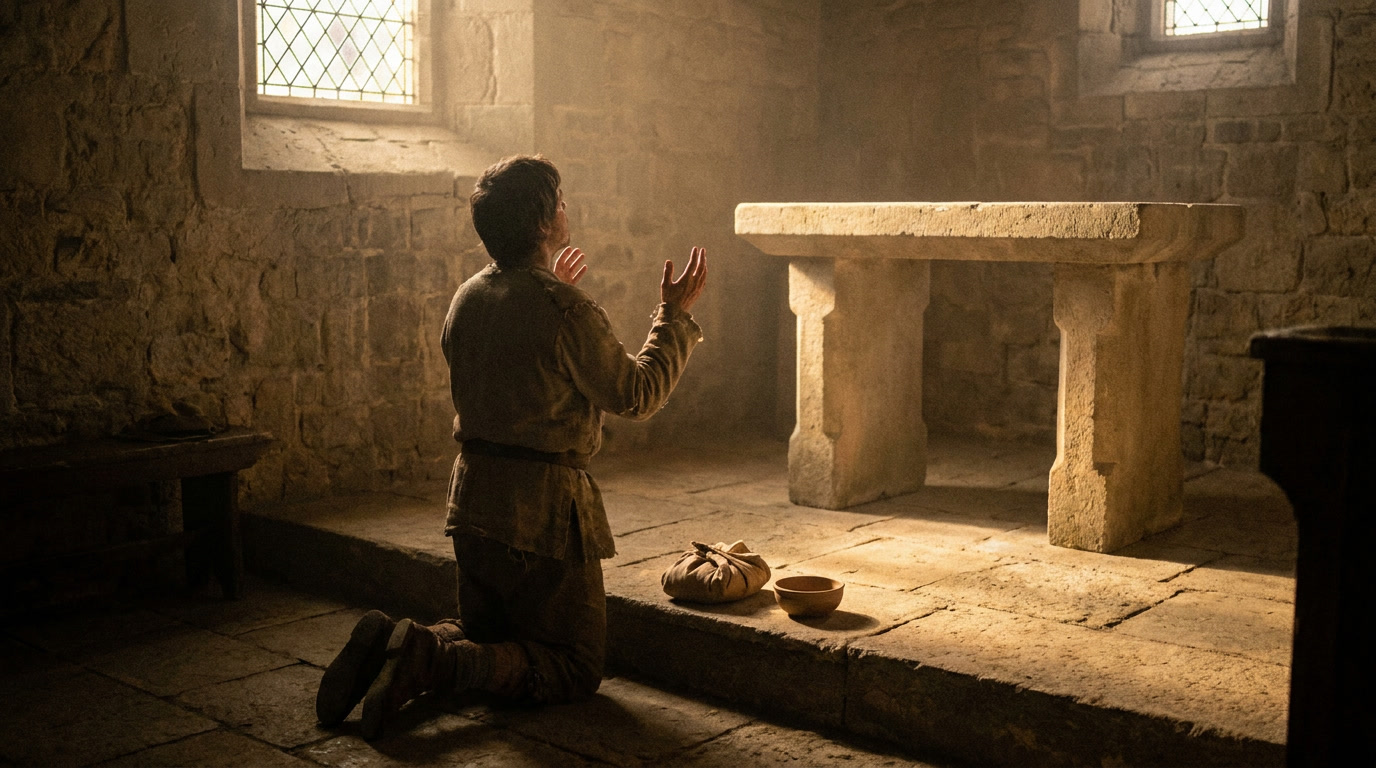
Jesus said to his disciples: "I tell you, unless your righteousness surpasses that of the scribes and Pharisees, you will not enter into the Kingdom of heaven. You have heard that it was said to your ancestors, You shall not kill; and whoever kills will be liable to judgment. But I say to you, whoever is angry with his brother will be liable to judgment, and whoever says to his brother, Raqa, will be answerable to the Sanhedrin, and whoever says, 'You fool,' will be liable to fiery Gehenna. Therefore, if you bring your gift to the altar, and there recall that your brother has anything against you, leave your gift there at the altar, go first and be reconciled with your brother, and then come and offer your gift." — Matthew 5:20-26
Christ's words in Matthew 5:20-26 pierce through surface religion to expose the heart's hidden violence. On this feast of Saint Barnabas, whose very name means "son of encouragement," these verses challenge us to examine not just our actions, but the anger that precedes them.
The Deeper Righteousness Christ Demands
"Unless your righteousness surpasses that of the scribes and Pharisees." Christ sets an impossibly high standard. The scribes and Pharisees were known for meticulous observance of the law. Yet their righteousness remained external, performative.
The righteousness Christ demands goes beyond mere compliance. It transforms the heart itself. Where the law said "do not kill," Christ says "do not harbor anger." Where tradition focused on the act, Christ examines the intention.
Saint Thomas Aquinas taught that anger becomes sinful when it seeks revenge rather than justice, when it exceeds proper measure, or when it lingers without cause. Christ calls us to uproot even justified anger when it threatens to poison the soul.
From Murder to Harsh Words: The Spectrum of Violence
Christ traces a progression from anger to insult to contempt. "Raqa" — empty-headed. "Fool" — morally worthless. Each word carries greater weight, greater condemnation.
The progression reveals how quickly anger escalates. A moment's irritation becomes sustained resentment. Resentment breeds contempt. Contempt justifies cruelty. The path from anger to violence is shorter than we imagine.
Saint John Chrysostom observed that murder begins in the heart long before the hand acts. Christ addresses the root, not merely the fruit.
The Saints and Righteous Anger
Even the saints struggled with anger. Saint Jerome was known for his fiery temperament. Saint Peter drew his sword in the garden. Yet sanctity lies not in the absence of anger, but in its transformation.
Saint Barnabas himself demonstrated this transformation. When others wanted to abandon John Mark for his earlier desertion, Barnabas chose reconciliation over judgment. His encouragement restored a future evangelist to the Church.
Reconciliation Before Worship
"Leave your gift there at the altar." Christ interrupts the sacred act of worship itself. No offering pleases God when offered by hands that refuse reconciliation.
This teaching scandalized religious sensibilities then as it does now. Surely God comes first? Yet Christ insists that love of God and love of neighbor cannot be separated. The vertical and horizontal dimensions of faith are one.
The early Church took this literally. The Didache, an ancient Christian manual, instructed believers to reconcile before receiving Eucharist. Division with others creates division with Christ.
The Urgency of Peace
"Settle with your opponent quickly." Christ speaks with legal imagery, but the deeper truth concerns spiritual bankruptcy. Unresolved anger accumulates interest. Resentment compounds daily.
Death may come before reconciliation. Hardness of heart may grow beyond remedy. The opportunity for peace is not infinite.
Saint Paul echoes this urgency: "Do not let the sun go down on your anger." Each day offers fresh grace for forgiveness. Each sunset that finds us still bitter is a day lost to love.
Pray With This Reading
This Gospel passage calls for honest self-examination and heartfelt repentance. Surrender Prayer provides a fitting method for this reflection, allowing us to release our grievances and anger into God's merciful hands. Through this practice, Christ can transform our hearts from stone to flesh, from anger to compassion.
Frequently Asked Questions
What does Jesus mean by righteousness surpassing the Pharisees?
Christ calls for internal transformation, not mere external compliance. The Pharisees focused on legal observance; Christ demands conversion of heart. True righteousness flows from love, not law.
Is all anger sinful according to Matthew 5?
Christ distinguishes between righteous indignation and sinful anger. Anger becomes sinful when it seeks revenge, exceeds proportion, or harbors resentment. Even justified anger must be released through forgiveness.
How do we reconcile when the other person refuses?
Reconciliation requires our sincere effort, not guaranteed success. Christ calls us to make the attempt, to humble ourselves, to seek peace. The other's response remains between them and God.