
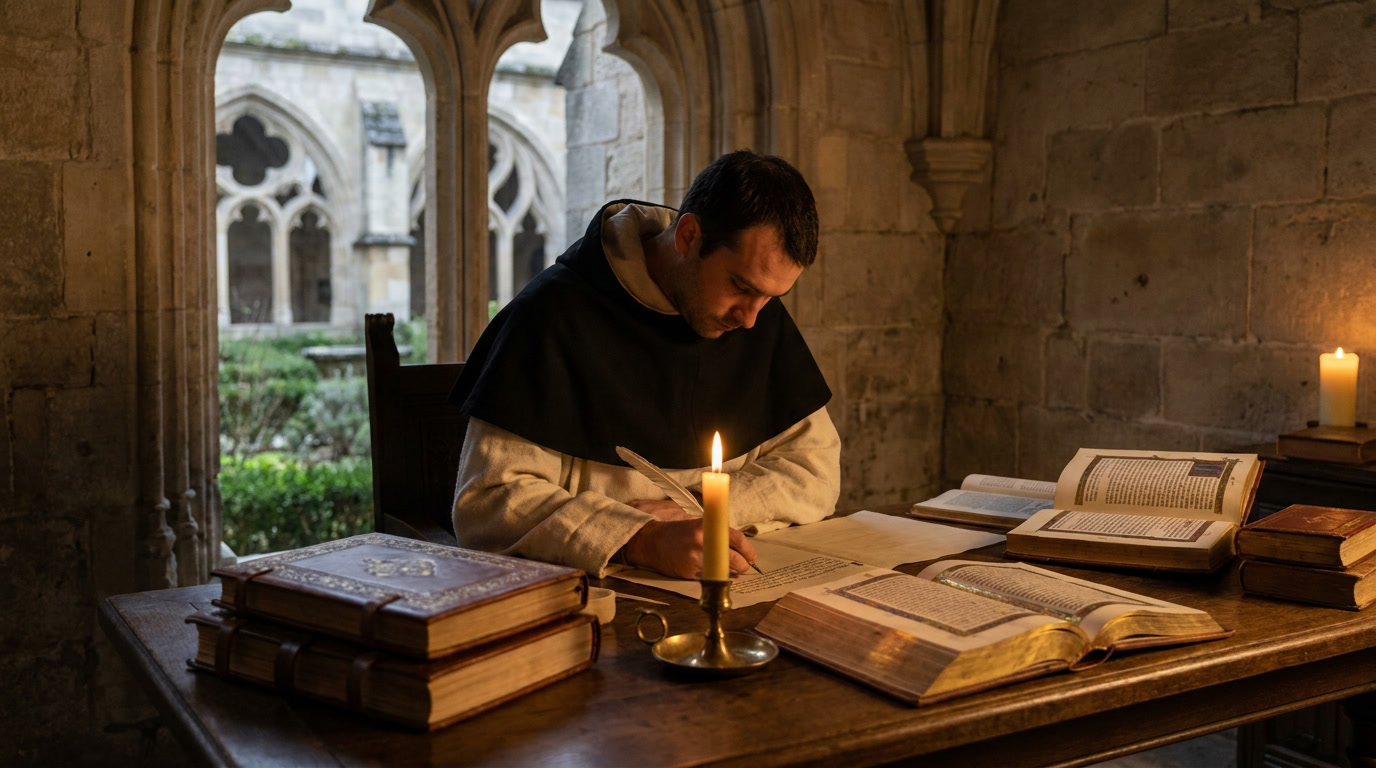
"Love is the first movement of the will and of every appetitive power." — Saint Thomas Aquinas
When the scribe in today's Gospel asks about the greatest commandment, Christ responds with stunning clarity: love God with everything and love neighbor as yourself. Saint Thomas Aquinas, the Angelic Doctor, spent his life exploring how these twin loves form the foundation of all Christian wisdom and virtue.
Thomas Aquinas lived in thirteenth-century Europe, dedicating himself to harmonizing faith and reason. This Dominican friar taught at the University of Paris and wrote the monumental Summa Theologica. His profound intellect served a deeper purpose: understanding how divine love transforms human life.
Love as the Source of All Virtue
Aquinas teaches that charity—supernatural love for God—stands as the form and mother of all virtues. The scribe in Mark's Gospel grasps something essential: loving God surpasses ritual sacrifice. Thomas explains why: love unites the soul directly to God, while external acts remain secondary.
This Dominican saint understood that the Great Commandment demands total engagement. Heart, soul, mind, and strength—each faculty must turn toward the divine. Love becomes not mere emotion but the ordering principle of human existence.
Neighbor Love as Divine Reflection
The second commandment flows naturally from the first in Thomistic thought. Since God creates each person in the divine image, loving neighbor expresses love for God. Thomas writes that we love others not for their own sake alone but because they share in divine goodness.
The scribe recognizes this connection when he tells Jesus that loving God and neighbor "is worth more than all burnt offerings and sacrifices." Aquinas would say: external worship means nothing without interior charity.
Living the Great Commandment Today
Saint Thomas offers practical guidance for embracing Christ's teaching. Love begins with knowledge—we cannot love what we do not know. Daily prayer, Scripture reading, and lectio divina cultivate this intimate knowledge of God.
Aquinas also emphasizes that love moves the will toward action. The Great Commandment calls for concrete choices: serving the poor, forgiving enemies, pursuing justice. These acts flow from charity and deepen our union with Christ.
Pray in the Spirit of Saint Thomas Aquinas
Thomas Aquinas approached prayer with both intellect and heart. He sought understanding not for its own sake but to love God more perfectly. His famous prayer before study reflects this integration: "Creator of all things, true source of light and wisdom, origin of all being, graciously let a ray of your light penetrate the darkness of my understanding."
Like Thomas, approach the Great Commandment as both mystery to contemplate and reality to live. Ask for grace to love with mind and heart united, following the path that leads toward the Kingdom of Heaven.
Frequently Asked Questions
What is Saint Thomas Aquinas best known for?
Saint Thomas Aquinas is renowned for his Summa Theologica, a comprehensive work that synthesizes Christian theology with Aristotelian philosophy. He earned the title "Angelic Doctor" for his extraordinary theological insights and is considered one of the Church's greatest teachers.
How did Saint Thomas Aquinas view the relationship between faith and reason?
Thomas Aquinas taught that faith and reason complement rather than contradict each other. He believed human reason could discover certain truths about God through natural law, while divine revelation provides additional knowledge necessary for salvation. This harmony forms the foundation of Catholic intellectual tradition.