
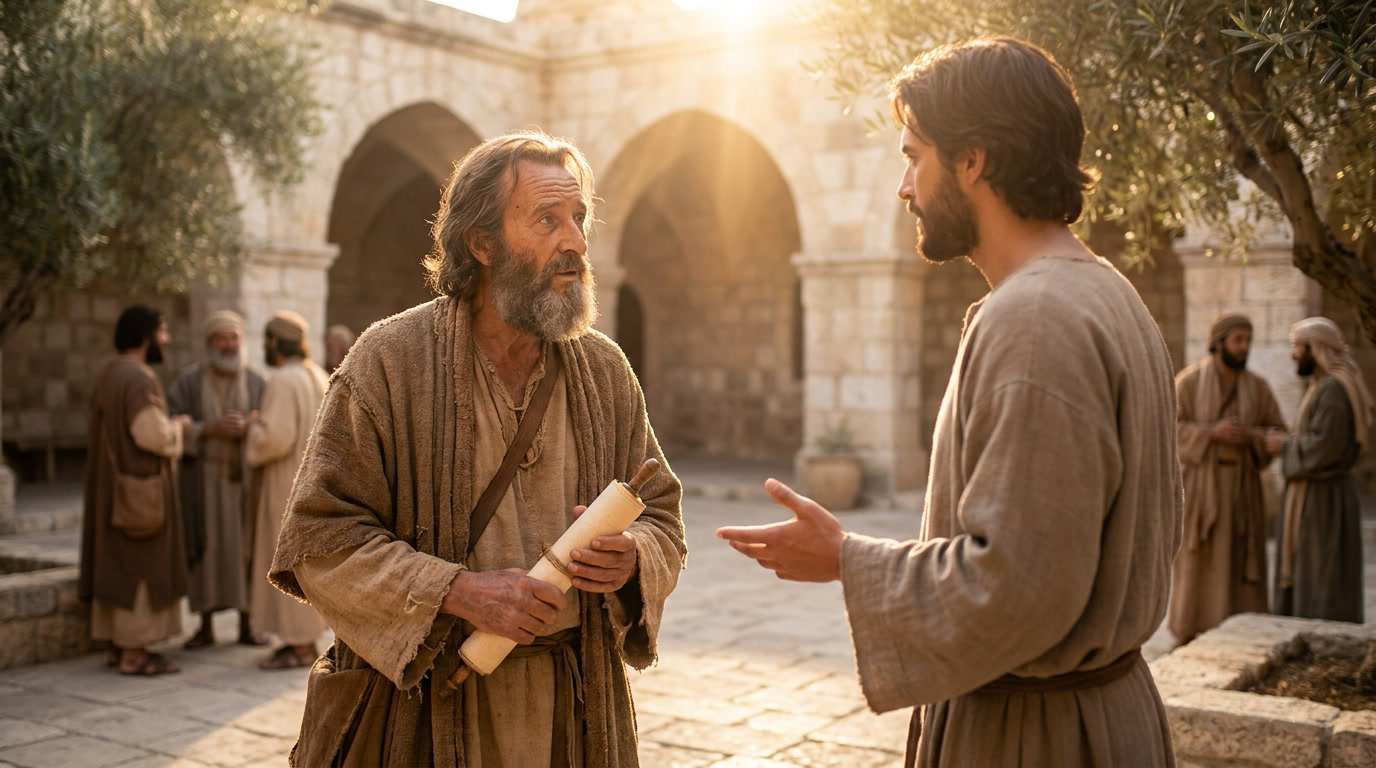
One of the scribes came to Jesus and asked him, "Which is the first of all the commandments?" Jesus replied, "The first is this: Hear, O Israel! The Lord our God is Lord alone! You shall love the Lord your God with all your heart, with all your soul, with all your mind, and with all your strength. The second is this: You shall love your neighbor as yourself. There is no other commandment greater than these." Mark 12:28-31
A scribe approaches Christ with genuine hunger. Not to trap or test, but to understand. In Mark 12:28-34, Jesus offers the greatest commandment that has guided Christian hearts for two millennia. Love of God and neighbor forms the cornerstone of discipleship.
The scribe's question cuts to the essence of faith. Among hundreds of religious laws, which matters most? Christ's answer sweeps away complexity and reveals simplicity.
The Shema: Foundation of All Love
"Hear, O Israel! The Lord our God is Lord alone!" Jesus begins with the Shema, the ancient prayer every faithful Jew knew by heart. This declaration anchors everything that follows.
God alone deserves complete devotion. Not wealth, comfort, or reputation. Not even family or ministry. The Lord claims the throne of every heart without rival or compromise.
Saint John of the Cross understood this radical demand. In his dark nights, he discovered that loving God with all requires surrendering all. Attachment to anything less than God blocks the flow of divine love.
The fourfold description—heart, soul, mind, strength—encompasses every dimension of human existence. Emotions, spirit, intellect, and body all belong to the Creator. Nothing remains exempt from love's claim.
Neighbor Love as Gospel Proof
"You shall love your neighbor as yourself." Jesus binds these commandments together with unbreakable cord. Love of God without neighbor love becomes self-deception.
Saint Teresa of Avila wrote that we cannot know if we truly love the unseen God except by how we love the visible neighbor. The person before us becomes the test of authentic devotion.
Self-love provides the measure. Not narcissistic indulgence, but proper recognition of human dignity as God's beloved creation. We extend to others the compassion and care we naturally offer ourselves.
This love transcends sentiment or feeling. It demands concrete action, forgiveness when wounded, service when inconvenient. The Good Samaritan exemplifies this costly commitment.
Worth More Than Burnt Offerings
The scribe's response reveals deep understanding. External religious practices, however elaborate, cannot substitute for love. Ritual without relationship becomes empty performance.
"Worth more than all burnt offerings and sacrifices." Temple worship held central importance in Jewish life. Yet love surpasses even sacred ceremony when ceremony lacks love's foundation.
This principle challenges every generation of believers. Mass attendance, charitable donations, and prayer disciplines serve love's growth, not love's replacement. God desires hearts, not mere observance.
The early Church Fathers recognized this priority. Saint John Chrysostom preached that the liturgy continues in loving service to the poor. Worship and mercy form one seamless garment.
Not Far from the Kingdom
"You are not far from the Kingdom of God." Jesus offers the scribe hope and invitation. Understanding precedes entry, but understanding alone cannot save.
The scribe grasps the truth intellectually. Yet moving from comprehension to commitment requires grace and surrender. Knowledge must become life transformation.
Many souls stand at this threshold. They recognize love's importance, acknowledge its demands, yet hesitate to embrace its cost. The Kingdom waits for hearts willing to risk everything for love.
Christ's words encourage without flattering. Proximity to truth creates opportunity, not guarantees. The Kingdom door opens for those who step through.
Pray With This Reading
This Gospel passage invites deep contemplation of love's practical demands. St. John of the Cross Method proves particularly fruitful here, as it focuses on purifying our loves and attachments to give God complete devotion.
Begin by placing yourself before the Lord in silence. Ask where your heart holds back from total love. Notice what competes with God for first place. Allow the Spirit to reveal areas needing surrender.
Then turn attention to specific neighbors—family members, coworkers, difficult people in your life. Ask how God's love might flow through you to them today. Listen for concrete actions love requires.
Frequently Asked Questions
What does it mean to love God with all your heart, soul, mind, and strength?
This fourfold love encompasses every aspect of human existence. Heart refers to emotions and affections, soul to spiritual dimension, mind to intellect and thoughts, strength to physical actions and resources. God claims complete devotion across all areas of life.
How does loving your neighbor connect to loving God?
Jesus presents these as inseparable commandments. We demonstrate love for the invisible God through visible love for neighbors. Saint John writes that anyone who claims to love God but hates a brother or sister is a liar. Neighbor love provides concrete expression and proof of divine love.
Why does Jesus say love is greater than burnt offerings and sacrifices?
External religious rituals, however elaborate or costly, cannot substitute for genuine love. God desires relationship over mere ceremony. Love transforms the heart in ways that external observances alone cannot achieve. Worship without love becomes empty performance rather than authentic devotion.