
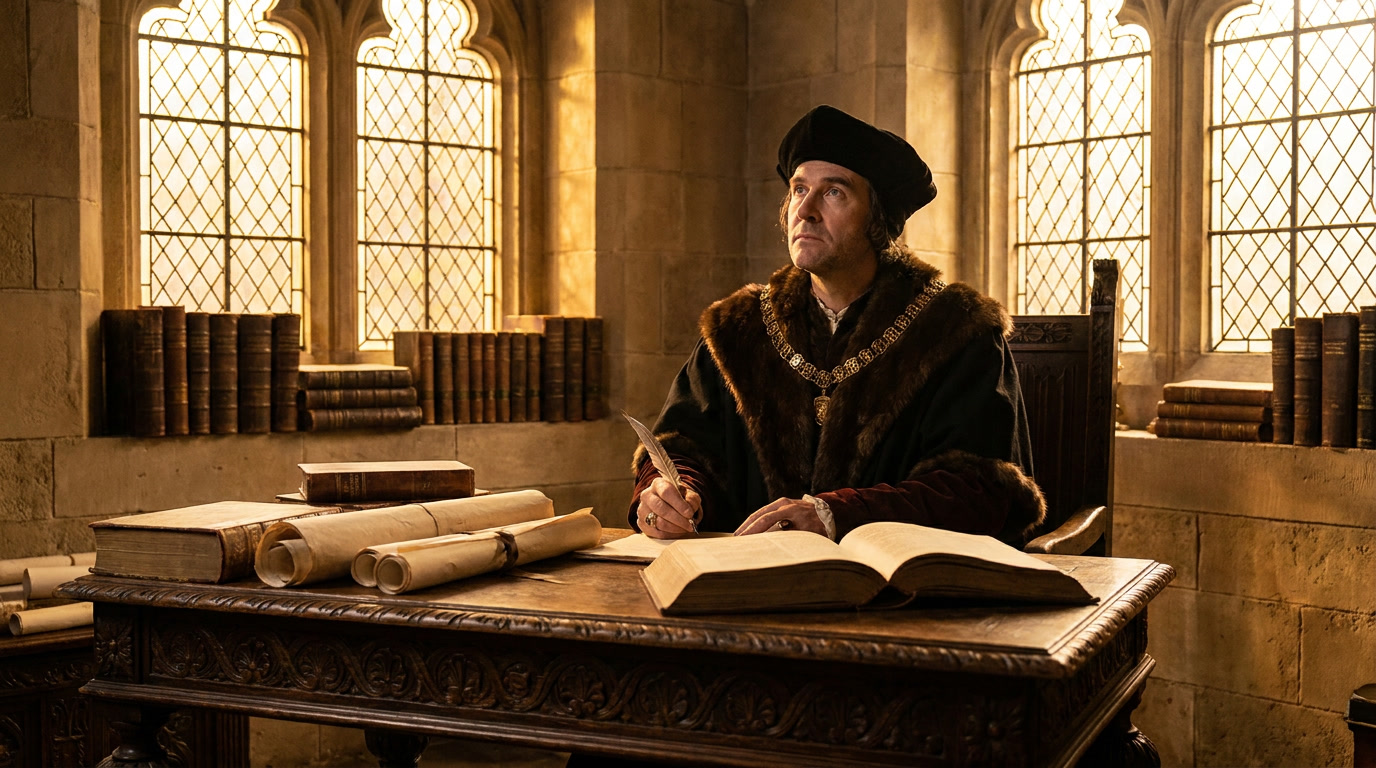
"I die the King's good servant, but God's first."
Saint Thomas More spoke these words on the scaffold in 1535, embodying the very principle Christ teaches in today's Gospel about rendering to Caesar what belongs to Caesar and to God what belongs to God. More's life demonstrates the delicate balance between earthly duty and divine allegiance that Christ's words call forth.
The Scholar Who Became a Martyr
Thomas More served as Lord Chancellor of England under King Henry VIII, wielding significant political power while maintaining deep Catholic faith. A renowned humanist scholar, he wrote extensively on theology and governance, understanding both secular authority and divine truth.
When Henry demanded acknowledgment as head of the English Church, More faced the ultimate test of conscience. Unlike the Pharisees who sought to trap Jesus with their question about taxes, More genuinely wrestled with the boundaries between temporal and eternal authority.
Conscience Before Convenience
More's refusal to sign the Act of Supremacy reveals what Christ means by rendering to God what belongs to God. Some matters transcend political expediency. The soul's allegiance to truth cannot be negotiated away for earthly peace.
The saint understood that Caesar's coin bears Caesar's image, but the human soul bears God's image. No earthly authority can claim dominion over what belongs to the Creator. More chose poverty, imprisonment, and death rather than betray this fundamental truth.
Living the Balance Daily
Modern disciples face similar tensions between worldly demands and spiritual integrity. Career pressures, social expectations, and political loyalties can all challenge our primary allegiance to God's truth.
More's example suggests that faithful citizenship includes knowing when to say no. Lectio divina with today's Gospel can help discern these boundaries through prayerful reflection on Christ's own words about dual citizenship.
Pray in the Spirit of Saint Thomas More
Ask Saint Thomas More to intercede for courage in moments when conscience conflicts with convenience. Pray for wisdom to distinguish between legitimate authority and overreach. Request strength to render truthful service in earthly roles while keeping God first in all things.
More's feast day reminds us that martyrdom often begins not with grand gestures but with small acts of integrity. Each choice to speak truth, even when costly, participates in his witness.
Frequently Asked Questions
Why is Saint Thomas More the patron saint of lawyers and politicians?
Thomas More exemplified ethical leadership in public service, choosing integrity over advancement when the two conflicted. His legal expertise, combined with moral courage in the face of political pressure, makes him an ideal patron for those in law and governance who seek to serve both justice and truth.
What can we learn from Saint Thomas More about conscience?
More teaches that conscience must be properly formed through prayer, study, and communion with the Church, but once formed, it cannot be violated without spiritual harm. He shows that following conscience sometimes requires great sacrifice, but this sacrifice preserves the soul's integrity and serves the common good.