
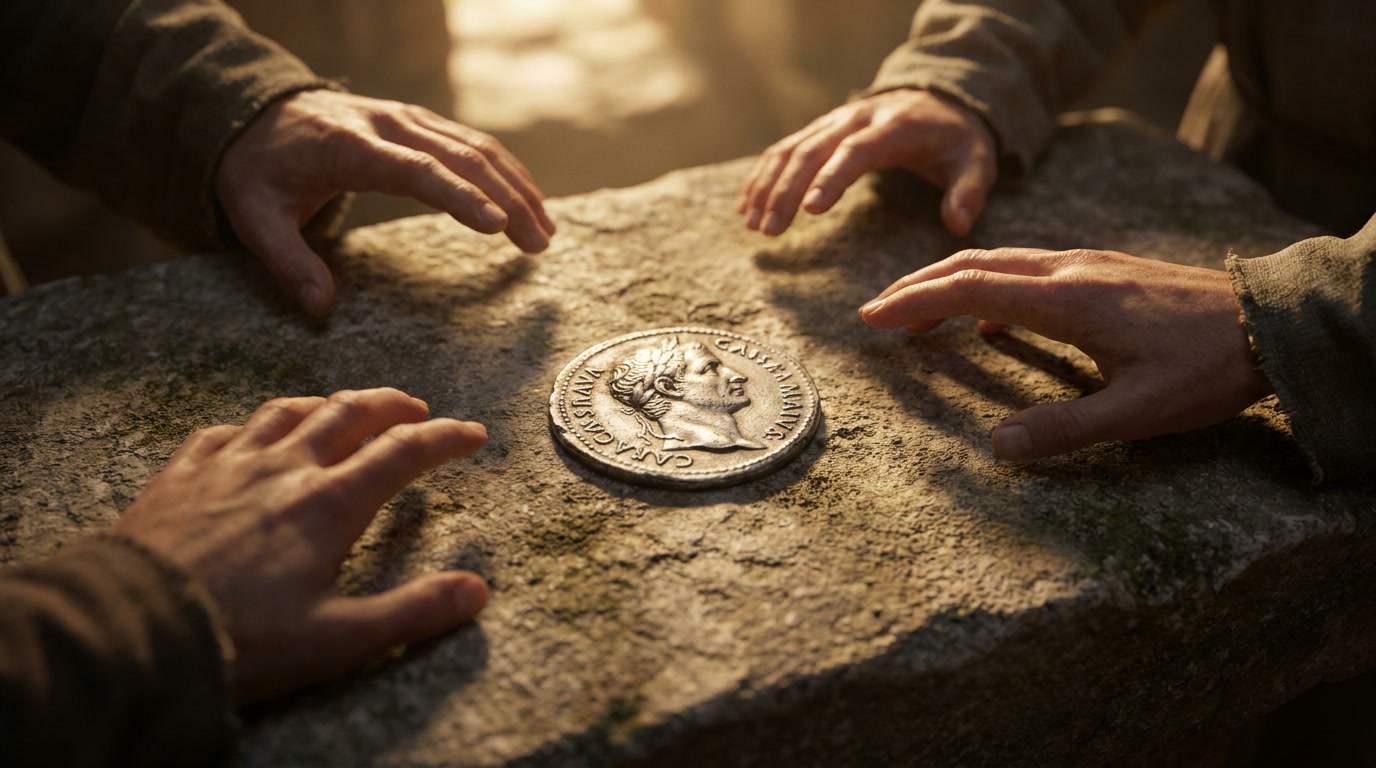
"Some Pharisees and Herodians were sent to Jesus to ensnare him in his speech. They came and said to him, 'Teacher, we know that you are a truthful man and that you are not concerned with anyone's opinion. You do not regard a person's status but teach the way of God in accordance with the truth. Is it lawful to pay the census tax to Caesar or not? Should we pay or should we not pay?' Knowing their hypocrisy he said to them, 'Why are you testing me? Bring me a denarius to look at.' They brought one to him and he said to them, 'Whose image and inscription is this?' They replied to him, 'Caesar's.' So Jesus said to them, 'Repay to Caesar what belongs to Caesar and to God what belongs to God.' They were utterly amazed at him." - Mark 12:13-17
The Pharisees and Herodians thought they had crafted the perfect trap. Their question about paying taxes to Caesar seemed to offer Jesus no safe answer. Refuse, and He appears rebellious against Rome. Accept, and He betrays Jewish religious sensibilities. Yet Christ's response in Mark 12:13-17 transcends their political snare with divine wisdom that continues to guide faithful hearts today.
The Trap That Revealed Truth
These religious leaders approached Jesus with flattery, acknowledging His truthfulness and fearlessness in teaching. Their words carried irony they could not foresee. They spoke truth while plotting deception.
The census tax represented Roman occupation and pagan authority. For devout Jews, paying it felt like acknowledging Caesar's lordship over the promised land. The question aimed to force Jesus into either political rebellion or religious compromise.
Christ recognized their hypocrisy immediately. His question about the coin's image cuts to the heart of the matter. Whose face appears on the currency reveals who claims ownership of it.
The Wisdom of Dual Allegiances
"Render to Caesar what belongs to Caesar and to God what belongs to God." These words establish a framework for living faithfully within earthly systems while maintaining ultimate loyalty to the divine.
Caesar's image on the coin indicates his temporal authority over material things. Yet humans bear God's image, stamped into their very being at creation. We belong first and foremost to our Creator.
Saint Augustine later reflected on this passage, noting that we must distinguish between our earthly citizenship and our citizenship in the kingdom of heaven. Both carry obligations, but they exist in proper order.
The teaching invites us to examine what truly belongs to which authority. Civil duties, taxes, civic participation—these fall under earthly governance. Our hearts, souls, worship, and ultimate allegiance belong to God alone.
Living the Balance in Daily Life
This Gospel reading speaks directly to modern struggles with competing loyalties. Work demands, family obligations, civic duties, and spiritual commitments can feel overwhelming when viewed as conflicting forces.
Christ's wisdom suggests these need not be contradictory. Faithful stewardship of earthly responsibilities becomes an expression of love for God. Paying taxes honestly, working diligently, and participating constructively in community life honor the order God established.
Yet the priorities remain clear. When earthly authorities demand what belongs to God—our conscience, our worship, our moral convictions—faithful resistance becomes necessary. The martyrs throughout Church history understood this distinction with their lives.
Saint Thomas More exemplified this balance. He served his king faithfully as chancellor, yet when Henry VIII demanded acknowledgment as head of the English Church, More chose death over betraying his ultimate allegiance to God.
Pray With This Reading
This passage invites deep contemplation about where our true loyalties lie. Consider praying with this Gospel through Ignatian Contemplation, placing yourself in the scene and observing Jesus' calm wisdom amid the tension of religious leaders trying to trap Him.
Ask Christ to show you the proper ordering of your own allegiances. Where do earthly concerns overshadow spiritual priorities? How might faithful citizenship and discipleship strengthen each other in your daily life?
The coin's image reminds us that we bear God's image. Let this truth shape how you approach both earthly duties and divine calling in the hours ahead.
Frequently Asked Questions
What does "render to Caesar" mean for Christians today?
"Render to Caesar" means fulfilling legitimate civic duties—paying taxes, following just laws, participating in community life—while maintaining ultimate loyalty to God. It does not mean blind obedience to earthly authorities when they conflict with divine law.
How do we know what belongs to God versus earthly authorities?
Scripture and Church teaching guide this discernment. Generally, material obligations and civic duties fall under earthly authority, while matters of conscience, worship, and moral convictions belong to God. When conflicts arise, God's authority takes precedence.
Why were the Pharisees trying to trap Jesus with this question?
The Pharisees wanted to discredit Jesus either as a political rebel against Rome or as unfaithful to Jewish religious identity. Either answer to their tax question seemed to create problems. Jesus' response transcended their false dilemma with divine wisdom.