
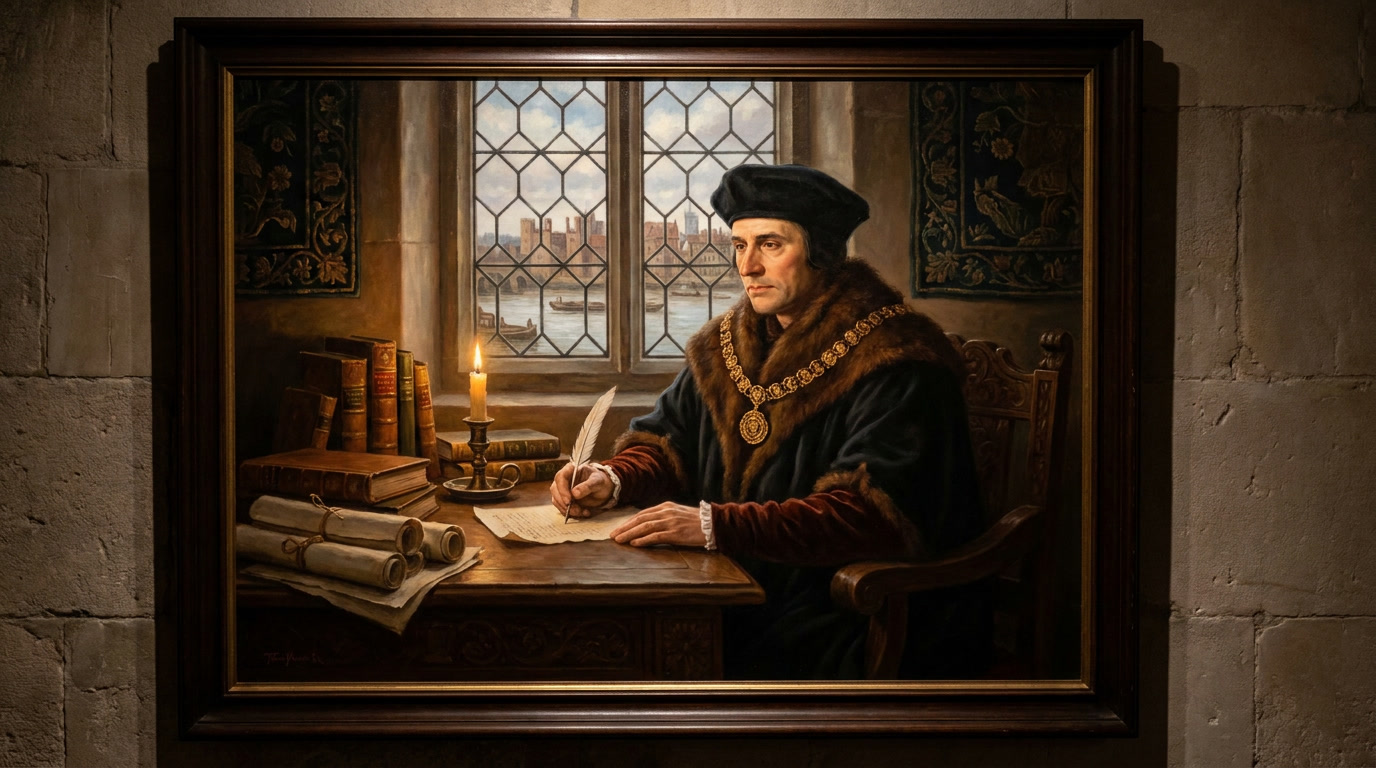
"I die the King's good servant, but God's first."
When religious and political authorities challenged Jesus about the source of his power in today's Gospel, Saint Thomas More faced a similar test centuries later. The martyr chancellor understood that divine authority often conflicts with human expectations, requiring courage to stand firm when earthly powers demand compromise.
Thomas More served as Lord Chancellor of England under King Henry VIII, rising to become one of the most powerful men in the realm. A brilliant lawyer, scholar, and statesman, he authored "Utopia" and earned respect across Europe for his intellect and integrity. Yet when Henry demanded that More support his break from Rome and his claim to supreme authority over the English Church, this faithful Catholic chose martyrdom over betrayal of his conscience.
Standing Firm When Authority Is Questioned
The chief priests, scribes, and elders confronted Jesus in the temple, demanding to know the source of his authority. Their question masked deeper fear—if Jesus acted by divine power, their own religious authority crumbled. Saint Thomas More faced identical pressure when Henry VIII questioned the Pope's authority and demanded loyalty to the crown above Christ's Church.
More recognized that human authorities often challenge divine truth when it threatens their control. He refused to take the Oath of Supremacy, knowing it meant certain death. Like Jesus, who answered his questioners with wisdom rather than defensiveness, More remained respectful yet unwavering in his convictions.
The Cost of Choosing God's Authority First
Jesus knew that declaring his divine mission openly would intensify opposition from religious leaders. Similarly, Thomas More understood that refusing Henry's demands would cost him everything—wealth, position, family, and life itself. Both chose faithfulness over preservation.
More's example teaches that following Christ's authority sometimes requires standing alone against popular opinion and powerful forces. He lost friends, faced imprisonment in the Tower of London, and ultimately died on the scaffold. Yet he gained eternal life through his unwavering witness to truth.
Finding Courage in Silent Prayer
During his final imprisonment, Thomas More spent hours in contemplative prayer, finding strength to face martyrdom with peace. His spiritual discipline prepared him for the ultimate test of faith. The practice of Lectio Divina can deepen our own relationship with Christ's authority, helping us discern his voice above the clamor of competing claims.
More's life demonstrates that Catholic martyrdom flows from intimate union with Christ rather than mere stubbornness. His gentle humor and charity toward his executioners revealed a soul anchored in divine love, not human anger.
Pray in the Spirit of Saint Thomas More
Ask Saint Thomas More to intercede for courage to recognize and follow Christ's authority in daily decisions. Pray for wisdom to discern between legitimate human authority and demands that compromise faith. Request his help in maintaining charity toward those who oppose truth, remembering his forgiveness of King Henry and his executioners.
Frequently Asked Questions
Why is Saint Thomas More the patron saint of lawyers and politicians?
Saint Thomas More serves as patron of lawyers and politicians because he demonstrated how to integrate faith with professional duties, maintaining integrity even when it cost him his career and life. His example shows that Catholic principles can guide those in legal and governmental roles.
What can we learn from Saint Thomas More about conscience?
Saint Thomas More taught that a properly formed Catholic conscience must follow God's law above human law when the two conflict. He spent years studying Scripture and Church teaching to form his conscience, then remained faithful to it despite enormous pressure to compromise.