
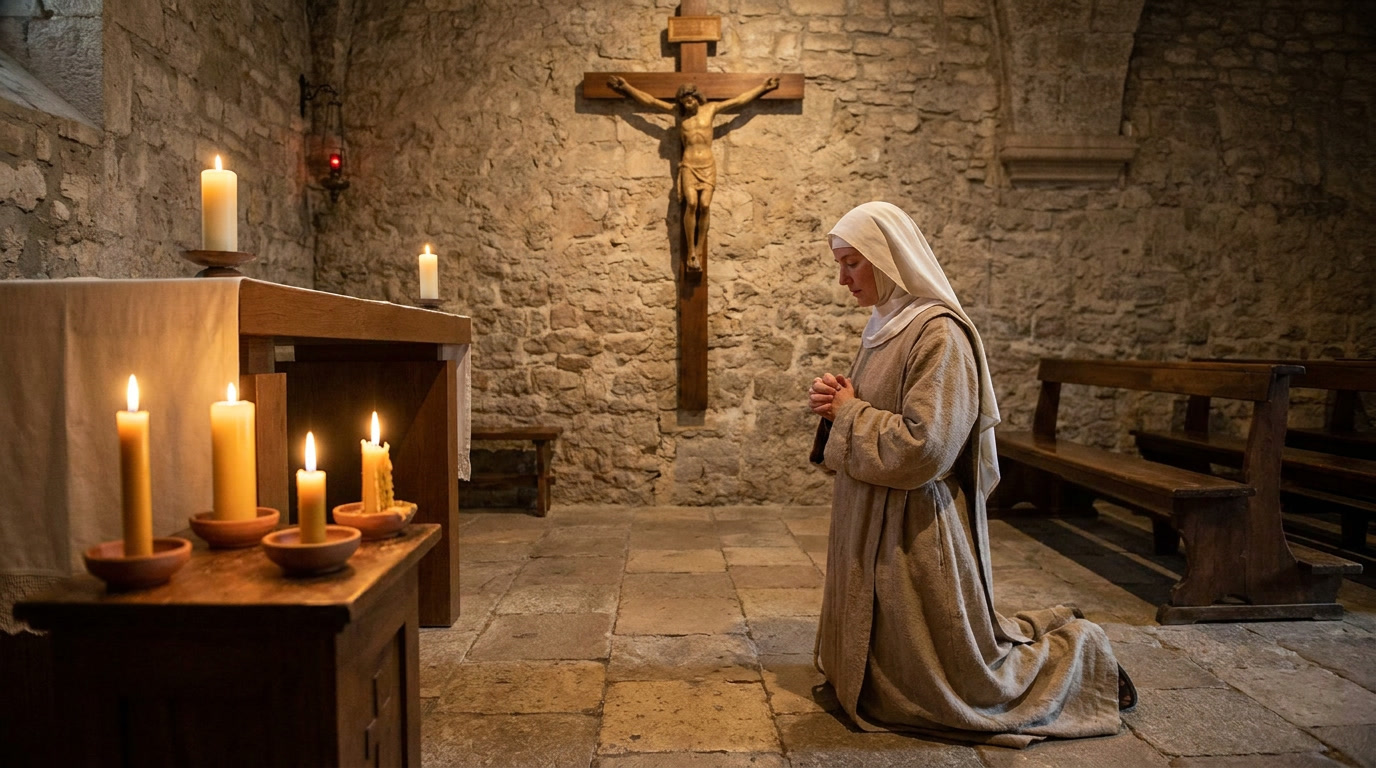
"Place your mind before the mirror of eternity! Place your soul in the brilliance of glory! And transform your entire being into the image of the Godhead Itself through contemplation."
When Bartimaeus cried out for sight along the Jericho road, his plea echoed through centuries to reach another soul who understood the journey from darkness to divine light. Saint Clare of Assisi, the Poor Clare foundress, spent her life teaching others to see with the eyes of faith, just as the blind beggar received both physical and spiritual vision from Christ.
Born into nobility in 1194, Clare Offreduccio abandoned worldly comfort at eighteen to follow Saint Francis in radical poverty. She founded the Order of Poor Ladies, later known as the Poor Clares, establishing the first religious community of women committed to absolute poverty. Her forty years of contemplative life revealed profound insights into spiritual sight and divine illumination.
The Cry for True Vision
Bartimaeus refused silence when the crowd tried to quiet his desperate plea. Saint Clare understood this persistence in seeking divine sight. Her letters to Agnes of Prague overflow with imagery of spiritual vision: "Look upon Christ poor and follow the poor Christ."
Like the blind beggar who threw off his cloak—his only possession—Clare cast aside the security of wealth and family connections. Both recognized that spiritual sight requires letting go of what the world considers valuable. True vision comes not through accumulating but through releasing.
Following the Light
After receiving sight, Bartimaeus immediately "followed him on the way." This detail carries profound significance. He didn't simply receive healing and return to his former life. The gift of sight became the beginning of discipleship.
Saint Clare lived this same pattern. Her spiritual sight led to lifelong following. She spent decades in contemplation at San Damiano, the chapel Francis had rebuilt. There she practiced what she preached: gazing upon Christ until her entire being reflected His light. Her nuns reported that Clare herself seemed to glow during prayer.
Daily Spiritual Sight
Modern life presents countless distractions that cloud spiritual vision. Saint Clare's wisdom offers practical guidance. She counseled looking "frequently in the mirror" of Christ's life. This suggests regular, intentional contemplation rather than sporadic spiritual glances.
The saint emphasized quality over quantity in prayer. Better to spend a few moments in genuine contemplation than hours in distracted recitation. Through Franciscan prayer methods, we can cultivate the focused attention that leads to spiritual sight.
The Mirror of Eternity
Saint Clare frequently used mirror imagery in her spiritual direction. She taught that Christ serves as a perfect mirror, reflecting both divine love and human potential. When we gaze upon Him consistently, we begin to see ourselves—and our circumstances—with divine clarity.
This wisdom transforms daily challenges. Instead of seeing only problems, we begin to notice God's presence within difficulties. Like Bartimaeus receiving sight, we start to perceive opportunities for grace hidden in ordinary moments.
Pray in the Spirit of Saint Clare
Saint Clare's approach to prayer emphasized sustained contemplation. Begin with the Gospel scene of Bartimaeus. Place yourself beside the blind beggar. Feel his desperation, his hope, his joy at receiving sight.
Now ask Christ: "What do you want me to see?" Wait in silence. Allow the Holy Spirit to illuminate areas of your life that need divine light. Close by gazing upon Christ in gratitude, letting His image transform your understanding.
Frequently Asked Questions
What miracles is Saint Clare of Assisi known for?
Saint Clare is famous for protecting Assisi from Saracen invasion by holding up the Blessed Sacrament. She also multiplied food for her sisters during famine and reportedly watched the Christmas Mass at Saint Francis' church through divine vision while too ill to attend.
How did Saint Clare influence the Franciscan movement?
Saint Clare founded the feminine branch of the Franciscan order, establishing the first religious community of women committed to absolute poverty. Her rule emphasized contemplative life combined with radical Gospel poverty, influencing centuries of women religious and expanding Franciscan spirituality beyond male communities.