
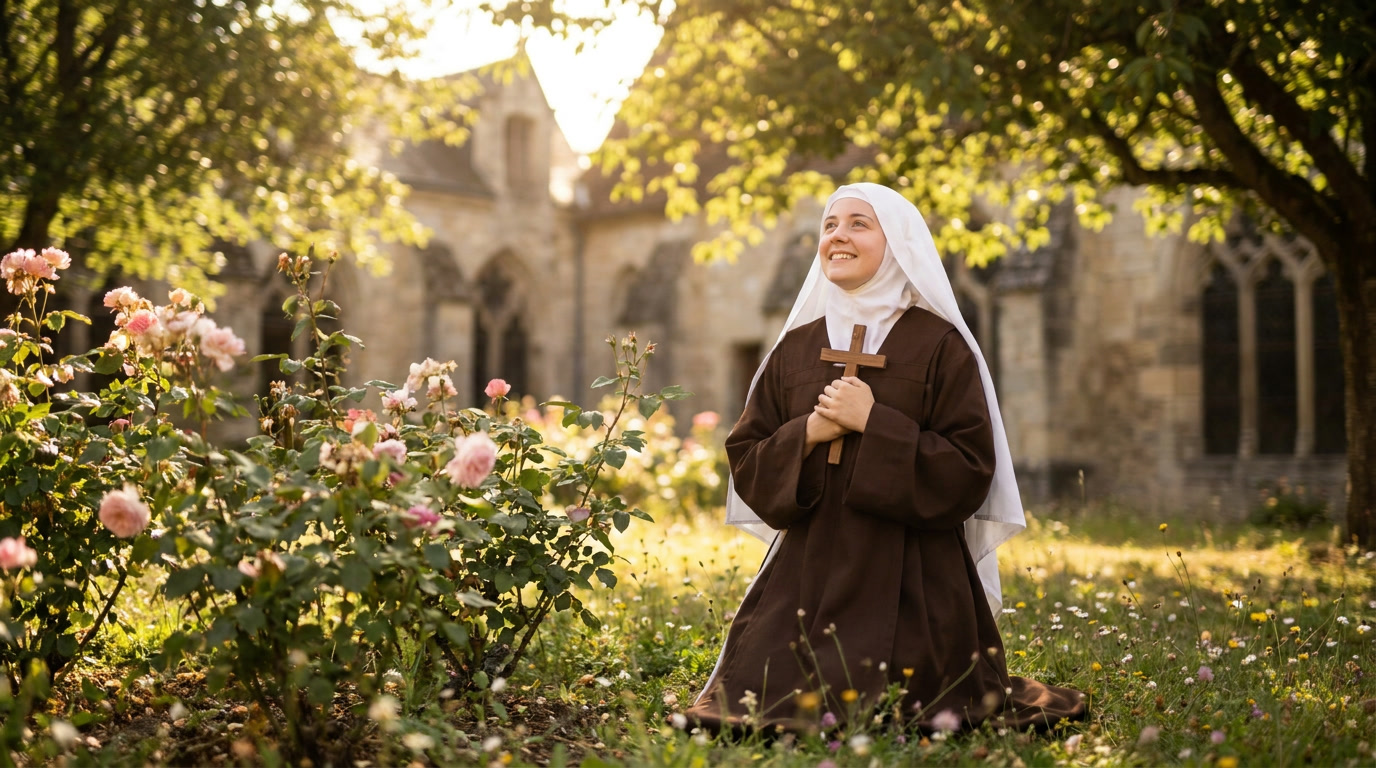
"I will seek out a means of getting to Heaven by a little way—very short and very straight, a little way that is wholly new."
When James and John sought places of honor beside Christ, they revealed humanity's persistent hunger for recognition and status. Saint Thérèse of Lisieux understood this temptation deeply. Her "Little Way" emerged not from natural humility, but from wrestling with the same desires that drove the disciples toward earthly glory.
Born Marie-Françoise-Thérèse Martin in 1873, this Doctor of the Church entered Carmel at fifteen with dreams of great sanctity. Yet God transformed her ambitions into something far more radical—a path of spiritual childhood that would revolutionize Catholic spirituality.
The Little Way vs. The Way of Ambition
The disciples' request for prominence reveals our tendency to measure spiritual progress by external achievements. Saint Thérèse recognized this trap in her own soul. Rather than pursuing extraordinary penances or mystical experiences, she chose what she called "the elevator of Jesus' arms"—complete dependence on divine mercy.
Her approach mirrors Christ's teaching that "whoever wishes to be great among you will be your servant." Thérèse discovered that sanctity lies not in grand gestures but in performing ordinary duties with extraordinary love. Each small act—bearing with difficult sisters, smiling when criticized, choosing the worst food at meals—became a prayer of self-surrender.
Spiritual Childhood in Daily Life
Thérèse's doctrine of spiritual childhood speaks directly to those who feel overwhelmed by their weaknesses. She taught that God delights in our littleness, using our limitations as pathways to grace. This perspective transforms failure from defeat into opportunity.
The saint's confidence rested not on personal strength but on divine love. "I am too little to climb the rough stairway of perfection," she wrote, "but Jesus must carry me in His arms." This surrender requires profound courage—the same boldness that led her to declare she would spend her heaven doing good on earth.
Her contemplative approach to prayer emphasized presence over performance, echoing the Franciscan tradition of simple devotion.
The Glory of Hidden Service
While the disciples dreamed of visible thrones, Thérèse found her throne in the laundry room, the garden, and the chapel choir. She understood that true greatness often goes unnoticed by human eyes. Her hidden sacrifices—enduring tuberculosis without complaint, caring for elderly nuns, maintaining joy despite spiritual darkness—revealed the profound dignity of ordinary suffering.
This hidden dimension of holiness challenges contemporary culture's obsession with recognition. Thérèse lived her final words: "I want to spend my heaven in doing good on earth." Her influence continues precisely because she embraced obscurity during her earthly life.
Pray in the Spirit of Saint Thérèse
Saint Thérèse invites us to approach God with childlike trust rather than adult calculation. Her prayer was simple conversation with Jesus, marked by honesty about weakness and confidence in mercy. She found God in the mundane, transforming daily tasks into acts of love.
Consider adopting her practice of offering small sacrifices throughout the day. When faced with disappointment or criticism, follow her example of interior surrender. Let each moment become an opportunity to choose love over self-interest, service over recognition.
Frequently Asked Questions
What is Saint Thérèse's Little Way?
The Little Way is Saint Thérèse's path to holiness through spiritual childhood, emphasizing complete trust in God's mercy rather than personal achievements. It involves performing ordinary acts with extraordinary love and accepting one's limitations as pathways to grace.
Why is Saint Thérèse called the Little Flower?
Saint Thérèse called herself "the little flower" to emphasize her smallness before God. She saw herself as a simple flower in God's garden, drawing attention not to her own beauty but to the divine gardener who tended her soul with loving care.