
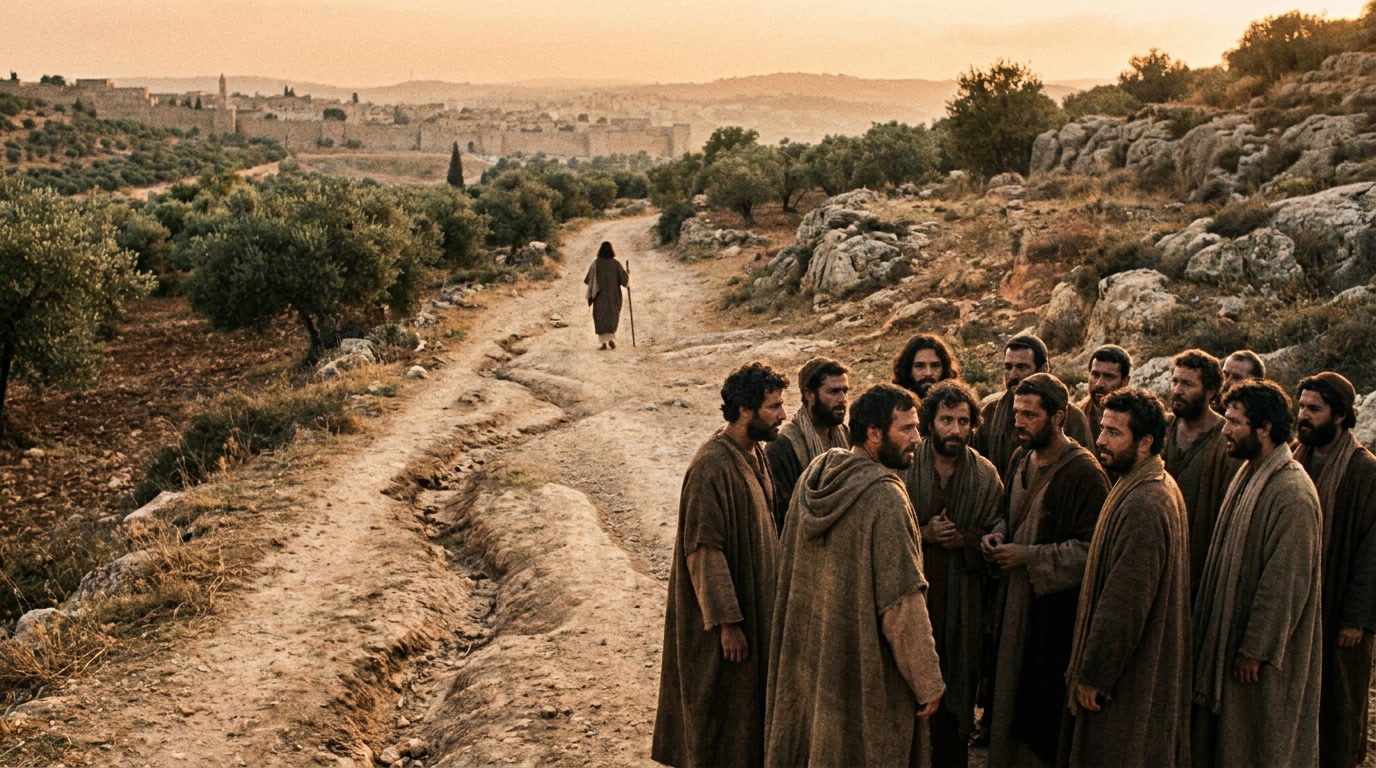
"The disciples were on the way, going up to Jerusalem, and Jesus went ahead of them. They were amazed, and those who followed were afraid. Taking the Twelve aside again, he began to tell them what was going to happen to him... 'You know that those who are recognized as rulers over the Gentiles lord it over them, and their great ones make their authority over them felt. But it shall not be so among you.'" - Mark 10:32-45
Jesus walks ahead of His disciples on the road to Jerusalem, His face set toward the cross. Behind Him, the Twelve follow in confusion and growing dread. This Gospel passage from Mark 10:32-45 captures one of Christianity's most profound paradoxes: the moment when divine prophecy meets human ambition, when the call to suffering collides with dreams of glory.
The Third Prediction: Jesus Prepares His Church
For the third time, Jesus foretells His passion with startling specificity. He speaks of being handed over, condemned, mocked, scourged, and killed. Yet He also promises resurrection after three days. This is not mere prediction but preparation — Jesus is forming His apostles for the reality of Christian discipleship.
The disciples' response reveals their spiritual immaturity. While Jesus speaks of His approaching death, James and John immediately pivot to securing positions of honor in His kingdom. Their timing seems callous, yet it exposes the human heart's persistent tendency toward self-promotion even in sacred moments.
Saint John Chrysostom observed that the apostles heard only what they wished to hear, filtering Christ's words through their own expectations rather than receiving them in faith.
The Chalice of Suffering and Service
When James and John request seats at Jesus' right and left, they reveal their misunderstanding of His kingdom. Jesus responds with a question that pierces to the heart of discipleship: "Can you drink the chalice that I drink?" This chalice represents not privilege but participation in Christ's suffering.
The brothers answer confidently, "We can," not comprehending what they promise. Jesus affirms they will indeed share His chalice — both would later face martyrdom for the Gospel. Yet He cannot grant their request for positions of honor, for these belong to those the Father has prepared.
This exchange teaches that authentic Christian leadership flows from willingness to suffer with Christ, not from seeking earthly recognition or power. Surrender prayer helps believers release personal ambitions and embrace God's will, even when it leads through suffering.
The Indignation of the Ten: Human Nature Revealed
The other ten disciples become indignant — not at the inappropriate timing of the request, but at being excluded from similar consideration. Their anger exposes the same spiritual blindness that motivated James and John. All twelve struggle with the fundamental misunderstanding of Christ's kingdom.
Jesus uses this moment of tension to deliver one of His most important teachings on authority. He contrasts worldly leadership, which dominates and oppresses, with Kingdom leadership, which serves and sacrifices.
Saint Augustine wrote that the anger of the ten was itself a lesson, showing how quickly Christian community can fracture when personal ambition takes precedence over mutual love and service.
The Greatest Must Be the Servant
Christ's final words in this passage revolutionize all concepts of greatness: "Whoever wishes to be great among you will be your servant; whoever wishes to be first among you will be the slave of all." This teaching doesn't merely suggest humility — it redefines power itself.
Jesus points to Himself as the ultimate example: "The Son of Man did not come to be served but to serve and to give his life as a ransom for many." The cross becomes the throne, suffering becomes the path to glory, and service becomes the measure of greatness.
This radical inversion challenges every worldly instinct. It calls believers to examine their own motivations in ministry, leadership, and daily relationships. Do we seek to be served or to serve? Do we grasp for recognition or embrace hiddenness?
Pray With This Reading
This Gospel passage invites deep contemplation of Christ's call to servant leadership. Ignatian contemplation provides an especially fruitful approach to this reading. Place yourself on the road to Jerusalem with the disciples. Watch Jesus' face as He speaks of His passion. Feel the weight of His prophecy and the confusion it brings. Notice your own reactions to His call to drink His chalice of suffering and service.
Frequently Asked Questions
What does it mean to drink from Christ's chalice?
Drinking from Christ's chalice means sharing in His suffering and sacrifice for the sake of the Gospel. It involves accepting the difficulties, persecutions, and self-denial that come with faithful discipleship. For James and John, this ultimately meant martyrdom.
How does Jesus define true greatness in this passage?
Jesus defines greatness as service to others rather than domination over them. The greatest person in God's kingdom is the one who serves most faithfully and sacrificially, following Christ's own example of giving His life for many.
Why were the other disciples angry at James and John?
The ten disciples became indignant because they wanted the same positions of honor for themselves. Their anger revealed that they shared James and John's misunderstanding about the nature of Christ's kingdom and what it means to be great in God's eyes.