
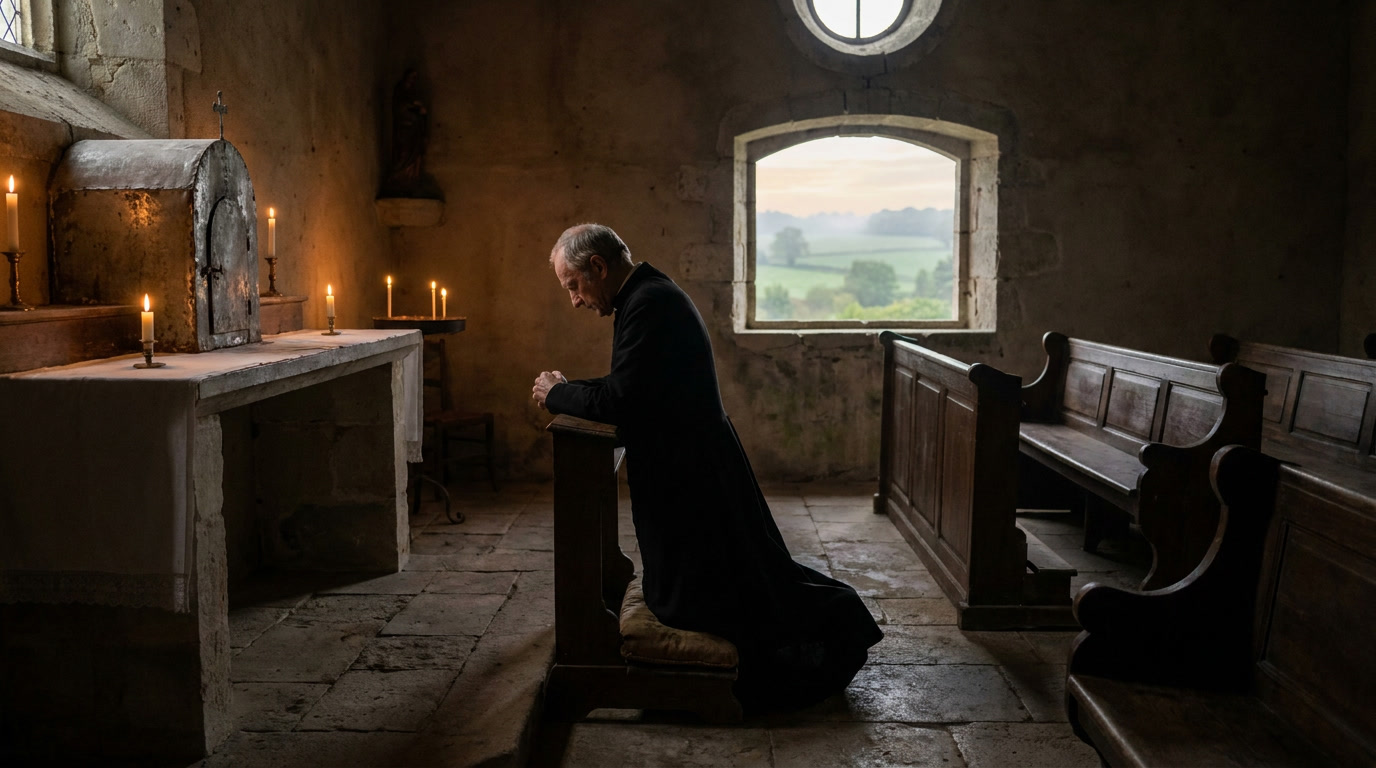
"The good God has not created anything better than the soul, and nothing which rejoices Him more than when He sees it pure: it is the mirror of His divine beauty."
St. John Vianney understood deeply what Christ meant when He called His apostles friends rather than servants. The Curé of Ars lived this divine friendship with such intimacy that pilgrims traveled across Europe to witness his communion with God. In today's Gospel from John 15, Jesus reveals the stunning truth: He has chosen us as friends, not servants.
Who Was St. John Vianney
Jean-Baptiste-Marie Vianney served as parish priest in the small French village of Ars from 1818 until his death in 1859. Despite struggling with his seminary studies, this humble priest became one of history's greatest confessors and spiritual directors. Peasants and nobility alike sought his counsel, recognizing in him someone who lived as Christ's intimate friend.
The saint's days began before dawn in prayer, often spending fifteen hours hearing confessions. He possessed remarkable insight into souls, frequently knowing penitents' sins before they spoke. This gift flowed from his profound friendship with Jesus, nurtured through constant prayer and sacrifice.
Chosen for Friendship, Not Merit
St. John Vianney embodied Christ's words: "You did not choose me, but I chose you." The future saint felt keenly his academic limitations and personal unworthiness. Yet God's choice transcends human qualifications. The Curé of Ars often remarked that God deliberately chose simple instruments to accomplish great works.
This divine election brings both privilege and responsibility. Jesus chooses friends to "bear fruit that will remain." St. John Vianney's fruit continues bearing souls to God more than a century after his death. His example teaches that Christ's friendship transforms ordinary lives into extraordinary instruments of grace.
Abiding in Love Through Daily Faithfulness
"If you keep my commandments, you will abide in my love," Jesus promises in today's Gospel. St. John Vianney lived this abiding through heroic fidelity to small duties. He rose at one in the morning for prayer, celebrating Mass with tears of devotion, and gave away his possessions to the poor.
The saint's love expressed itself through availability to souls. Despite physical exhaustion and spiritual attacks from evil spirits, he remained in the confessional until the last penitent departed. This self-sacrificial love mirrors Christ's own: "Greater love has no man than this, that a man lay down his life for his friends."
Such radical availability requires deep roots in prayer. Consider exploring Lectio Divina as the Curé of Ars did, allowing Scripture to nourish this friendship with Christ through contemplative reading.
Pray in the Spirit of St. John Vianney
St. John Vianney's prayer life centered on the Eucharist and simple conversation with God. He would gaze upon the tabernacle, saying, "He looks at me and I look at Him." This profound simplicity marked his approach to divine friendship.
Follow his example by spending time in eucharistic adoration when possible. Speak to Jesus as a friend, sharing daily concerns and listening in silence. The Curé of Ars reminds us that prayer need not be eloquent—only sincere.
Frequently Asked Questions
What miracles did St. John Vianney perform?
St. John Vianney performed numerous miracles including multiplication of food for his orphanage, healing the sick through his blessing, and reading souls in confession. His most remarkable gift was bringing hardened sinners to conversion through his prayers and counsel.
Why is St. John Vianney the patron saint of priests?
Pope Pius XI named St. John Vianney patron of parish priests in 1929 because of his extraordinary dedication to pastoral care, especially the sacrament of confession. His example of priestly holiness and availability to souls makes him the ideal model for clergy worldwide.