
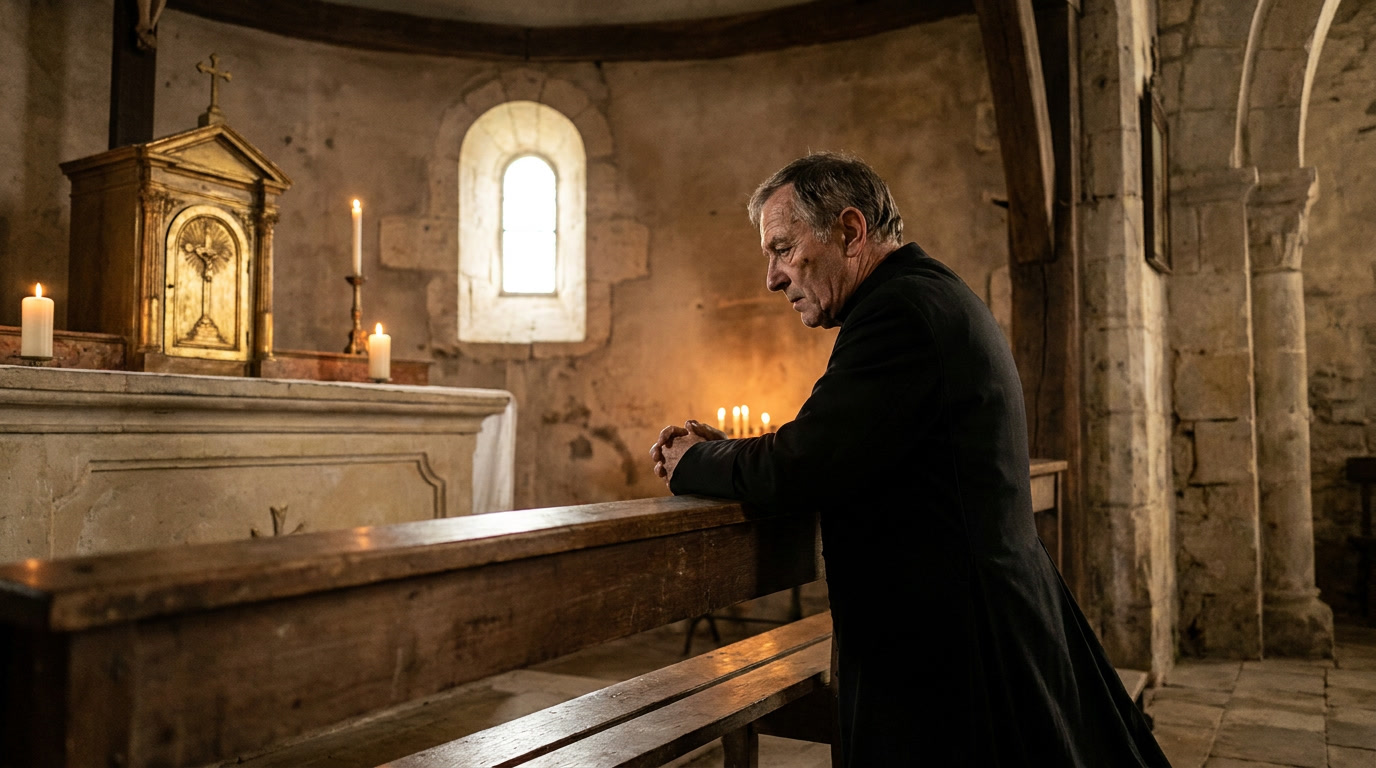
"The priest continues the work of redemption on earth... If I were to meet a priest and an angel, I would salute the priest before I would salute the angel."
Saint John Vianney understood what Philip struggled to grasp in today's Gospel. When Jesus declares "Whoever has seen me has seen the Father," the humble priest of Ars lived this mystery daily. Through simple faith and pastoral devotion, Saint John Vianney revealed Christ to countless souls seeking the Father's face.
Born in 1786 to French farmers, John Baptist Vianney faced extraordinary challenges becoming a priest. Academic studies proved difficult. Seminary Latin seemed impossible. Yet beneath this simplicity burned an unquenchable desire to serve Christ. Ordained in 1815, he was assigned to the remote village of Ars—a place where faith had grown cold.
Seeing the Father Through Priestly Ministry
The Gospel presents Jesus' profound unity with the Father. Saint John Vianney embodied this same transparency in his priesthood. Parishioners often said they could see Christ when Father Vianney celebrated Mass or heard confessions.
His confessional became a place of encounter with divine mercy. Pilgrims traveled across France to experience God's forgiveness through this simple priest. Saint John Vianney spent up to sixteen hours daily in the confessional, becoming a living icon of Christ's compassion.
Like Jesus revealing the Father through his works, the Curé of Ars manifested divine love through pastoral care. He visited the sick, catechized children, and transformed Ars from spiritual wasteland to pilgrimage destination.
The Works of Faith in Daily Life
Jesus promises that believers "will do the works that I do, and will do greater ones." Saint John Vianney proves this promise through ordinary fidelity. He performed no spectacular miracles, yet his simple presence converted thousands.
This saint teaches that knowing the Father comes not through theological complexity but through faithful service. Every act of kindness, every moment of prayer, every choice for virtue reveals Christ to others.
Contemporary disciples can follow Saint John Vianney's path by embracing simplicity over sophistication. The Father becomes visible when Christians serve with humility, love with sacrifice, and trust with childlike faith.
Contemplating Divine Unity
The mystery Jesus reveals to Philip—perfect unity between Father and Son—finds expression in contemplative prayer. Saint John Vianney spent hours before the Blessed Sacrament, gazing upon Christ present in the Eucharist.
This contemplative dimension deepened his pastoral effectiveness. Through Ignatian contemplation of today's Gospel scene, believers can enter Philip's confusion and Jesus' gentle correction. Such prayer transforms understanding into encounter.
Saint John Vianney reminds us that theological questions find their deepest answers in prayer. The Father becomes known not through argument but through adoration, not through study alone but through surrender.
Pray in the Spirit of Saint John Vianney
Enter your day with the Curé of Ars's simple confidence. When overwhelmed by life's complexity, remember his trust in divine providence. When serving others feels burdensome, recall his joy in pastoral ministry.
Spend time in adoration, allowing Christ's presence to form your heart. Let Saint John Vianney's example inspire faithful service in small things. Through such simplicity, others will encounter the Father's love made visible in your life.
Frequently Asked Questions
Why is Saint John Vianney the patron saint of priests?
Saint John Vianney exemplified priestly virtue through his extraordinary dedication to the confessional, pastoral care, and contemplative prayer. Pope Pius XI declared him patron of parish priests in 1929, recognizing his perfect model of pastoral ministry.
What miracles did Saint John Vianney perform?
While Saint John Vianney possessed gifts of prophecy and spiritual insight, his greatest miracle was the transformation of Ars from spiritual indifference to fervent faith. His ability to read hearts in confession and his multiplication of food for his school demonstrated divine favor through humble service.