
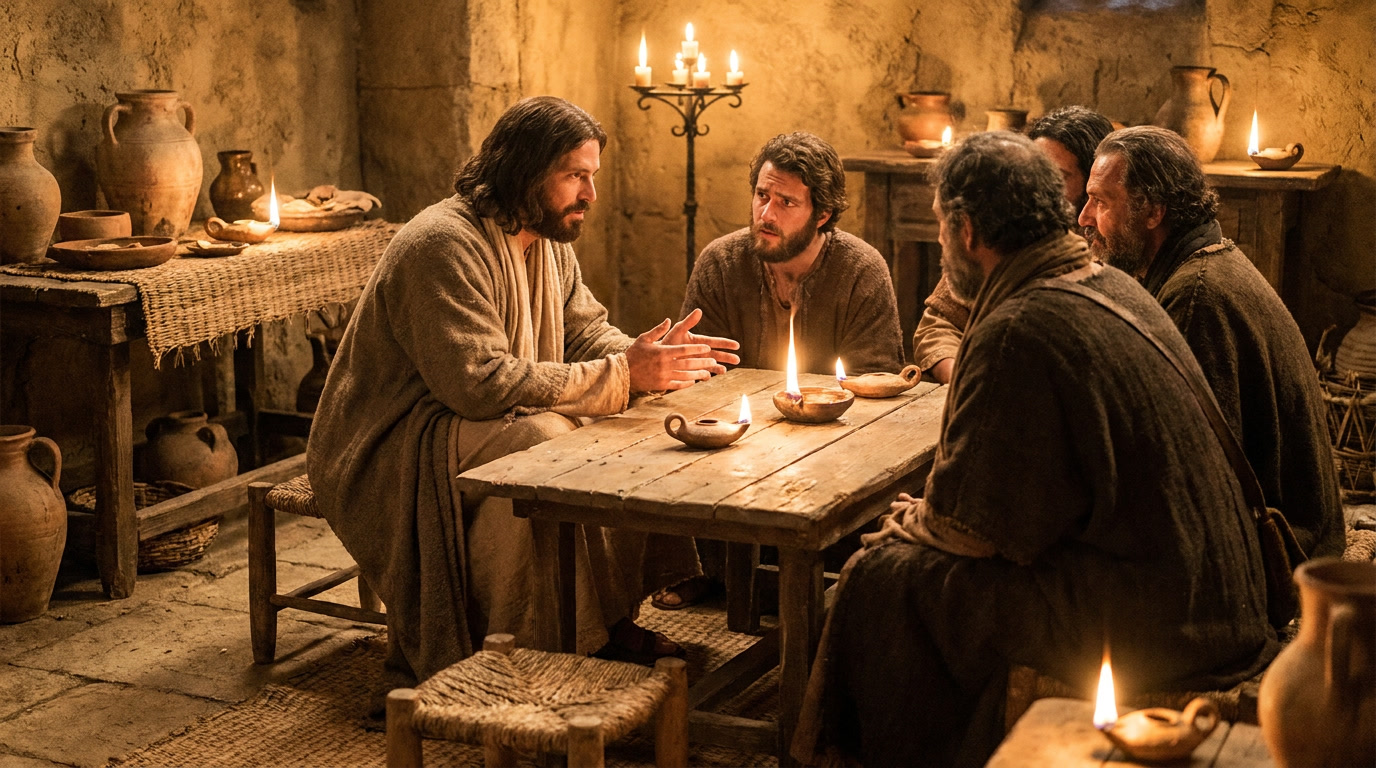
"If you know me, then you will also know my Father. From now on you do know him and have seen him." Philip said to Jesus, "Master, show us the Father, and that will be enough for us." Jesus said to him, "Have I been with you for so long a time and you still do not know me, Philip? Whoever has seen me has seen the Father." — John 14:7-9
Philip's request echoes the deepest longing of the human heart: to see God face to face. Yet Christ's response reveals that this vision has been before the disciples all along. In today's Gospel passage from John 14:7-14, Jesus unveils the mystery of divine revelation through his very presence among us.
The Hidden Father Made Manifest
Philip's question—"show us the Father"—betrays a fundamental misunderstanding. Like Moses who asked to see God's glory, Philip seeks a theophany, some dramatic divine manifestation. Christ's gentle rebuke cuts to the heart of the Incarnation: the Father has already been revealed through the Son's words and deeds.
Saint Athanasius, whose memorial we celebrate today, spent his life defending this very truth against Arian heresy. The great Doctor of the Church proclaimed that Christ is not merely like the Father, but shares the Father's very essence. When we look upon Jesus, we encounter the invisible God made visible.
Works That Reveal Divine Nature
Christ points Philip beyond surface appearances to the works themselves. Every healing, every word of forgiveness, every act of mercy reveals the Father's character. The blind receive sight because God is light. The dead are raised because God is life. The hungry are fed because God is love.
These works continue through those who believe. Christ promises that his followers will do "greater works" not in power, but in scope. The Gospel will reach every nation. The Church will span centuries. What began with twelve disciples in an upper room will embrace the world.
Prayer in Christ's Name
The passage concludes with Christ's promise regarding prayer: "Whatever you ask in my name, I will do." This is not a blank check for personal desires, but an invitation to participate in divine mission. To pray in Christ's name means to align our will with his, to seek the Father's glory above all else.
This promise finds expression in contemplative prayer, where the soul learns to desire what God desires. Through Lectio Divina, we allow Scripture to shape our petitions, moving beyond surface requests to deeper communion with divine will.
Living Revelation
The disciples' struggle to recognize the Father in Jesus mirrors our own spiritual journey. We often seek God in extraordinary signs while missing his presence in ordinary moments. Christ calls us to see with eyes of faith—to recognize divine love in human kindness, divine mercy in forgiveness offered and received.
Saint Athanasius taught that God became human so that humans might become divine. This transformation happens not through dramatic visions, but through patient conformity to Christ's image. Each act of love makes the invisible God more visible in our world.
Pray With This Reading
This Gospel invitation to see the Father through the Son lends itself especially well to Ignatian Contemplation. Place yourself in the upper room with Philip and the other disciples. Listen to Christ's gentle correction. Allow your own desire to "see the Father" to surface, then receive Christ's revelation that the Father has been before you all along.
Frequently Asked Questions
What does it mean that Jesus and the Father are one?
This refers to the unity of essence in the Trinity. While distinct as persons, Father and Son share the same divine nature. Saint Athanasius defended this doctrine against those who claimed Christ was merely similar to the Father rather than consubstantial with him.
How can we do greater works than Jesus?
The "greater works" refer not to more powerful miracles, but to the broader scope of the Church's mission. Through the apostles and their successors, the Gospel would reach beyond Palestine to the entire world, bringing salvation to all nations.
What does it mean to pray in Jesus' name?
Praying in Christ's name means more than adding "through Christ our Lord" to our petitions. It means aligning our will with his, seeking what he would seek, and desiring the Father's glory above personal gain. Such prayer participates in Christ's own relationship with the Father.