
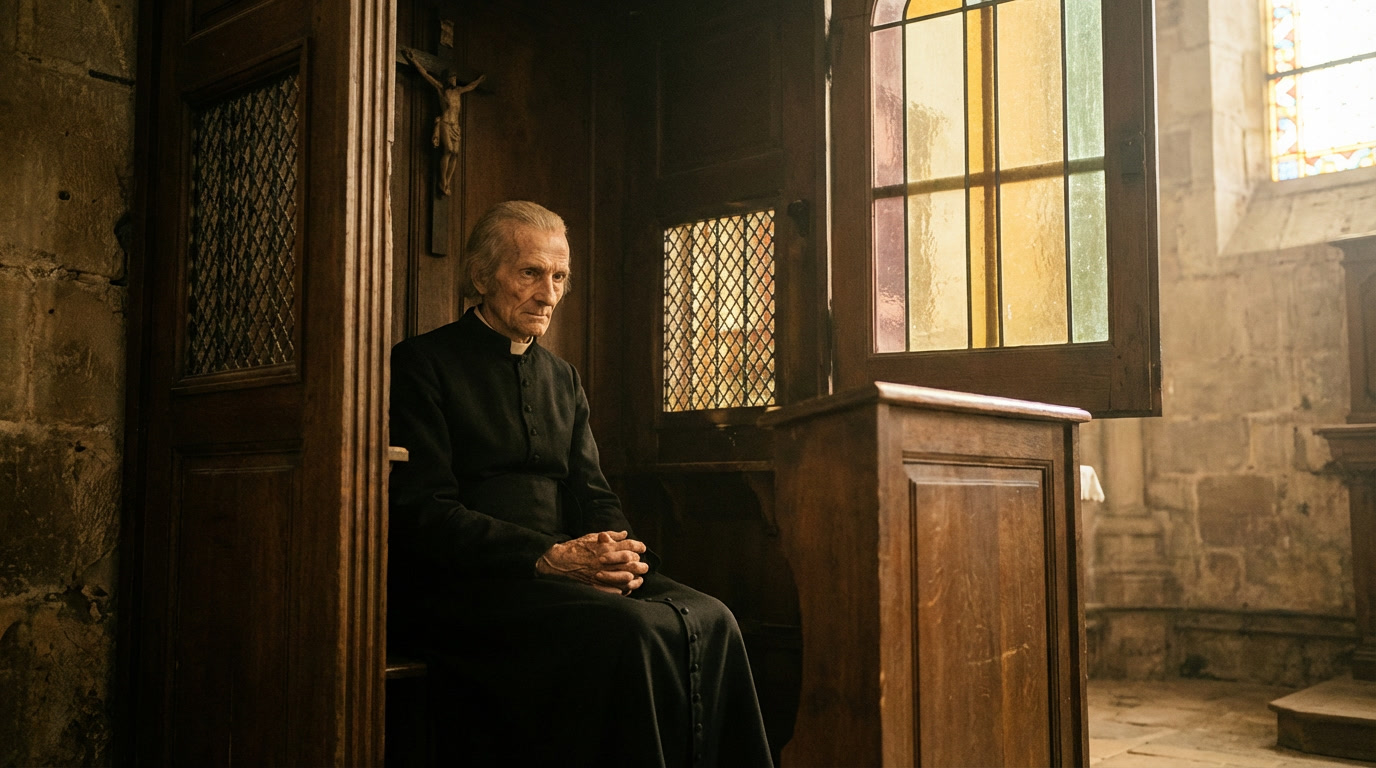
"The priest is not a priest for himself; he does not give himself absolution; he does not administer the sacraments to himself. He is not for himself, he is for you." — Saint Jean-Marie Vianney
When Christ declares himself the Good Shepherd in today's Gospel, he speaks of laying down his life for the sheep. Saint Jean-Marie Vianney understood this call with startling clarity. The Curé d'Ars transformed a dying parish through the radical gift of himself, becoming a living icon of Christ the Good Shepherd.
Born during the French Revolution, Jean-Marie Vianney witnessed the devastating effects of a Church under siege. Priests were exiled or executed. Parishes lay abandoned. The faithful scattered like sheep without a shepherd. When he arrived in the small village of Ars in 1818, fewer than two hundred souls remained, many having drifted from the faith entirely.
The Shepherd Who Knows His Sheep
"I know mine and mine know me," Jesus tells us. Saint Jean-Marie Vianney lived this intimate knowledge of souls. He spent up to eighteen hours daily in the confessional, listening to the deepest struggles of hearts seeking mercy. Pilgrims traveled from across Europe to receive his counsel.
The Curé possessed what many called supernatural insight into souls. Yet this gift flowed not from mysticism alone, but from his fierce commitment to prayer and penance. He ate little, slept less, and gave everything to his flock. His life became a constant laying down for the sheep.
Unlike the hired hand who flees when danger comes, Saint Jean-Marie Vianney confronted the wolves threatening his parish. He preached fearlessly against the taverns that destroyed families. He challenged the culture of Sunday labor that eroded worship. When threatened, he remained steadfast.
Transforming Hearts Through Sacrifice
The Gospel speaks of one flock under one shepherd. Through Saint Jean-Marie Vianney's ministry, Ars became a preview of this unity. Hardened sinners found reconciliation. Lukewarm Catholics rekindled their faith. The village itself was transformed from a place of spiritual desolation to a center of pilgrimage.
This transformation came through the saint's understanding that pastoral care requires total self-giving. He practiced severe penances not from self-hatred, but from love—offering his sufferings for the conversion of souls. His life mirrored Christ's words: "I lay down my life for the sheep."
The Good Shepherd in Daily Life
Saint Jean-Marie Vianney's witness speaks to every Catholic called to pastoral care—parents shepherding their children, teachers guiding students, anyone entrusted with souls. The good shepherd mentality requires genuine concern over mere duty.
The saint's example challenges comfortable Christianity. He reminds us that following the Good Shepherd means becoming like him—willing to sacrifice for others' spiritual welfare. This might mean difficult conversations with loved ones, defending truth when it's unpopular, or simply being present when others suffer.
Consider practicing Lectio Divina with today's Gospel, asking how Christ calls you to shepherd others in your particular circumstances.
Pray in the Spirit of Saint Jean-Marie Vianney
Saint Jean-Marie Vianney, patron of parish priests, teach us the heart of the Good Shepherd. Help us recognize when we act as hired hands, concerned only with ourselves. Show us how to lay down our lives in small, daily sacrifices for those entrusted to our care. Through your intercession, may we become instruments of Christ's pastoral love, drawing scattered souls back to the one flock under the one Shepherd. Amen.
Frequently Asked Questions
What miracles did Saint Jean-Marie Vianney perform?
Saint Jean-Marie Vianney was known for supernatural knowledge of souls in confession, healings through his intercession, and multiplication of food for the poor. His greatest miracle was the transformation of the parish of Ars from spiritual desolation to vibrant faith.
Why is Saint Jean-Marie Vianney the patron saint of parish priests?
Pope Pius X declared Saint Jean-Marie Vianney patron of parish priests in 1929 because of his extraordinary dedication to pastoral care, his long hours in confession, and his complete self-sacrifice for his flock—embodying the ideal of priestly ministry.