
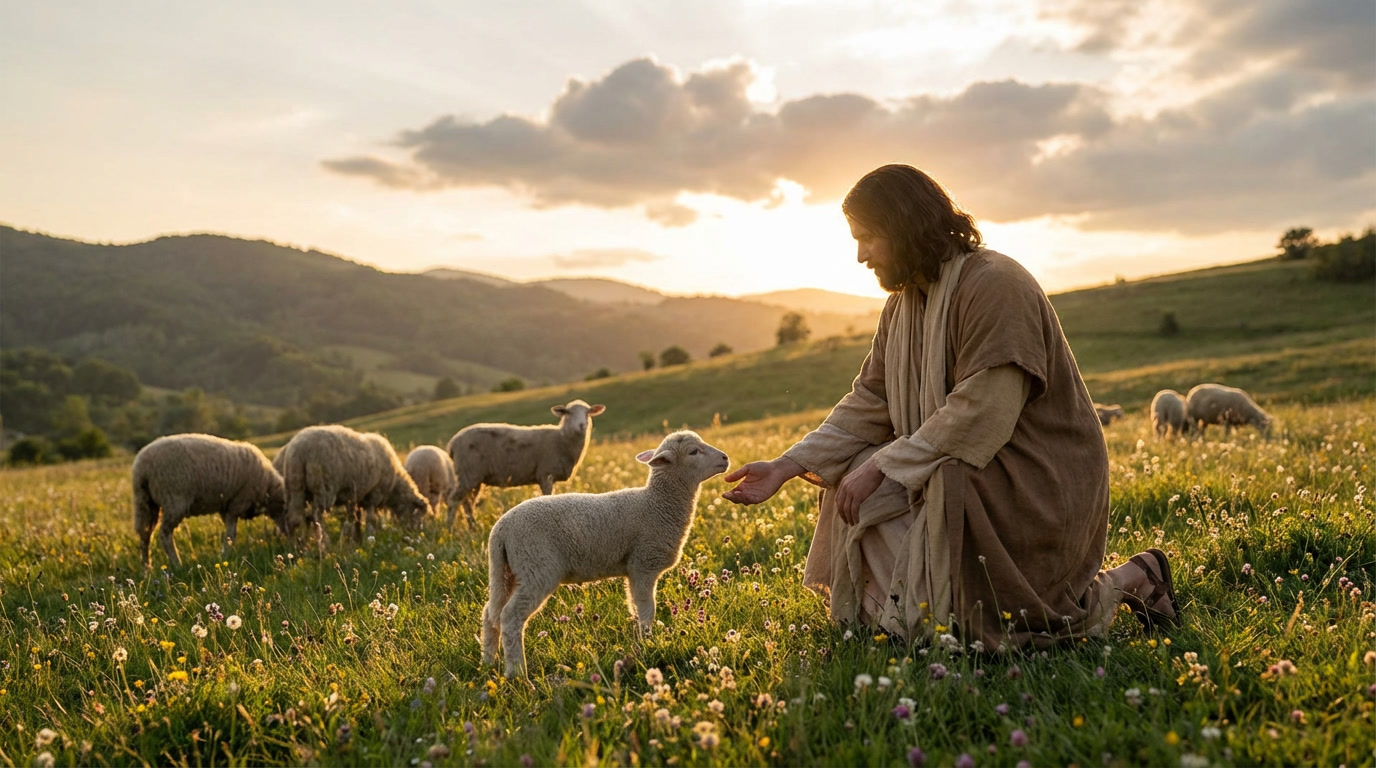
"I am the good shepherd. A good shepherd lays down his life for the sheep. A hired man, who is not a shepherd and whose sheep are not his own, sees a wolf coming and leaves the sheep and runs away, and the wolf catches and scatters them. This is because he works for pay and has no concern for the sheep. I am the good shepherd, and I know mine and mine know me, just as the Father knows me and I know the Father; and I will lay down my life for the sheep." - John 10:11-18
In this profound passage from John's Gospel, Christ reveals the depth of His love through the image of the good shepherd. The shepherd metaphor would have resonated deeply with His first-century audience, who understood the daily risks shepherds faced protecting their flocks. Jesus transforms this familiar image into a window through which we glimpse the heart of God.
The Shepherd's Ultimate Sacrifice
The good shepherd lays down his life for the sheep. This statement cuts through every shallow understanding of love. Christ speaks not of mere affection or sentiment, but of total self-gift. The hired hand flees when danger approaches because his commitment extends only to his wage. The true shepherd remains because the sheep belong to him.
This belonging flows both ways. The sheep are his, and he is theirs. Saint John Chrysostom reflected that the shepherd's love creates an unbreakable bond. The sheep follow not from compulsion but from recognition. They know his voice because he has proven himself trustworthy through countless acts of care.
The Intimacy of Being Known
"I know mine and mine know me." Knowledge here transcends intellectual understanding. The Greek word suggests intimate, experiential knowledge—the kind that develops through relationship. Jesus knows each sheep by name, temperament, and need. This knowledge mirrors the relationship between Father and Son, drawing us into the very life of the Trinity.
Saint Teresa of Avila often wrote about this divine knowing. God sees beyond our exterior struggles to the heart He formed. When we feel lost in the crowd of humanity, Christ's words remind us that we are individually cherished, personally known, and specifically loved.
This intimate knowledge becomes the foundation for prayer. Through lectio divina, we can slowly absorb these words, allowing them to transform our understanding of how God sees us.
One Flock, One Shepherd
Christ speaks of "other sheep that do not belong to this fold." The good shepherd's mission extends beyond any single group or nation. His love knows no boundaries of race, culture, or background. The vision is expansive: one flock under one shepherd.
This unity emerges not from human effort but from the shepherd's call. The sheep hear his voice across every division. They come together because they recognize the same loving authority. Saint Augustine noted that this gathering continues throughout history as people respond to Christ's invitation.
The Church lives this reality. Despite differences in language, custom, and circumstance, Catholics worldwide share the same shepherd. This connection runs deeper than mere organization—it flows from shared recognition of Christ's voice.
Power Over Life and Death
"I have power to lay down my life, and power to take it up again." These words reveal the voluntary nature of Christ's sacrifice. No one forces the good shepherd to die for his sheep. He chooses this path from love, not compulsion.
This power—to give life and receive it back—belongs to God alone. Christ's death and resurrection demonstrate his divine authority over the fundamental realities of human existence. Death, humanity's ultimate enemy, becomes the means of our salvation.
The Father loves the Son precisely because of this willing sacrifice. Love recognizes and delights in love. The Trinity's perfect communion provides the pattern for the shepherd's relationship with his flock.
Pray With This Reading
This Gospel invites quiet contemplation of Christ's tender care. Consider praying with Ignatian contemplation, placing yourself among the sheep in the pasture. Notice how the shepherd looks at you, speaks to you, protects you. Allow this experience of being known and loved to deepen your trust in God's providence.
What does it mean that Jesus is the good shepherd?
Jesus as the good shepherd means He knows each person intimately, sacrifices Himself for their wellbeing, and provides protection and guidance. Unlike hired hands who abandon sheep in danger, Christ remains faithful even unto death. His shepherding flows from love, not duty or wages.
How do sheep know the shepherd's voice in John 10?
The sheep recognize the shepherd's voice through relationship and experience. They have learned to trust him through his consistent care and protection. This knowledge develops over time as the shepherd proves himself reliable. In our spiritual lives, we learn to recognize Christ's voice through prayer, Scripture, and the Church's teaching.
Why does Jesus mention other sheep not of this fold?
Jesus refers to all people who will come to faith in Him, not just those from Jewish backgrounds. The good shepherd's mission extends to every nation and culture. His vision encompasses one unified flock under His care, gathered from all corners of the earth through the power of His voice and love.