
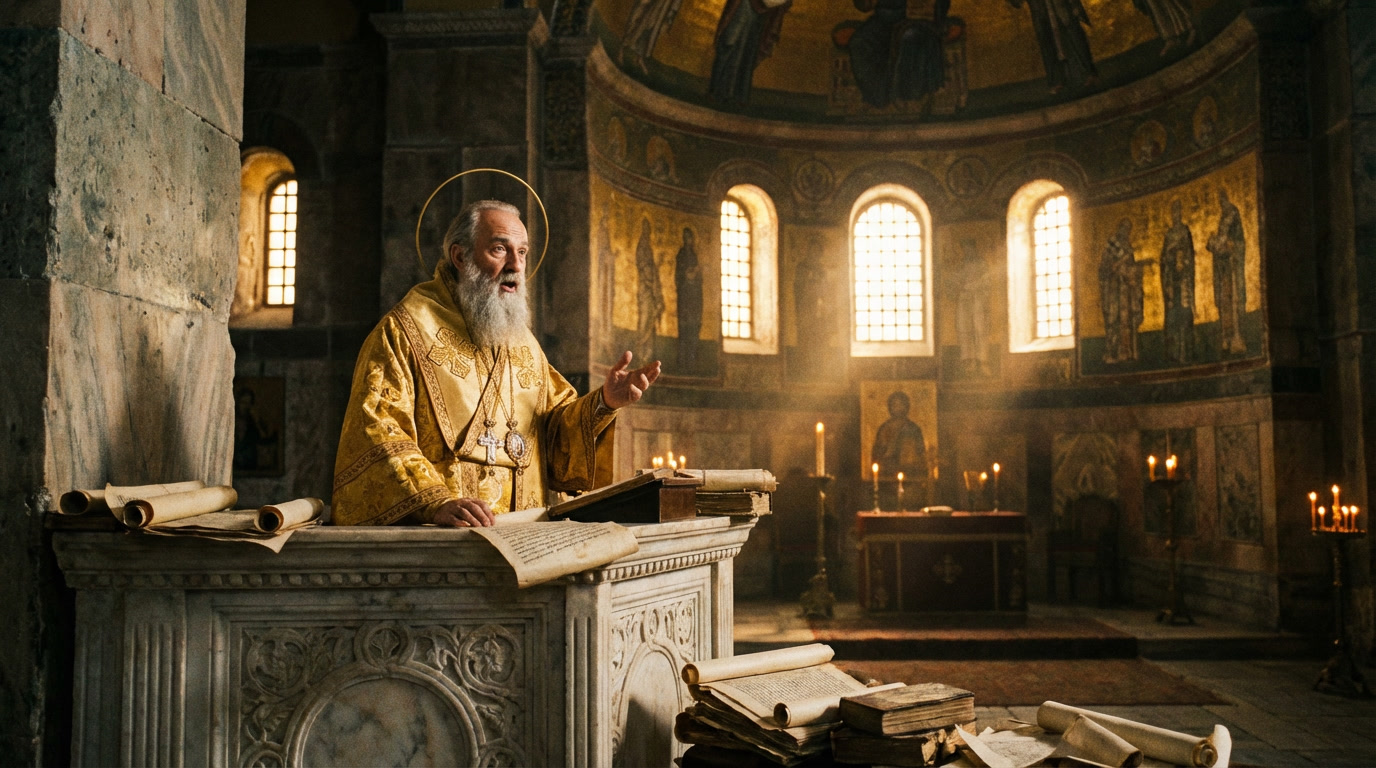
"The bread was broken and immediately they recognized Him. So it is with us when we approach the Scriptures humbly. Christ is made known to us in the breaking open of the Word."— Saint John Chrysostom
When the disciples walked toward Emmaus, their hearts burned as Jesus explained the Scriptures to them. Saint John Chrysostom understood this sacred moment deeply. Known as the "Golden-Mouthed" preacher, this fourth-century bishop devoted his life to breaking open God's Word, helping countless souls recognize Christ walking alongside them in daily life.
John served as Archbishop of Constantinople from 398 to 407 AD. His powerful homilies drew crowds who hung on every word. Yet his fearless preaching against corruption among the wealthy and clergy ultimately led to his exile. Even in suffering, John continued to write, teaching that Christ meets us most powerfully through Scripture and the Eucharist.
Recognizing Christ in the Breaking of the Word
John Chrysostom preached that Scripture reading without prayer leaves the heart cold. The Emmaus disciples walked seven miles discussing recent events, yet remained blind to Jesus beside them. Only when Christ "interpreted to them what referred to him in all the Scriptures" did understanding dawn.
John taught his congregations to approach the Bible expectantly. Christ speaks through every verse when hearts remain open. The golden-mouthed saint insisted that casual reading profits little. Scripture demands reverence, attention, and the Holy Spirit's guidance.
The Eucharist Reveals the Hidden Christ
"In the breaking of bread their eyes were opened." John Chrysostom saw profound meaning in this moment. The disciples had walked with Jesus for hours yet failed to recognize Him. One simple gesture at table changed everything.
For John, every Mass recreates this Emmaus revelation. Christ conceals Himself under bread and wine, then makes Himself known to those who approach with faith. The saint taught that the Eucharist transforms ordinary meals into encounters with the risen Lord. Even family dinners become opportunities to recognize Christ's presence.
Those seeking deeper prayer might explore Lectio Divina, the ancient practice of slowly reading Scripture that John Chrysostom championed throughout his ministry.
Hearts That Burn for Truth
John Chrysostom understood why the disciples' hearts burned on the road. Truth ignites the soul when properly received. His own preaching set Constantinople ablaze with spiritual fervor, though it also sparked opposition from those who preferred comfortable lies to challenging truth.
The saint's exile demonstrates that hearts burning for Christ often face earthly persecution. Yet John continued teaching through letters, knowing that God's Word accomplishes its purpose regardless of circumstances. His example encourages modern disciples to speak truth boldly, trusting divine protection over human approval.
Pray in the Spirit of Saint John Chrysostom
Follow John Chrysostom's practice of prayerful Scripture reading. Before opening the Bible, ask Christ to walk beside you as He did with the Emmaus disciples. Read slowly, allowing each verse to penetrate the heart. Notice which passages make your spirit burn with recognition. Close with gratitude for Christ's presence in the Word.
When attending Mass, remember John's teaching about the Eucharist revealing the hidden Christ. Approach communion expecting to encounter the same Jesus who broke bread at Emmaus. Let this recognition transform ordinary moments throughout the week into opportunities for deeper intimacy with the Lord.
Frequently Asked Questions
Why is Saint John Chrysostom called the Golden-Mouthed?
Saint John Chrysostom received the title "Chrysostom" (meaning "golden-mouthed" in Greek) because of his eloquent preaching and profound biblical commentaries. His sermons were so compelling and spiritually rich that people traveled great distances to hear him speak.
What can we learn from Saint John Chrysostom about reading Scripture?
Saint John Chrysostom taught that Scripture reading requires prayer, reverence, and expectation. He emphasized that Christ reveals Himself through the Word just as He did to the Emmaus disciples, but only to hearts prepared through humble prayer and careful attention to the text.