
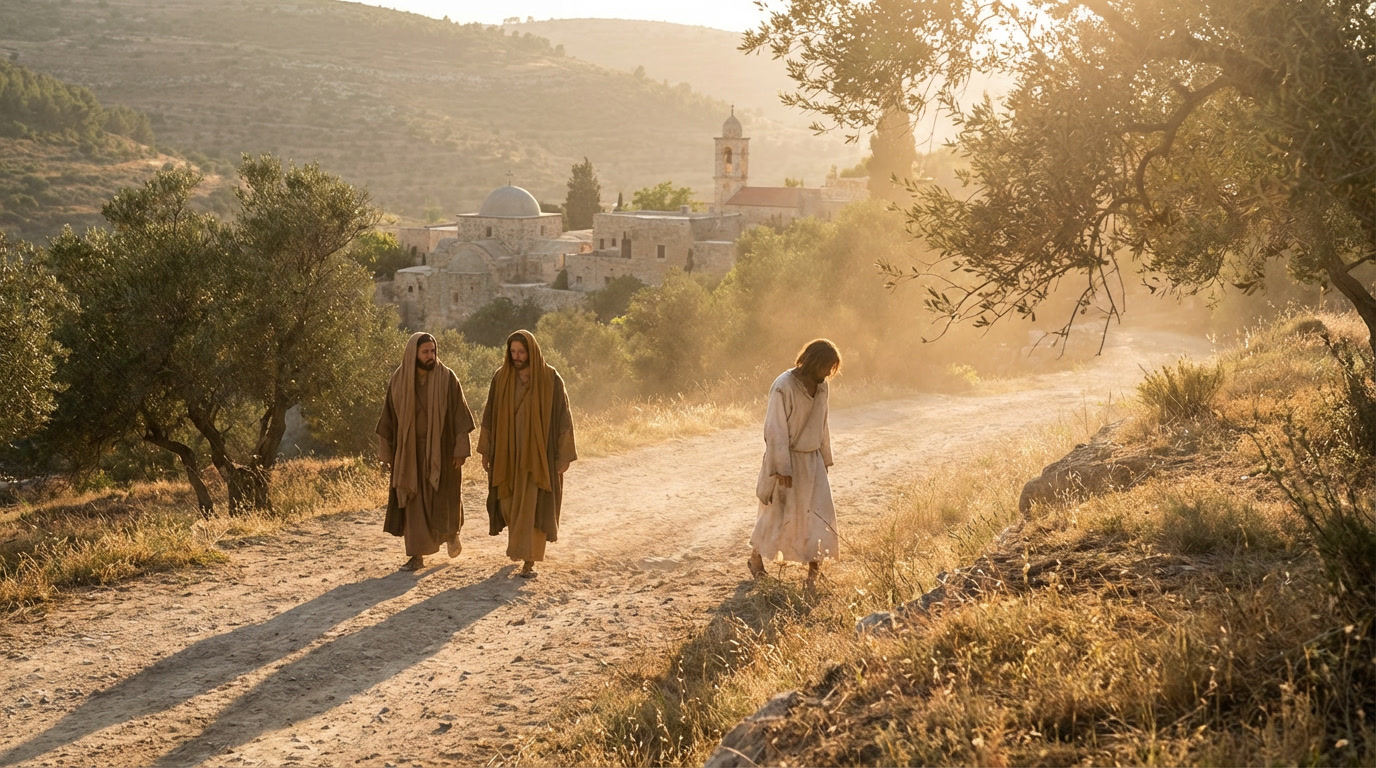
That very day, the first day of the week, two of Jesus' disciples were going to a village seven miles from Jerusalem called Emmaus, and they were conversing about all the things that had occurred. And it happened that while they were conversing and debating, Jesus himself drew near and walked with them, but their eyes were prevented from recognizing him.— Luke 24:13-16
The road to Emmaus reveals a profound truth about the risen Christ: He walks alongside us even when we cannot see Him. These two disciples, hearts heavy with disappointment and confusion, encounter Jesus without recognizing His presence. Their story becomes our story—a journey from spiritual blindness to clear sight, from despair to resurrection hope.
Walking in Disappointment and Doubt
The disciples leave Jerusalem carrying the weight of shattered expectations. They had hoped Jesus would redeem Israel, yet He died on a cross. Sound familiar? Life rarely unfolds as we envision. Dreams collapse. Prayers seem unanswered. Faith wavers.
Notice how Jesus approaches them in their confusion rather than their certainty. He meets them where they are—walking away from Jerusalem, walking away from the scene of apparent failure. Christ does not wait for us to have perfect faith or clear understanding. He joins us in our questions, our doubts, our disappointments.
The disciples speak freely about their confusion, and Jesus listens. Sometimes the most sacred conversations begin not with answers but with honest questions shared in trusted company.
Scripture Opens Hearts and Minds
Jesus begins to reveal Himself through the Scriptures, explaining how the prophets foretold His suffering and glory. Their hearts burn within them as He opens the Word. This encounter demonstrates the power of Lectio Divina—the slow, prayerful reading of Scripture that allows God's Word to transform us from within.
The risen Christ continues to reveal Himself through Scripture today. When we approach the Bible not merely as historical text but as living Word, we create space for encounter. The same fire that burned in the disciples' hearts can ignite in ours when we allow Scripture to interpret our lives rather than merely analyzing its words.
Notice that understanding comes gradually. Jesus does not overwhelm them with revelation but unfolds truth step by step, passage by passage. God's self-revelation often works this way—not in blinding flashes but in gentle illumination that respects our human capacity to receive divine truth.
Recognition in the Breaking of Bread
The climactic moment arrives at table. As Jesus takes bread, blesses it, breaks it, and gives it to them, their eyes open. They recognize Him in the Eucharistic gesture—the same movements He made at the Last Supper, the same actions that define every Mass.
This recognition pattern reveals something essential about encountering Christ. He becomes known not only through Scripture but through sacramental action, through the shared meal, through community gathered in His name. The Eucharist remains the privileged place where the risen Christ reveals Himself to His Church.
The moment they recognize Him, He vanishes from their sight. Yet this disappearance does not devastate them. They have learned to see with new eyes. They understand that Christ's presence does not depend on physical visibility. He lives among them—among us—in Word and sacrament, in the gathered community, in the breaking of bread.
From Recognition to Mission
Recognition compels action. The disciples immediately return to Jerusalem—not to resume their former lives but to bear witness. They run back to share what they have seen and heard. Encounter with the risen Christ always leads to mission.
Their testimony contributes to the larger story of resurrection faith. They add their voices to the women at the tomb, to Peter's experience, to the growing chorus of resurrection witnesses. Personal encounter with Christ finds its completion in communal witness and shared faith.
The road to Emmaus becomes a template for Christian discipleship: confusion transformed by Scripture, hearts opened through community, Christ recognized in the breaking of bread, encounter leading to mission. This pattern repeats in every age, in every life that genuinely seeks the risen Christ.
Pray With This Reading
The Emmaus story invites contemplative prayer that places us on the road with these disciples. Consider using Ignatian Contemplation to enter this scene imaginatively. Picture yourself walking this dusty road, feeling the disciples' confusion, experiencing Jesus drawing near.
Ask yourself: Where in your life might Christ be walking beside you unrecognized? What disappointments or confusion cloud your spiritual vision? How does Scripture burn in your heart when you approach it prayerfully? Where do you most readily recognize Christ's presence?
Frequently Asked Questions
Why didn't the disciples recognize Jesus on the road to Emmaus?
Luke states their eyes were "prevented" from recognizing Him, suggesting divine purpose in their temporary blindness. This allowed Jesus to teach them gradually through Scripture before revealing Himself sacramentally. Sometimes we need preparation before we can receive full revelation.
What does it mean that their hearts burned within them?
The burning hearts represent the interior stirring that occurs when Scripture is opened by Christ Himself. This fire signifies recognition dawning gradually—not full understanding yet, but the warmth of approaching truth. Many saints describe similar experiences during prayer with Scripture.
How can we recognize Jesus today like the Emmaus disciples did?
Christ reveals Himself today primarily through Scripture prayerfully read, the Eucharist worthily received, and genuine Christian community. Like the disciples, we recognize Him in the "breaking of bread"—both liturgical celebration and shared life with others.