
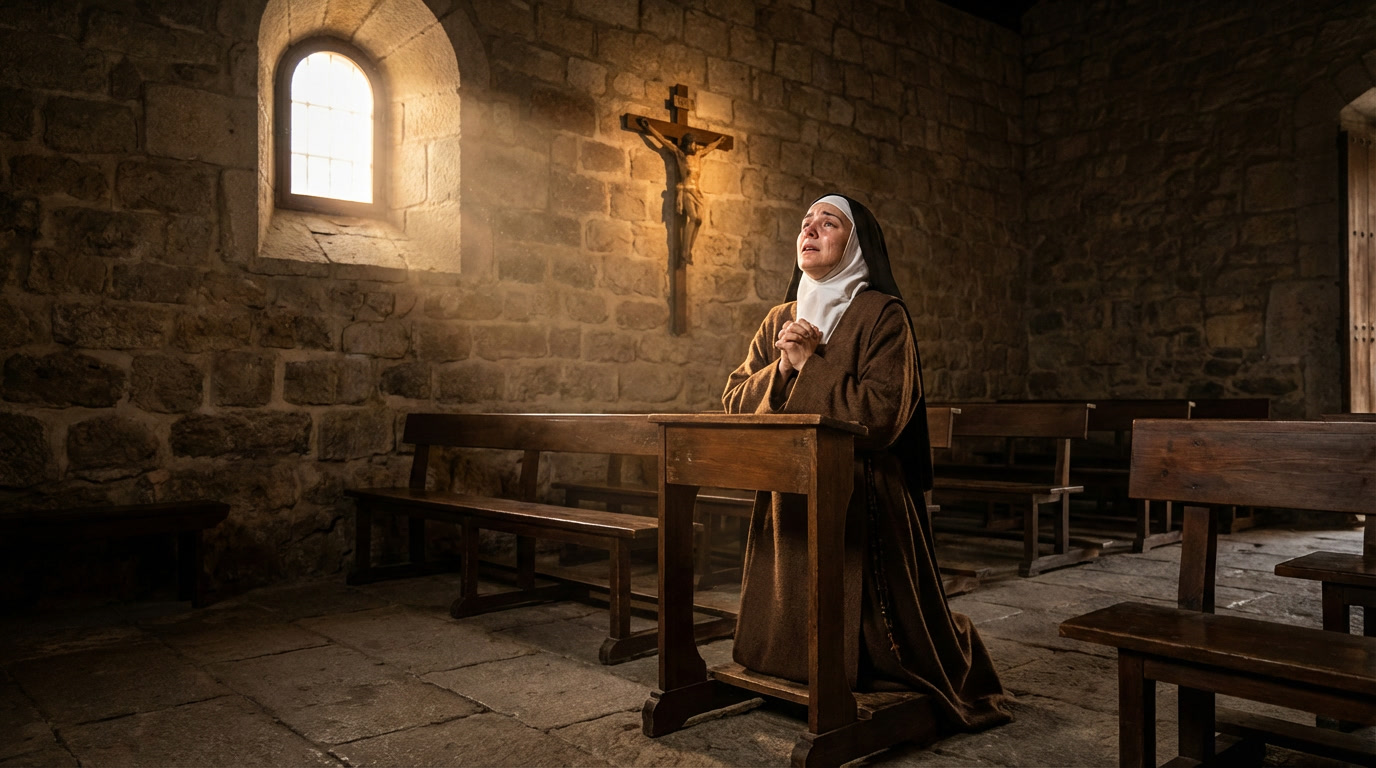
"Let nothing disturb you. All things pass. God does not change. Patience obtains all. Whoever has God lacks nothing. God alone suffices."
When Nicodemus approached Jesus under cover of darkness, he sought understanding of divine mysteries that defied human reason. Saint Teresa of Avila would recognize this seeker's struggle. Her own journey from comfortable religious observance to radical spiritual transformation mirrors the profound rebirth Christ describes in today's Gospel.
Teresa de Cepeda y Ahumada lived in sixteenth-century Spain, entering the Carmelite convent of the Incarnation at twenty. For nearly twenty years, she remained in what she called a "tepid" spiritual state. Prayer felt burdensome. Divine union seemed impossible.
Then came her conversion at thirty-nine. Reading Augustine's Confessions, Teresa encountered the same truth Nicodemus would learn: spiritual rebirth requires complete surrender to God's transforming grace.
When the Spirit Moves Like Wind
Christ tells Nicodemus that the Spirit "blows where it wills." Teresa experienced this unpredictable divine movement through mystical graces that came without warning. Ecstasies, visions, and supernatural prayer invaded her ordinary religious routine.
Like Nicodemus questioning how an old man can be born again, Teresa's fellow nuns doubted these extraordinary experiences. Some suspected deception. Others feared demonic influence. Teresa herself wrestled with uncertainty about these divine visitations.
Her spiritual directors helped her discern authentic movements of the Holy Spirit. Through this process, Teresa learned that being born from above means releasing control over our spiritual progress. The wind of the Spirit cannot be captured or commanded.
From Flesh to Spirit in Daily Life
Jesus distinguishes between what is born of flesh and what is born of Spirit. Teresa's reform of the Carmelite order demonstrates this distinction. She established the Discalced Carmelites, communities dedicated to prayer, poverty, and contemplative life.
This wasn't mere institutional change. Teresa understood that spiritual renewal requires dying to worldly attachments. Her convents emphasized simplicity over comfort, solitude over social connection, interior prayer over external activity.
Modern disciples face the same choice between flesh and Spirit. Career advancement, material security, and social approval represent "flesh" when they become ultimate concerns. Saint Teresa of Avila shows how surrendering these attachments opens space for divine transformation.
The Night Journey to Light
Nicodemus comes to Jesus "at night," perhaps symbolizing the darkness of spiritual confusion. Teresa's autobiography describes similar darkness during her early religious life. Distractions filled her prayer. Dryness replaced devotion.
Yet this darkness preceded dawn. Teresa's mystical experiences emerged from years of seemingly fruitless prayer. She learned that God works even when divine presence feels absent. Contemplative prayer in the tradition of Saint John of the Cross helps navigate these dark nights of the soul.
Pray in the Spirit of Saint Teresa
Teresa teaches that prayer is "nothing else than a close sharing between friends." Begin with simple conversation with Christ. Share doubts like Nicodemus. Express confusion about spiritual matters.
Set aside time for mental prayer daily, even when it feels difficult. Teresa spent hours in the chapel, often struggling with distractions. Persistence matters more than perfection.
Ask for the grace of spiritual rebirth. Teresa's transformation came through divine gift, not human effort. Trust that the Spirit moves according to divine timing and wisdom.
Frequently Asked Questions
What are Saint Teresa of Avila's four stages of prayer?
Teresa describes four degrees of prayer in her autobiography: vocal prayer and meditation (drawing water from a well), prayer of quiet (using a waterwheel), prayer of union (irrigation channels), and mystical marriage (gentle rain). Each stage represents deeper surrender to divine grace.
How did Saint Teresa of Avila reform the Carmelite order?
Teresa established the Discalced Carmelites in 1562, returning to the order's original rule of poverty, enclosure, and contemplation. She founded seventeen convents across Spain, emphasizing small communities dedicated to mental prayer and penance rather than external works.