
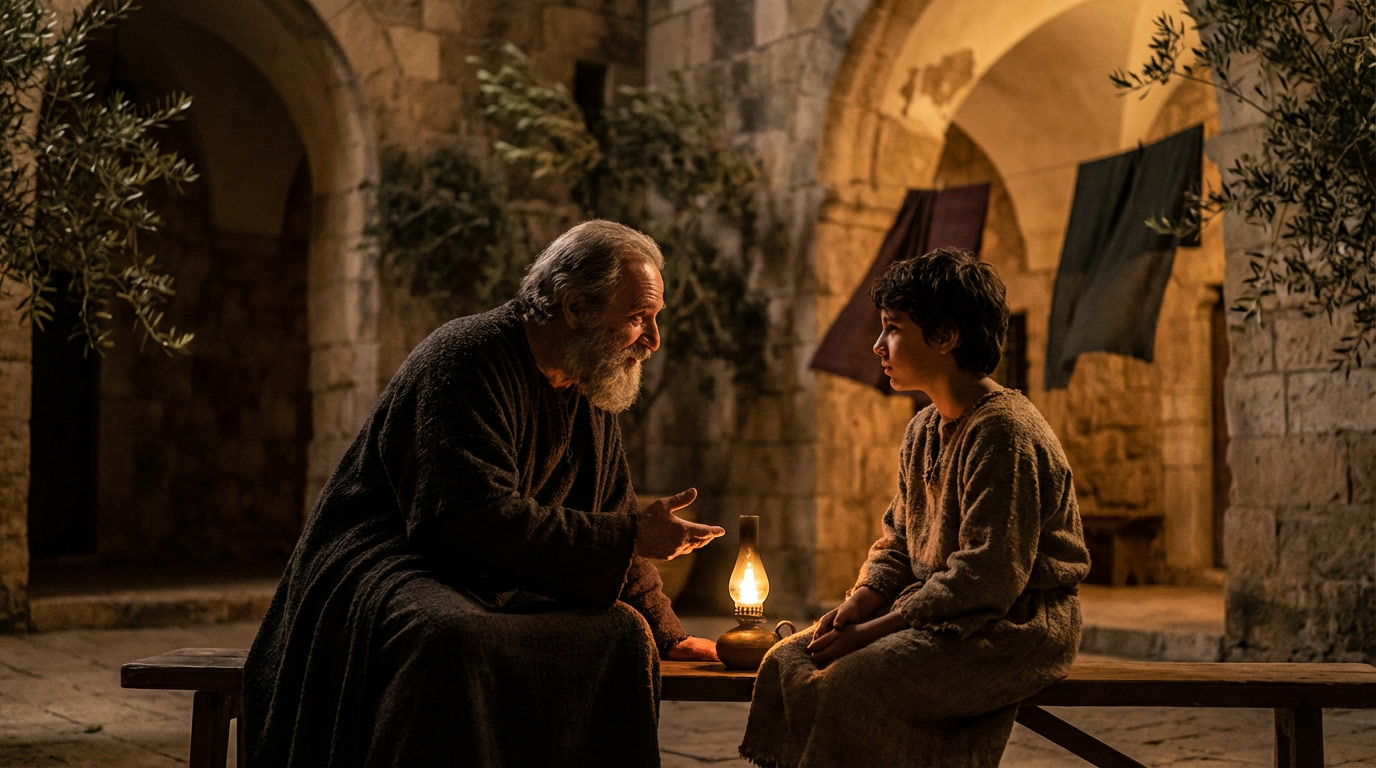
There was a Pharisee named Nicodemus, a ruler of the Jews. He came to Jesus at night and said to him, "Rabbi, we know that you are a teacher who has come from God, for no one can do these signs that you are doing unless God is with him." Jesus answered and said to him, "Amen, amen, I say to you, unless one is born from above, he cannot see the Kingdom of God." — John 3:1-8
Under cover of darkness, Nicodemus seeks the light. This Pharisee and ruler approaches Jesus with questions that echo in every seeking heart. Christ's response about being born from above challenges our deepest assumptions about spiritual life and transformation.
The Courage to Seek in Darkness
Nicodemus comes at night, perhaps fearing the judgment of his peers. Yet his darkness becomes the setting for profound illumination. The night conceals his vulnerability while revealing his hunger for truth.
Saint John Chrysostom notes that Nicodemus possessed intellectual humility despite his religious authority. He recognized divine power in Jesus' signs and sought understanding rather than defending his position. This posture of openness creates space for Christ's radical teaching.
The darkness that shrouds Nicodemus mirrors the spiritual condition Jesus addresses. Before rebirth comes recognition of our need. The learned teacher must become a student.
Born from Above: Beyond Human Understanding
"Unless one is born from above, he cannot see the Kingdom of God." Jesus speaks of a birth that transcends biological processes. The Greek word "anothen" carries dual meaning—from above and anew—suggesting both divine origin and complete renewal.
Nicodemus stumbles over the literal interpretation, asking how one can reenter the womb. His confusion reflects our tendency to apply earthly logic to heavenly mysteries. Christ patiently clarifies: this birth involves water and Spirit.
The Catechism teaches that baptism accomplishes this spiritual birth, making us children of God and members of Christ's Body. What flesh cannot achieve, the Spirit accomplishes through divine grace working in the sacraments.
The Wind of the Spirit
Jesus compares those born of the Spirit to wind—mysterious, powerful, beyond human control. The Spirit's movement defies prediction or manipulation. Divine life operates according to God's sovereignty, not our understanding.
This comparison offers both comfort and challenge. The Spirit's work exceeds our comprehension but never our experience. Like wind, the Spirit's presence becomes known through effects rather than direct observation.
Saint Thérèse of Lisieux understood this mystery, surrendering to divine action rather than analyzing it. Her Little Way embraces spiritual childhood, trusting the Spirit's guidance without demanding explanations.
Living the Transformed Life
Nicodemus represents every believer encountering Christ's transformative power. His nighttime visit becomes a journey from darkness to light, from confusion to faith. Tradition suggests he later defended Jesus before the Sanhedrin and assisted in His burial.
Being born from above transforms how Christians see reality. The Kingdom of God becomes visible to those with Spirit-illumined eyes. Former priorities fade as divine life takes root and grows.
This rebirth continues throughout the Christian journey. Each day offers fresh opportunities for the Spirit to renew and transform hearts willing to receive divine life.
Pray With This Reading
Consider approaching this passage through Lectio Divina, allowing Christ's words about spiritual birth to penetrate deeply. Read slowly, noticing where the Spirit draws your attention. Rest in the mystery of divine transformation working within you.
Frequently Asked Questions
What does it mean to be born from above?
Being born from above refers to spiritual regeneration through baptism and the Holy Spirit's work. This divine birth makes believers children of God and members of Christ's Body, transforming their fundamental nature and relationship with God.
Why did Nicodemus come to Jesus at night?
Nicodemus likely came at night to avoid public scrutiny from fellow Pharisees who opposed Jesus. The darkness also symbolizes his spiritual condition before encountering Christ's light and truth.
How does the Spirit work like wind in our lives?
Like wind, the Spirit's movement is mysterious yet real, invisible yet powerful. The Spirit works according to divine will rather than human understanding, producing visible fruits of transformation in those born from above.