
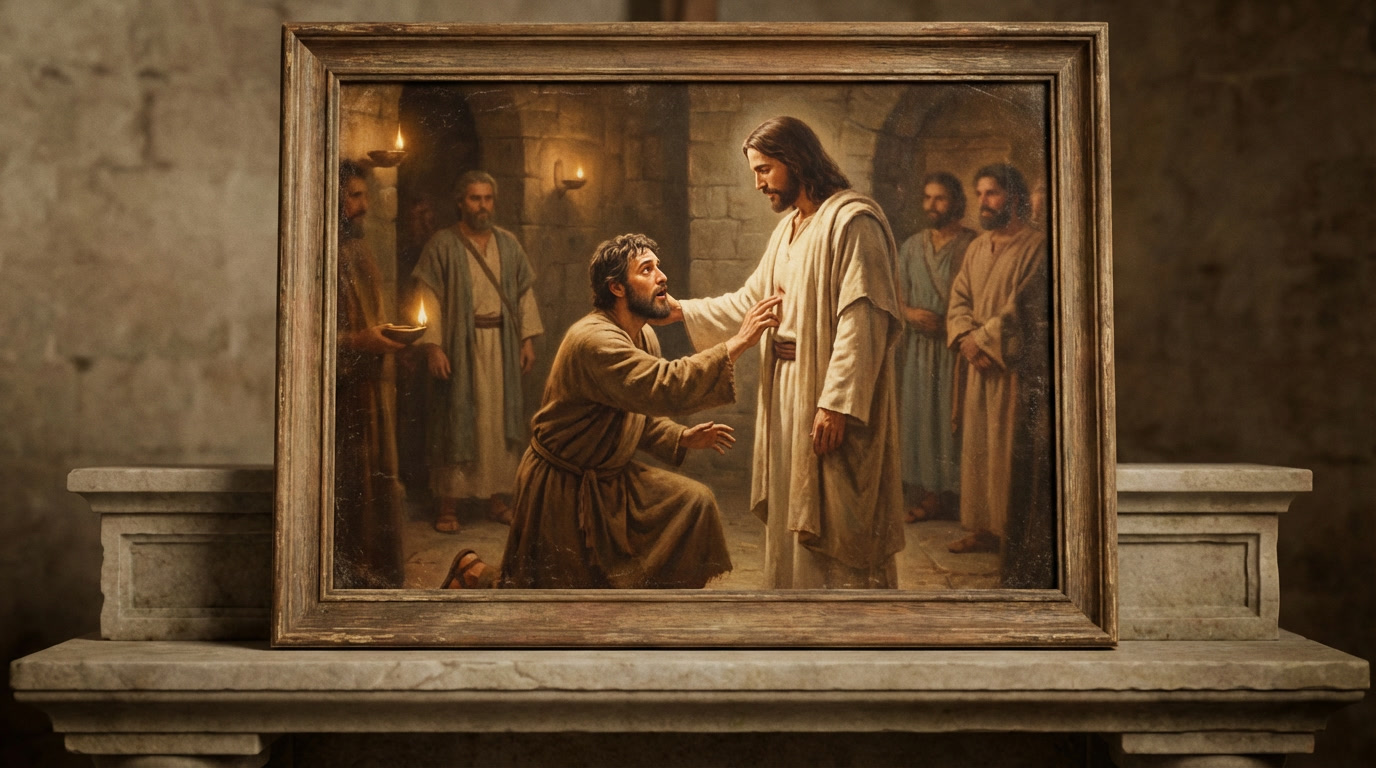
"My Lord and my God!" - Saint Thomas the Apostle, John 20:28
Saint Thomas the Apostle understood the weight of doubt that presses against faith. His honest struggle in today's Gospel speaks to every soul wrestling with belief, showing how authentic questioning can deepen rather than destroy our relationship with Christ.
The Apostle Who Dared to Doubt
Thomas, called Didymus or "the Twin," walked among the Twelve as one willing to voice what others kept silent. Scripture reveals him as a man of courage - when Jesus announced His intention to return to dangerous Judea, Thomas declared, "Let us also go to die with him" (John 11:16). His doubt after the Resurrection arose not from faithlessness but from the very human need to touch the divine.
Early Christian tradition tells us Thomas carried the Gospel to India, where he founded Christian communities that endure today. His missionary zeal grew from the depths of his encounter with the risen Lord, proving that tested faith becomes unshakeable faith.
From Skepticism to Surrender
Thomas teaches us that doubt need not be faith's enemy. His insistence on seeing and touching Christ's wounds reveals the profound human longing for tangible proof of God's love. When Jesus appeared and invited Thomas to examine His hands and side, the apostle's response transcended mere acknowledgment - "My Lord and my God" became one of Scripture's most complete confessions of faith.
This transformation mirrors our own spiritual journey. Moments of questioning, when brought honestly before God, become opportunities for deeper encounter. Thomas shows us that Christ meets us in our uncertainty, not with condemnation but with patient invitation to "stop doubting and believe."
Living Faith in an Age of Questions
The world presents countless reasons to doubt God's presence and power. Thomas's example offers a path through these challenges. Rather than dismissing questions or pretending certainty we do not possess, we can bring our doubts directly to Christ through prayer and Scripture.
The practice of Lectio Divina particularly suits Thomas's approach - slowly reading, meditating, and responding to God's word allows space for both questioning and revelation. Like Thomas, we need time to process what God reveals before we can fully embrace it.
Pray in the Spirit of Saint Thomas
Saint Thomas invites us to honest prayer that acknowledges both our faith and our struggles. Begin by bringing your questions to God without shame. Ask for the grace to recognize Christ's presence even when circumstances make belief difficult. Pray for the courage Thomas showed in voicing doubt, trusting that God desires authentic relationship over surface piety.
End each prayer session by repeating Thomas's great confession: "My Lord and my God." Let these words become your anchor when doubt storms rage, remembering that the apostle who questioned most deeply also believed most completely.
Frequently Asked Questions
Why is Saint Thomas called "Doubting Thomas"?
Saint Thomas earned this title from his response to news of Christ's Resurrection in John 20:25, when he declared he would not believe unless he could see and touch Jesus's wounds. However, this nickname overlooks his courageous faith and eventual profound confession of belief.
Where did Saint Thomas preach after the Resurrection?
According to ancient Christian tradition, Saint Thomas traveled to India where he established Christian communities. The Saint Thomas Christians of Kerala, India, trace their origins to his missionary work. He is believed to have been martyred there around 72 AD.