
"The power of God is such that it can turn a publicist into an evangelist, a persecutor into an apostle, a tax collector into a disciple, a robber into a confessor."
The empty tomb that greeted Mary Magdalene and the apostles on Easter morning speaks not only of Christ's victory over death, but of the radical transformation possible for every human soul. Saint Mary of Egypt understood this mystery intimately, having experienced her own passage from spiritual darkness to the light of resurrection grace.
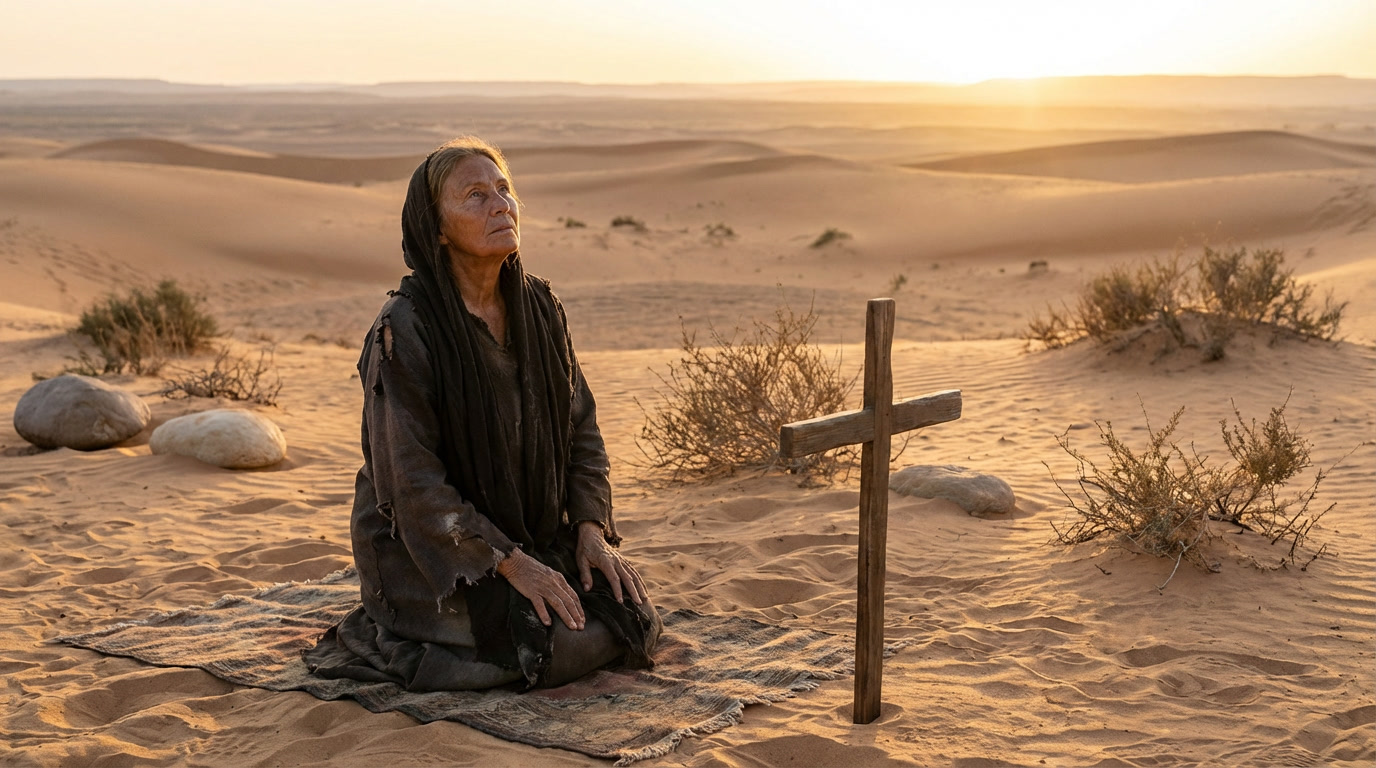
Mary of Egypt lived in fifth-century Alexandria, where she spent seventeen years in grave sin before a pilgrimage to Jerusalem changed everything. Unable to enter the Church of the Holy Sepulchre due to an invisible force, she experienced a profound conversion that led her to spend forty-seven years in the desert, sustained by divine grace alone.
The Stone Rolled Away: Breaking Through Our Barriers
Just as the stone was removed from Christ's tomb, Mary of Egypt witnessed the removal of every barrier between herself and God. Her inability to enter the holy church became the very moment of her liberation. The Easter Gospel shows us that God's power breaks through our most entrenched obstacles.
The burial cloths left behind in the tomb mirror Mary's abandonment of her former life. She left behind not just her sinful past, but every attachment that kept her from Christ. The resurrection faith demands this same radical letting go.
Running Toward the Truth
Peter and John's hurried journey to the tomb reflects the urgency Mary of Egypt felt after her conversion. She fled immediately to the desert, understanding that spiritual transformation requires decisive action. The saints teach us that Easter conversion cannot be postponed or half-hearted.
Like the beloved disciple who "saw and believed," Mary of Egypt's desert years were filled with contemplative prayer and direct encounter with the living God. Her mystical prayer life demonstrates how the resurrection opens new depths of communion with Christ.
Living the Resurrection Daily
Mary of Egypt's forty-seven years in the desert were not an escape from the world but a profound engagement with resurrection life. Her fasting, prayer, and solitude prepared her to become a spiritual mother to countless souls seeking conversion.
The Easter mystery invites us to examine what stones need rolling away in our own lives. Through practices like Lectio Divina, we can discover the burial cloths we need to leave behind and the new life Christ offers.
Pray in the Spirit of Saint Mary of Egypt
Saint Mary of Egypt, you who experienced the power of Christ's resurrection to transform even the most hardened heart, intercede for us. Help us to run toward the empty tomb with the same urgency as the apostles, ready to abandon whatever keeps us from complete surrender to God. May your example inspire us to embrace the radical conversion that Easter faith demands, trusting in God's mercy to roll away every stone that blocks our path to holiness. Amen.
Frequently Asked Questions
What is Saint Mary of Egypt known for?
Saint Mary of Egypt is known for her dramatic conversion from a life of sin to becoming one of the greatest desert mothers. After being miraculously prevented from entering a church, she spent 47 years in the Egyptian desert in prayer and penance, becoming a model of repentance and mystical union with God.
When is Saint Mary of Egypt's feast day celebrated?
Saint Mary of Egypt's feast day is celebrated on April 1st in the Roman Catholic Church and on the Fifth Sunday of Lent in the Eastern Orthodox tradition, where she is particularly venerated during the Lenten season as an example of true repentance.