
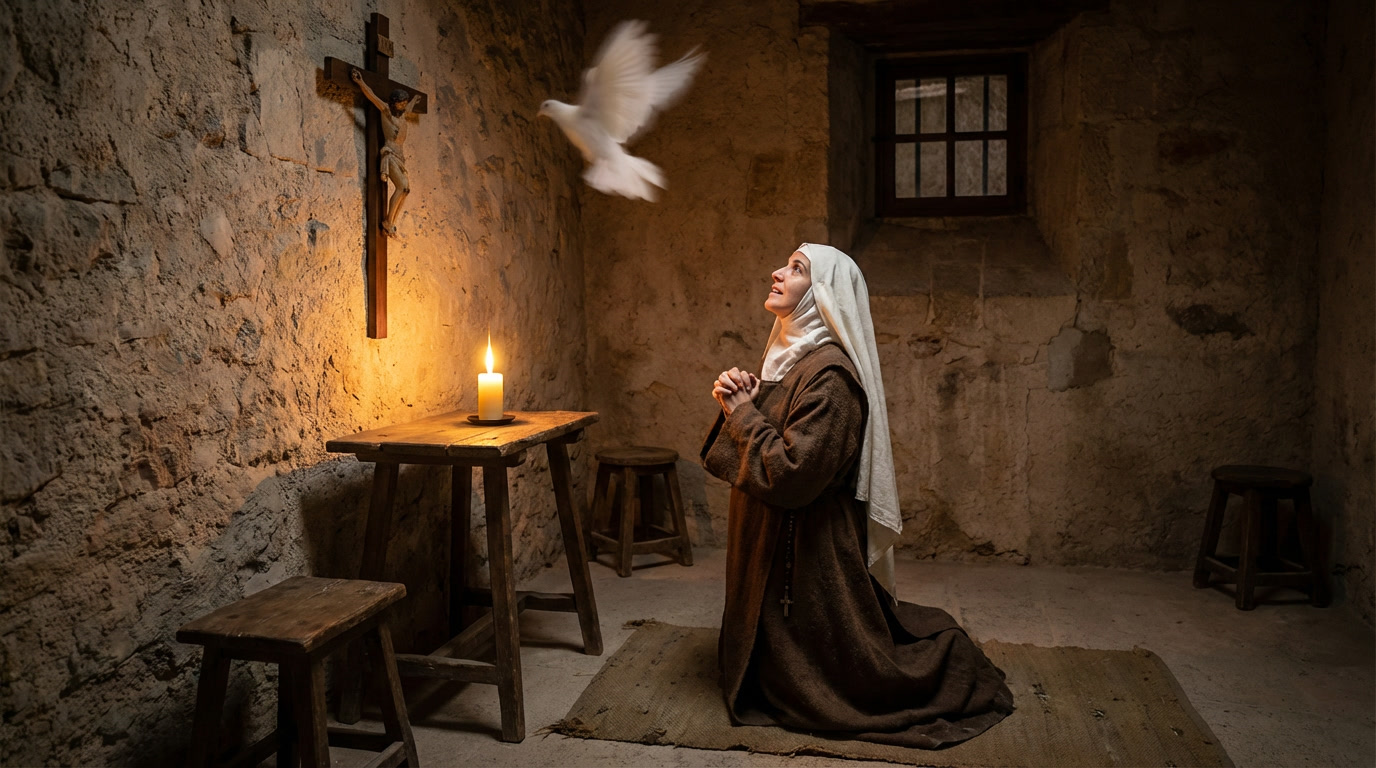
"Let nothing disturb you. All things pass. God does not change. Patience obtains all."
On Good Friday, as we contemplate Christ's passion in the garden of Gethsemane, Saint Teresa of Avila's profound understanding of suffering and divine encounter offers deep spiritual insight. This great mystic knew that the garden of the soul becomes most fertile when watered with tears of surrender, just as Jesus demonstrated when He said "I AM" to His captors.
Born Teresa Sánchez de Cepeda y Ahumada in 1515, this Spanish Carmelite nun transformed the religious landscape of her time through radical reform and mystical prayer. Her experiences of divine union, recorded in works like "The Interior Castle," reveal a soul that found God not despite suffering, but through complete abandonment to His will.
The Garden Where God Reveals Himself
Teresa understood what Jesus demonstrated in John's Gospel: divine revelation often comes in moments of apparent defeat. When Christ proclaimed "I AM" and His enemies fell to the ground, He revealed that true power lies in surrender to the Father's plan. Teresa wrote extensively about how God meets us in our interior garden, especially when external circumstances seem impossible.
Her mystical experiences taught her that the soul must pass through various mansions of prayer, often encountering darkness before reaching union with the Beloved. Like Christ in Gethsemane, Teresa learned that saying "yes" to God's will transforms even betrayal into blessing.
Embracing the Cross Through Interior Prayer
Teresa's approach to prayer mirrors Christ's final hours. She advocated for mental prayer that engages both heart and mind, teaching her nuns to remain present to God even amid interior trials. When Jesus allowed Himself to be bound and led away, He modeled the complete surrender Teresa called "the prayer of union."
This great saint knew that authentic prayer requires vulnerability. Her practice of contemplative reading helped her disciples encounter Christ personally in Scripture, just as the soldiers encountered His divine presence in the garden.
Living the Passion Daily
Teresa's reform of Carmelite life centered on poverty, prayer, and penance—three virtues Christ embodied during His passion. She understood that following Jesus means accepting the crosses He permits in ordinary life. Whether facing opposition from religious authorities or enduring physical illness, Teresa found Christ's strength sufficient.
Her letters reveal a woman who faced betrayal, misunderstanding, and persecution with remarkable peace. Like Jesus identifying Himself clearly to His captors, Teresa learned to name her sufferings honestly while trusting completely in divine providence.
Pray in the Spirit of Saint Teresa
Enter your interior garden today. Acknowledge whatever betrayals, fears, or sufferings you carry. Ask Teresa to intercede for the grace to say "I AM" with Christ—present to whatever God allows, trusting that He transforms all things for those who love Him.
Remember Teresa's counsel: God desires our friendship more than our perfection. In prayer, offer Him your Gethsemane moments. Let Him find you there, as He found the disciples sleeping, with compassion rather than condemnation.
Frequently Asked Questions
What is Saint Teresa of Avila known for?
Saint Teresa of Avila is known for her mystical experiences, reform of the Carmelite order, and writings on prayer, particularly "The Interior Castle" and "The Way of Perfection." She was declared a Doctor of the Church in 1970.
How did Saint Teresa of Avila practice prayer?
Saint Teresa practiced and taught mental prayer, emphasizing personal relationship with Christ through meditation, contemplation, and surrender to God's will. She described prayer as "an intimate sharing between friends" and developed a systematic approach to interior spiritual growth.