
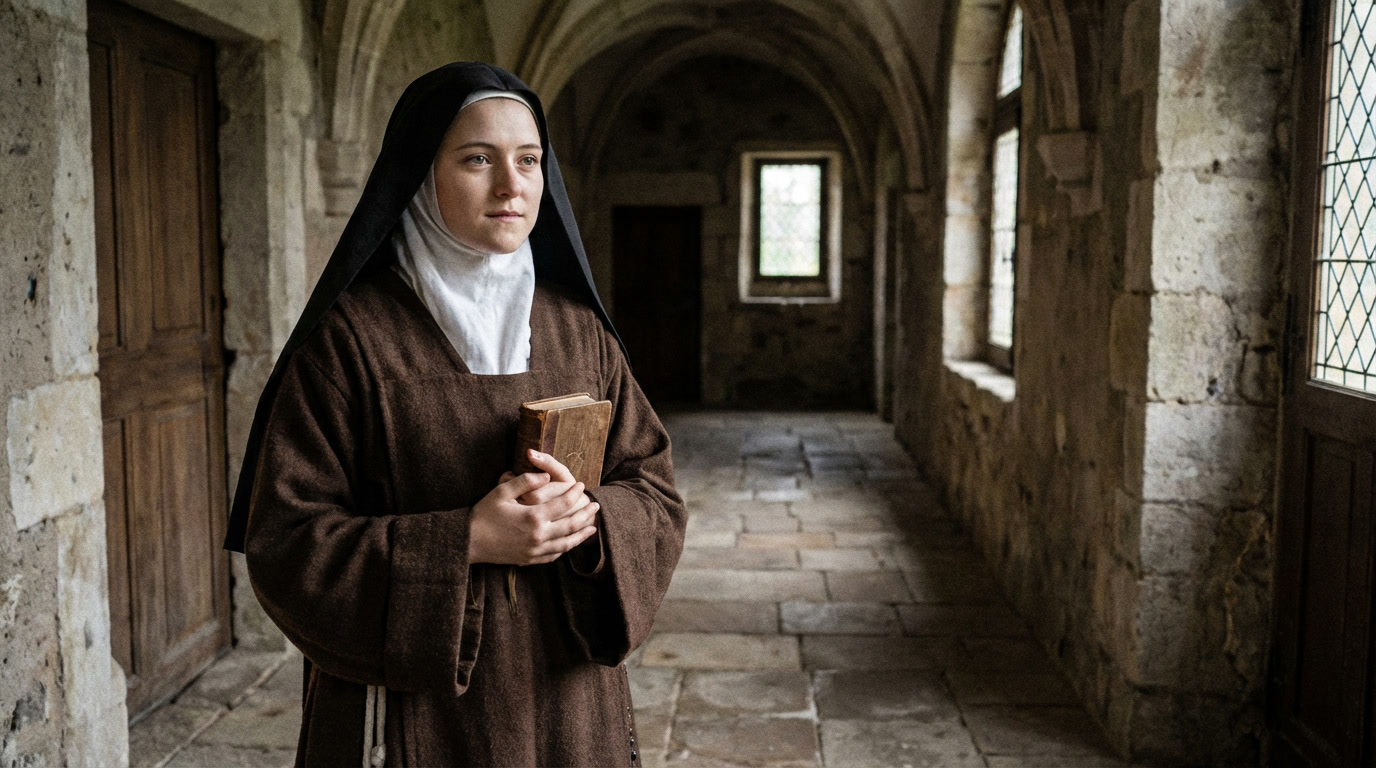
"I will spend my heaven doing good on earth. I will let fall a shower of roses." — Saint Thérèse of Lisieux
When the Pharisees convene the Sanhedrin to plot against Jesus in today's Gospel, their fear reveals how God's greatest works often face the fiercest opposition. Saint Thérèse of Lisieux understood this reality deeply, teaching that spiritual opposition calls for childlike trust rather than worldly strategies.
Born Marie-Françoise-Thérèse Martin in 1873, this young Carmelite nun died at twenty-four yet became a Doctor of the Church. Her "Little Way" of spiritual childhood transformed countless souls through its radical simplicity. Thérèse entered Carmel at fifteen, facing opposition from both Church authorities and family members who questioned her calling.
When Religious Authority Becomes Opposition
Caiaphas speaks unwitting prophecy when he declares one man should die for the nation. Like the high priest, religious leaders sometimes oppose God's work through institutional fear. Thérèse experienced this when superiors questioned her spiritual insights and delayed publication of her writings.
The saint's response differed radically from worldly reactions to opposition. She neither defended herself aggressively nor retreated in bitterness. Instead, Thérèse embraced what she called "the science of love," trusting that God's will would unfold despite human resistance.
The Little Way Through Fear and Politics
The Sanhedrin's calculation—"the Romans will come and take away both our land and our nation"—reveals how fear drives opposition to God's work. Political preservation becomes more important than recognizing divine action. Thérèse witnessed similar dynamics in her convent, where personalities and preferences sometimes overshadowed spiritual discernment.
Her Little Way offers profound wisdom for these moments. Rather than engaging in spiritual politics or defending divine work through human means, Thérèse taught complete abandonment to Divine Providence. She wrote, "The good God would not inspire unattainable desires." This trust sustained her through opposition and criticism.
Scattered Seeds and Hidden Victories
Today's Gospel notes how Jesus "no longer walked about in public" as opposition intensified. Sometimes God's greatest works require hiddenness, like seeds scattered in winter soil. Thérèse understood this mystery intimately. Her most profound spiritual insights came during periods of internal darkness and external misunderstanding.
The saint's confidence in God's ultimate victory sustained her through tuberculosis, spiritual dryness, and institutional resistance. She prophesied her posthumous mission, declaring she would "spend heaven doing good on earth." This wasn't presumption but profound trust in God's ability to bring victory through apparent defeat.
For souls facing opposition to their spiritual calling or witnessing attacks on faith itself, Thérèse's example provides clear guidance. Her approach to sacred reading emphasized finding God's love even in difficult passages, transforming opposition into opportunity for deeper trust.
Pray in the Spirit of Saint Thérèse
When religious opposition or spiritual warfare troubles your soul, follow Thérèse's Little Way. Offer your concerns to Jesus with childlike confidence. Trust that God's work continues even when human authorities resist or misunderstand. Remember that the greatest saints often faced the strongest opposition, yet their legacy endures while their opponents fade into history.
Let Thérèse's shower of roses remind you that God's love overcomes every form of spiritual opposition through souls who trust completely in Divine Providence.
Frequently Asked Questions
What is Saint Thérèse of Lisieux's Little Way?
Saint Thérèse's Little Way is a spiritual path of childlike trust and abandonment to God's will, emphasizing simplicity over complicated spiritual practices and confidence in God's mercy over fear of judgment.
Why is Saint Thérèse called a Doctor of the Church despite dying so young?
Pope John Paul II declared Saint Thérèse a Doctor of the Church in 1997 because her spiritual doctrine of the Little Way provided profound theological insights that have guided countless souls toward holiness through its universal application.