
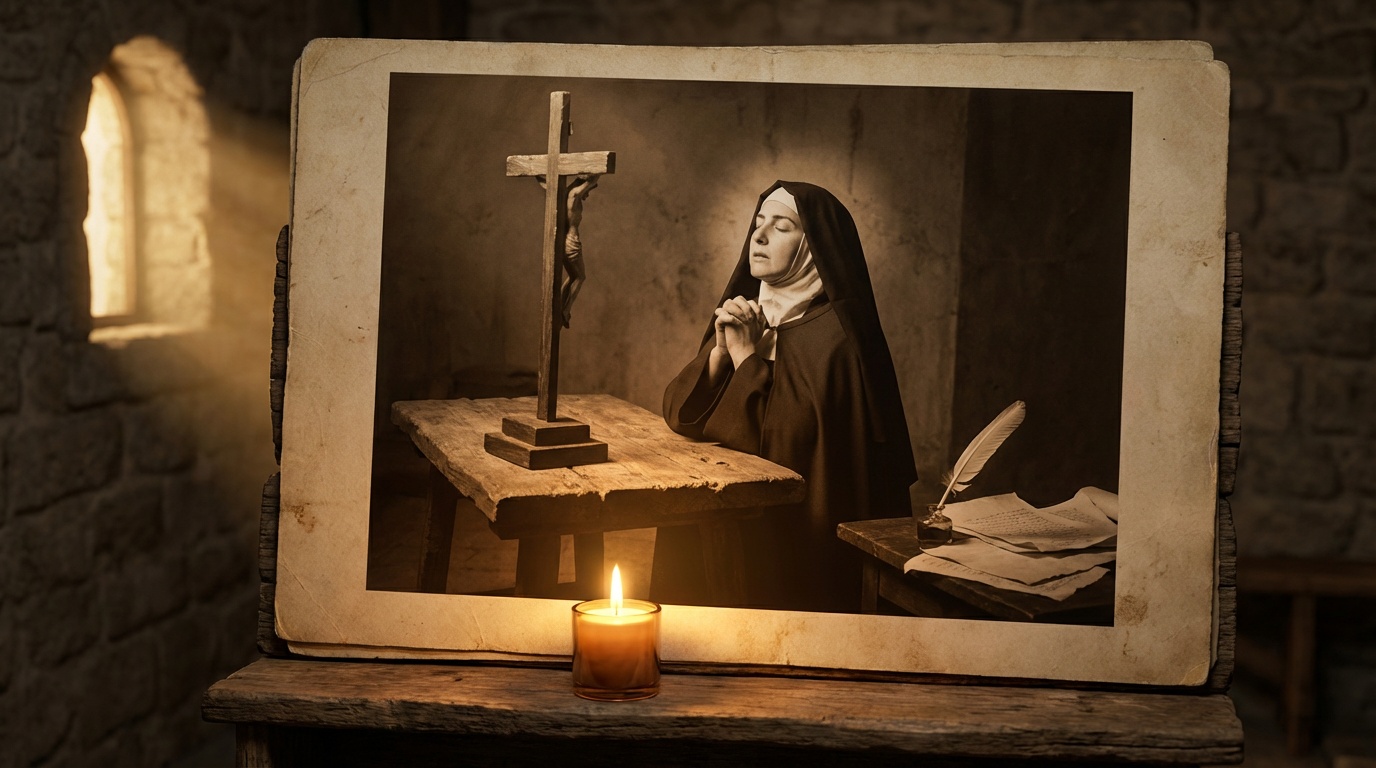
"Let nothing disturb you. All things pass. God does not change. Patience obtains all. Whoever has God lacks nothing. God alone suffices."
The man at the Pool of Bethesda had waited thirty-eight years for healing, trapped in patterns of helplessness and spiritual paralysis. Saint Teresa of Avila understood this profound struggle between human limitation and divine grace, teaching us how Christ's healing touch transforms our deepest wounds.
Born Teresa Sánchez de Cepeda y Ahumada in 1515, this Spanish mystic and Doctor of the Church experienced her own spiritual paralysis before becoming one of Christianity's greatest contemplatives. After twenty years of lukewarm religious life, Teresa encountered Christ's healing presence through prayer, transforming her into a reformer of Carmelite spirituality and guide for countless souls seeking deeper union with God.
The Question That Changes Everything
Jesus asked the paralyzed man a startling question: "Do you want to be well?" Saint Teresa of Avila recognized that this same divine inquiry echoes through every human heart. In her autobiography, she describes how Christ posed this question to her own soul, trapped in spiritual mediocrity and self-doubt.
The paralyzed man's response reveals our common condition. He focused on obstacles, external circumstances, and the failure of others to help. Teresa teaches that true healing begins when we stop looking to earthly pools and turn wholly toward the divine physician. Christ's healing power requires no intermediary, no perfect conditions, only our honest desire for transformation.
Rising from Spiritual Stagnation
"Rise, take up your mat, and walk." These words echo Teresa's teaching on the soul's journey through the interior castle. Like the healed man, we must leave behind the familiar patterns of spiritual paralysis—the excuses, the comfortable complaints, the reliance on external circumstances for our spiritual progress.
Saint Teresa experienced this radical rising during her mystical encounters with Christ. She learned that divine healing often comes suddenly, breaking through years of apparent stagnation. Her mystical marriage with Christ demonstrates how the soul, once paralyzed by sin and lukewarmness, can achieve the highest union with God through surrendered prayer and trust.
Consider practicing contemplative prayer in the spirit of Saint John of the Cross to deepen this interior surrender that Teresa so beautifully exemplified.
Carrying Our Mat Forward
The healed man carried his mat—symbol of his former helplessness—as testimony to Christ's power. Saint Teresa of Avila teaches that our past struggles, spiritual dryness, and even failures become instruments of grace when touched by divine love. Her own years of tepid prayer became the foundation for teaching others about authentic mystical experience.
Teresa's reforms of Carmelite life emerged from her personal experience of spiritual paralysis and healing. She established convents where nuns could pursue contemplative prayer without the distractions that had hindered her own spiritual progress. Like the healed man walking freely, Teresa carried forward the memory of her former condition to serve others trapped in similar spiritual stagnation.
Pray in the Spirit of Saint Teresa of Avila
Saint Teresa invites us to examine our own spiritual paralysis with honest compassion. Begin with her fundamental question: Do you truly desire to be well? Spend time in silent prayer, allowing Christ to identify the mats of helplessness, excuse-making, or spiritual mediocrity that you must leave behind.
Practice Teresa's method of recollected prayer, gathering your scattered thoughts and affections to focus entirely on Christ present within your soul. Like the man at Bethesda, bring your long-carried burdens directly to Jesus, trusting that his healing word can transform years of spiritual stagnation into vibrant life.
Frequently Asked Questions
What is Saint Teresa of Avila most known for?
Saint Teresa of Avila is renowned for her mystical writings, particularly "The Interior Castle," which describes the soul's journey to union with God through contemplative prayer. She reformed the Carmelite order and became the first woman declared a Doctor of the Church.
How did Saint Teresa of Avila overcome spiritual dryness?
Saint Teresa overcame twenty years of spiritual dryness through persistent prayer, especially before an image of the wounded Christ. She learned to surrender completely to God's will and discovered that periods of dryness often precede profound mystical experiences and spiritual growth.