
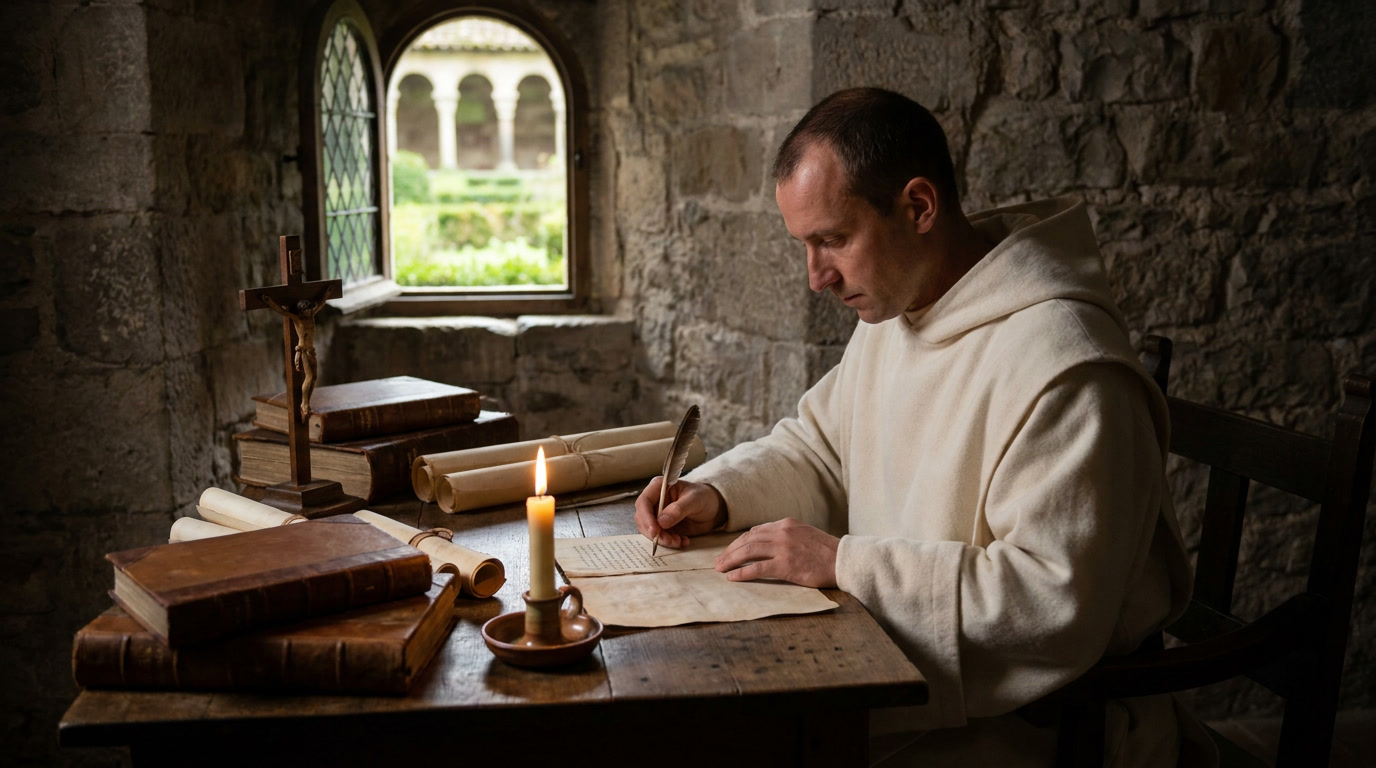
"You will find something more in woods than in books. Trees and stones will teach you that which you can never learn from masters."
— Saint Bernard of Clairvaux
Saint Bernard of Clairvaux understood the need for spiritual reform in both the Church and the human heart. His fervor for purifying religious life echoes Christ's righteous anger as He cleansed the temple in Mark's Gospel. Where merchants had turned God's house into a marketplace, Bernard saw monasteries that needed renewal and souls that required deeper conversion.
Born into French nobility in 1090, Bernard chose the austere life of a Cistercian monk at Clairvaux. He became one of history's most influential abbots, founding sixty-eight monasteries and advising popes and kings. His writings on mystical theology, particularly his sermons on the Song of Songs, reveal a heart ablaze with love for Christ and zeal for authentic spiritual life.
The Temple of the Heart Needs Cleansing
Christ's cleansing of the temple reveals divine intolerance for anything that corrupts worship. Saint Bernard of Clairvaux applied this same principle to monastic reform. He witnessed monasteries where prayer had grown cold and discipline had weakened. Like Christ overturning tables, Bernard challenged comfortable mediocrity with passionate calls to holiness.
The temple of our hearts requires similar cleansing. Bernard taught that we must expel the merchants of self-love, pride, and spiritual laziness. His reforms at Clairvaux emphasized simplicity, contemplative prayer, and genuine conversion. When we examine our prayer life honestly, what tables might Christ overturn? What false merchants have we allowed to set up shop in the sanctuary of our souls?
From Barren Leaves to Fruitful Prayer
The cursed fig tree in Mark's Gospel bore leaves but no fruit. Saint Bernard of Clairvaux warned against this same spiritual barrenness. External observances mean nothing without interior transformation. His monastic reforms stripped away unnecessary ornaments to focus on essential spiritual practices.
Bernard's approach to prayer cultivated authentic fruit. His Lectio Divina method moves from reading Scripture to meditation, prayer, and contemplation. This progression mirrors Christ's expectation of fruitfulness from the fig tree. Through Lectio Divina practice, we can move beyond mere leaves of religious activity to bear genuine spiritual fruit.
Zeal for God's House Consumes Us
Christ's disciples remembered the words: "Zeal for your house will consume me." Saint Bernard of Clairvaux embodied this same consuming love. His passion for church reform led him to preach the Second Crusade and confront theological errors. Though some of his endeavors proved controversial, his motivation remained pure: love for Christ and His Church.
This zealous love transforms ordinary believers into instruments of renewal. Bernard's reforms succeeded because they flowed from authentic prayer and deep union with God. When our hearts burn with similar love, we become agents of gentle transformation in our families, parishes, and communities. The same Spirit that drove Christ to cleanse the temple empowers us to purify our own spiritual lives.
Pray in the Spirit of Saint Bernard
Saint Bernard of Clairvaux teaches us to examine our hearts with Christ's unflinching honesty. Begin prayer by asking: What needs cleansing in my spiritual life? Where have I allowed compromise to weaken my devotion? Like Bernard, approach reform with humility and patience, trusting that God's love, not human effort, accomplishes true transformation.
Frequently Asked Questions
What was Saint Bernard of Clairvaux known for?
Saint Bernard of Clairvaux was known for his monastic reforms, mystical writings, and influence on 12th-century church life. He founded numerous Cistercian monasteries and wrote extensively on spiritual theology, particularly his sermons on the Song of Songs.
How did Saint Bernard of Clairvaux reform monasteries?
Saint Bernard of Clairvaux reformed monasteries by emphasizing strict observance of the Rule of Saint Benedict, promoting contemplative prayer, and removing unnecessary luxuries. His reforms at Clairvaux became a model for Cistercian houses throughout Europe.