
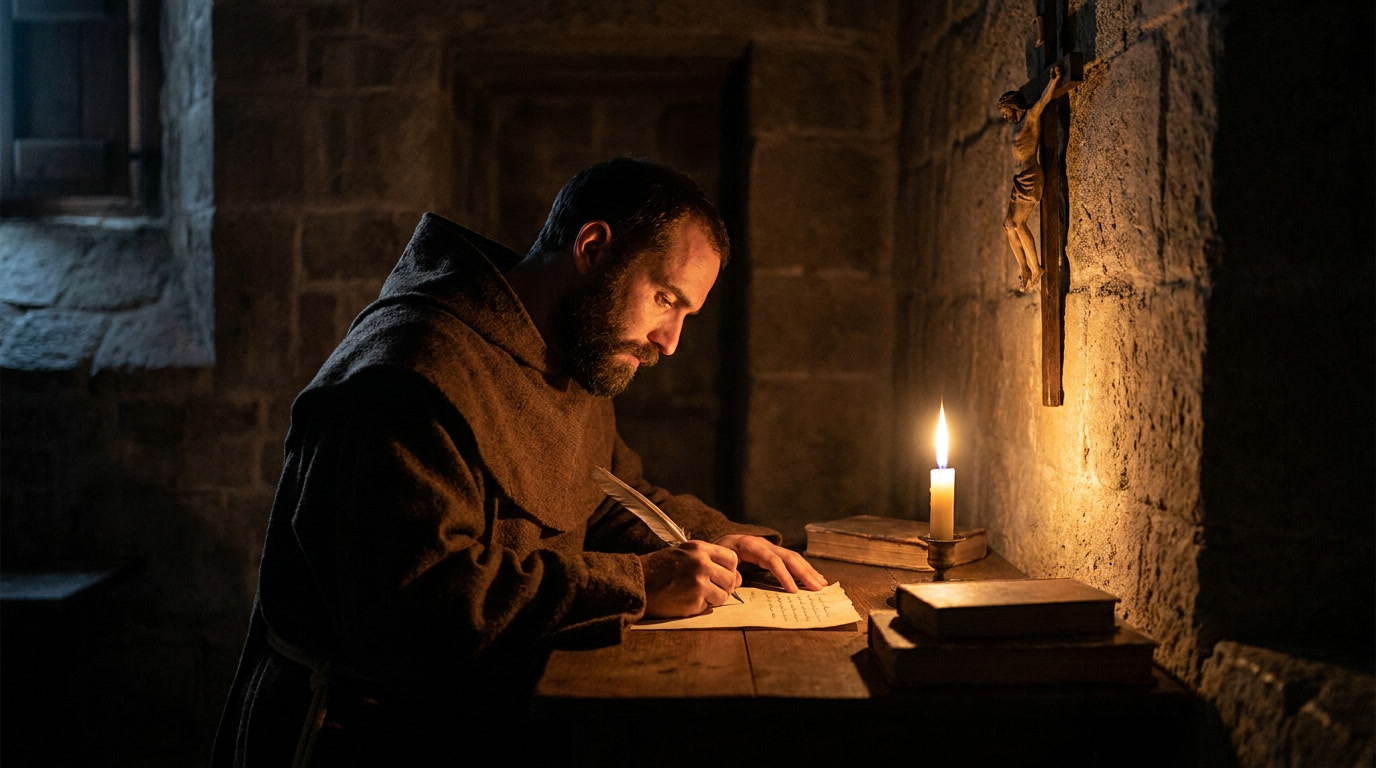
"The soul that is attached to anything, however much good there may be in it, will not arrive at the liberty of divine union."
When Jesus tells Peter "What concern is it of yours? You follow me," He speaks to every soul called to walk a unique path with God. Saint John of the Cross understood this deeply. His mystical writings reveal how each person must follow their own journey into divine union, without comparing themselves to others or seeking to understand God's plans for different souls.
Born Juan de Yepes in 1542, this Spanish Carmelite priest transformed Christian mysticism through his poetry and spiritual direction. Despite facing imprisonment and persecution from his own religious order during the Counter-Reformation, John never wavered from his calling to reform Carmelite life and guide souls toward deeper prayer. His works "The Dark Night of the Soul" and "The Ascent of Mount Carmel" remain essential guides for spiritual growth.
The Danger of Spiritual Comparison
Peter's question about John's fate reveals a common human tendency. Even among the apostles, comparison crept in. Saint John of the Cross warned against this spiritual trap. He taught that each soul receives specific graces and crosses according to God's mysterious wisdom.
The saint's own experience proves this truth. While other reformers worked through external changes, John was called to the hidden path of mystical union. His greatest insights came not through success but through the "dark night" of spiritual dryness and suffering. What appeared as failure to others became his pathway to sanctity.
Following Your Unique Call
"You follow me" becomes the essential command for every Christian. Saint John of the Cross spent his life helping others discern and follow their particular calling. He understood that authentic spiritual growth requires detachment from comparing our progress to others.
In his spiritual direction, John emphasized that God leads each soul differently. Some are called to active ministry, others to contemplative prayer. Some experience consolations, others endure aridity. The saint taught that faithfulness to one's own path matters more than understanding God's ways with others.
This wisdom applies directly to daily life. Career choices, family decisions, and even prayer styles must flow from personal discernment rather than imitation of others. The prayer method of Saint John of the Cross can help cultivate this inner listening.
Embracing Mystery in God's Plan
Jesus deliberately leaves John's future unclear in today's Gospel. Saint John of the Cross embraced such divine mystery. His mystical theology teaches that God often works beyond human understanding, calling some to paths that appear contradictory to worldly wisdom.
The saint's poetry captures this paradox: "I entered into unknowing, and there I remained unknowing, transcending all knowledge." He learned to trust God's hidden purposes even when circumstances seemed to contradict his calling to reform.
Pray in the Spirit of Saint John of the Cross
Allow yourself to rest in God's mysterious love without needing to understand His ways with others. Ask for the grace to follow your unique calling with complete trust, even when the path leads through darkness or seems different from those around you.
Remember that your spiritual journey belongs to God alone. Like Saint John of the Cross, find peace in surrender to divine wisdom that surpasses human comprehension.
Frequently Asked Questions
What is Saint John of the Cross known for?
Saint John of the Cross is known for his mystical writings, particularly "The Dark Night of the Soul," and his role in reforming the Carmelite order alongside Saint Teresa of Ávila. He is a Doctor of the Church and patron of mystical theology.
How did Saint John of the Cross practice detachment?
Saint John of the Cross practiced radical detachment from worldly consolations and even spiritual consolations to achieve union with God. He taught that attachment to anything, even good things, can hinder complete surrender to divine love.