
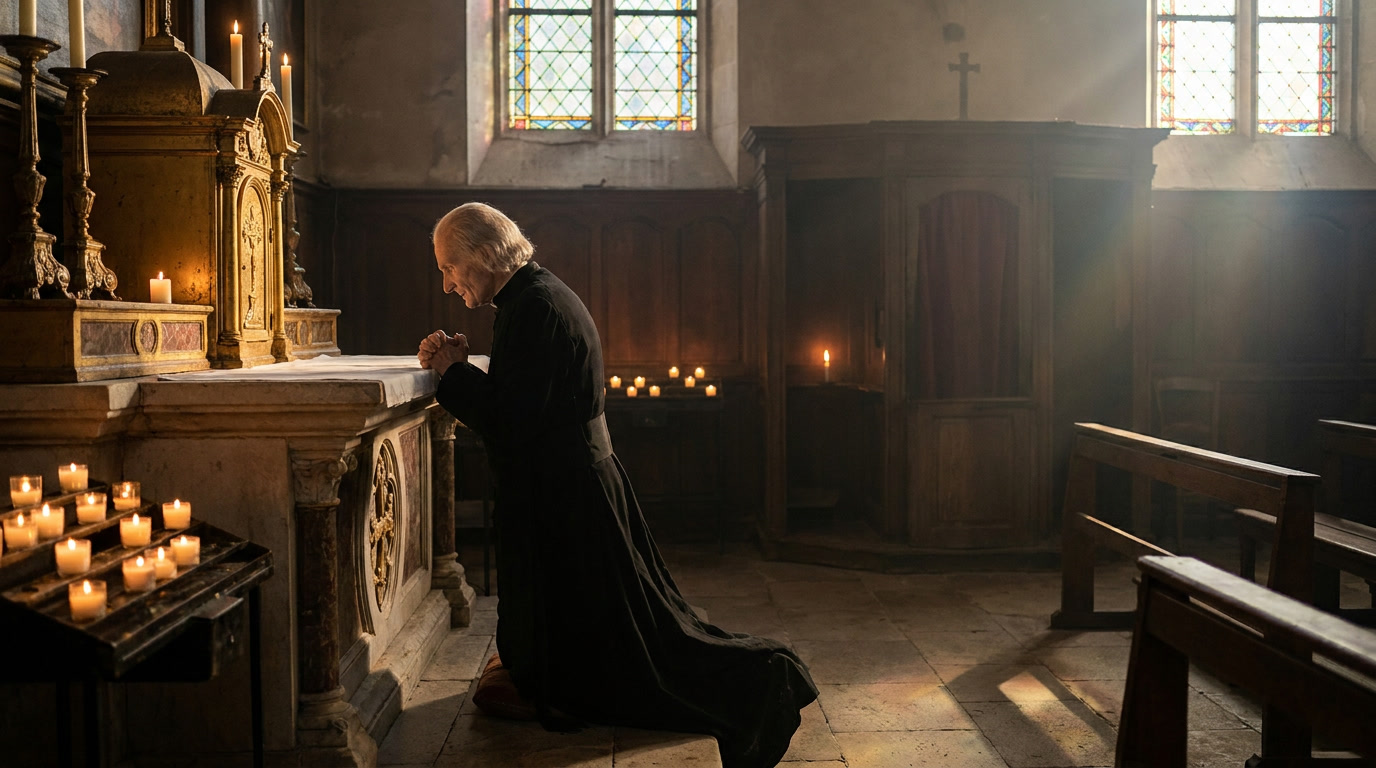
"A priest should have his heart where Jesus Christ had His—pierced with a lance for love of souls."
When Christ asked Peter three times "Do you love me?", He was not seeking information. He was forging a shepherd's heart. St. John Vianney, the humble Curé of Ars, understood this divine persistence that transforms wounded hearts into instruments of pastoral care. His life demonstrates how Christ's repeated question to Peter echoes in every soul called to shepherd others.
John Vianney arrived in the tiny French village of Ars in 1818, a simple priest with modest academic gifts. The parish was spiritually barren. Villagers had grown cold to faith during the revolutionary years. Yet this unassuming man would become one of history's greatest pastors, drawing pilgrims from across Europe to his confessional.
Love Tested Through Repetition
Peter's distress at Christ's third question reveals something profound about pastoral calling. The repetition was not punishment but purification. St. John Vianney faced his own testing through twenty years of spiritual warfare, physical attacks, and the weight of countless confessions. Like Peter, he learned that true pastoral love is not emotional sentiment but steadfast commitment tested through trial.
The saint spent up to eighteen hours daily in the confessional, hearing the sins and sorrows of thousands. This relentless service was his "yes" to Christ's question. Each penitent was a sheep entrusted to his care, regardless of their condition or his own exhaustion.
Feeding the Flock Through Suffering
Christ's command to "feed my sheep" found literal fulfillment in John Vianney's ministry. He established an orphanage, cared for the poor, and nourished souls with tireless preaching and counsel. Yet his greatest offering was himself—consumed like bread for the hungry masses who sought him out.
The saint understood that pastoral love demands self-surrender. His own words echo Peter's final surrender: "Lord, you know that I love you." This knowledge belonged not to human emotion but to divine recognition of a heart wholly given over to Christ's mission.
The Shepherd's Interior Life
John Vianney's effectiveness flowed from his interior union with Christ. He spent hours before the Blessed Sacrament, practicing a form of contemplative presence that deepened his pastoral sensitivity. Through Ignatian contemplation, we can enter this same receptive stance, allowing Christ's questions to echo in our own hearts.
The saint knew that pastoral care begins with personal conversion. Before feeding others, the shepherd must first be fed by the Good Shepherd. His life of prayer, penance, and abandonment to divine providence created the interior space from which authentic love could flow.
Pray in the Spirit of St. John Vianney
Take Christ's question to Peter as your own: "Do you love me?" Sit with the repetition, not as accusation but as invitation to deeper surrender. Ask St. John Vianney to intercede for all pastors and for the pastoral heart that beats within every baptized soul. Whether caring for family, colleagues, or community, the call to shepherd remains.
Let the saint's example inspire patience with your own limitations and trust in divine grace. True pastoral love is not about perfection but about persistent availability to serve Christ in others.
Frequently Asked Questions
What made St. John Vianney such an effective confessor?
St. John Vianney combined deep personal holiness with extraordinary pastoral sensitivity. His long hours of prayer before the Blessed Sacrament gave him insight into souls, while his own struggles with temptation made him compassionate toward sinners. He possessed the supernatural gift of reading hearts, often knowing penitents' sins before they confessed.
How did St. John Vianney transform the parish of Ars?
Through patient pastoral care spanning four decades, St. John Vianney transformed Ars from spiritual indifference to vibrant faith. He preached simply but powerfully, established devotional practices, cared for the poor, and most importantly, made himself constantly available for confession and spiritual counsel. His holiness attracted pilgrims, making Ars a center of Catholic renewal.