
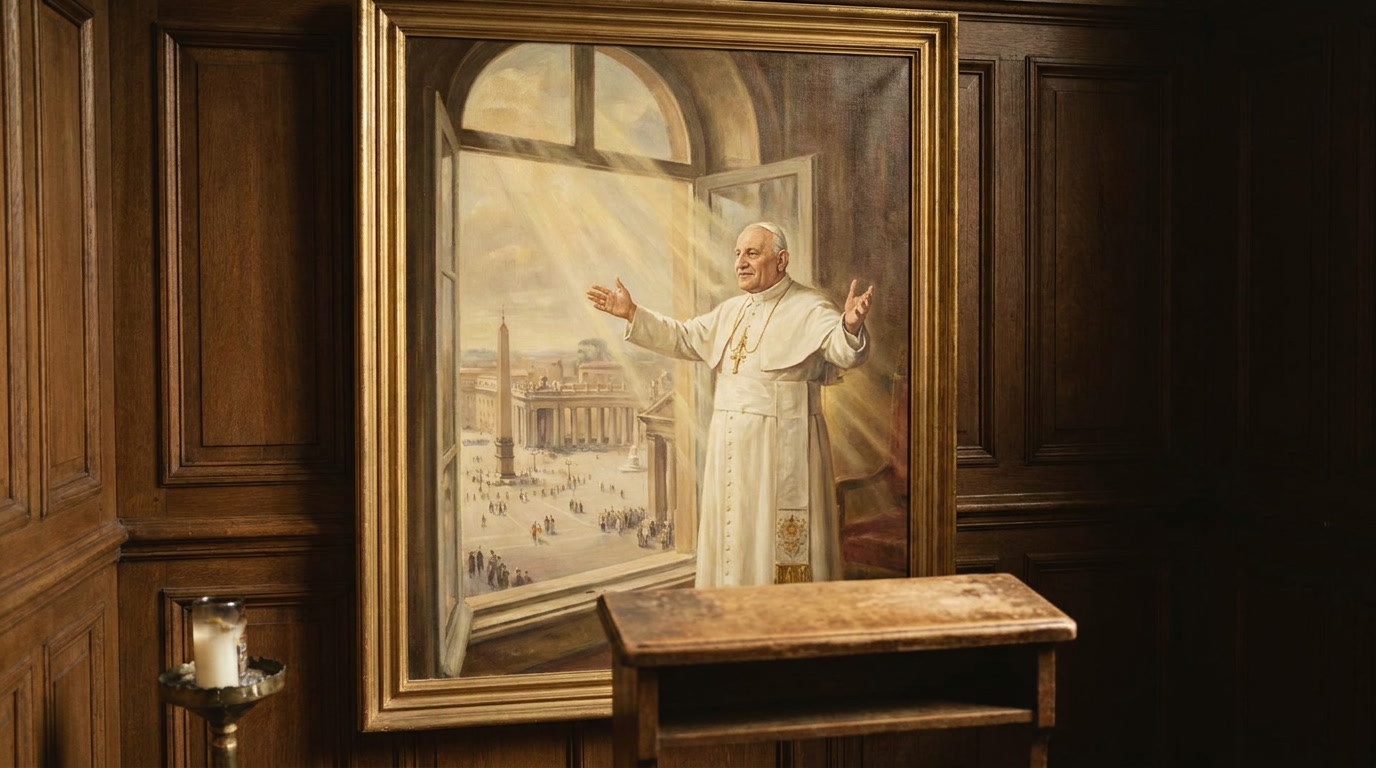
"The true and solid peace of nations consists not in equality of arms but in mutual trust alone."
As Christ lifts His eyes to heaven in today's Gospel, praying for unity among believers, Saint John XXIII emerges as a luminous example of this divine desire made flesh. The beloved Pope who opened Vatican II understood deeply what Jesus meant when He prayed "that they may all be one." Pope John's entire pontificate centered on breaking down walls and building bridges—embodying Christ's prayer for unity in tangible ways.
Angelo Giuseppe Roncalli, born to peasant farmers in northern Italy, became Pope at age 76 when many expected a transitional papacy. Instead, "Good Pope John" transformed the Catholic Church through his profound commitment to unity and peace. His gentle manner masked a revolutionary vision: the Church must embrace all humanity as one family under God.
The Unity Christ Desires
When Jesus prays "that they may be one, as we are one," He reveals the deepest mystery of divine love. Saint John XXIII's teachings on unity show us this isn't merely organizational harmony. True unity flows from recognizing our shared dignity as children of the Father.
Pope John demonstrated this in countless ways. He visited prisoners, saying they were "all children of God." He welcomed people of all faiths to the Vatican. His encyclical "Pacem in Terris" addressed not just Catholics but "all people of good will." Like Christ in today's Gospel, Pope John saw unity as the natural fruit of divine love.
Building Bridges in Daily Life
Pope John XXIII's approach to Christian unity offers practical wisdom for our relationships. He understood that walls between people often begin with small misunderstandings left unaddressed. His famous words about opening windows in the Church apply equally to our homes and workplaces.
Consider how Christ prays for future believers—"those who will believe in me through their word." Our unity today affects those who will encounter faith through us tomorrow. Franciscan prayer can help us discern where God calls us to be instruments of His peace, following Pope John's example of gentle persistence.
The Glory of Communion
"I have given them the glory you gave me, so that they may be one," Jesus declares. Saint John XXIII's vision of church unity helps us understand this glory. It's not earthly power but the radiance of love shared among believers.
Pope John saw this glory reflected in simple acts: families praying together, neighbors helping neighbors, nations choosing dialogue over conflict. He knew that when Christians live in genuine communion, the world glimpses the divine life itself. This was his hope for Vatican II—not doctrinal change but deeper participation in God's own unity.
Pray in the Spirit of Saint John XXIII
End each day by examining where you built bridges or erected walls. Ask Pope John to intercede for your family, parish, and community. Pray his favorite prayer: "Lord, help me to be a source of joy and peace wherever I go."
Like Christ in today's Gospel, lift your eyes beyond immediate concerns to God's vision for human unity. Let Saint John XXIII's legacy of peace inspire you to see every person as a beloved child of the Father.
Frequently Asked Questions
What is Saint John XXIII most known for?
Saint John XXIII is most known for calling the Second Vatican Council and his commitment to unity, peace, and dialogue between the Catholic Church and other faiths and communities.
When was Pope John XXIII canonized?
Pope John XXIII was canonized as a saint on April 27, 2014, by Pope Francis, along with Pope John Paul II, in a historic double canonization ceremony.