
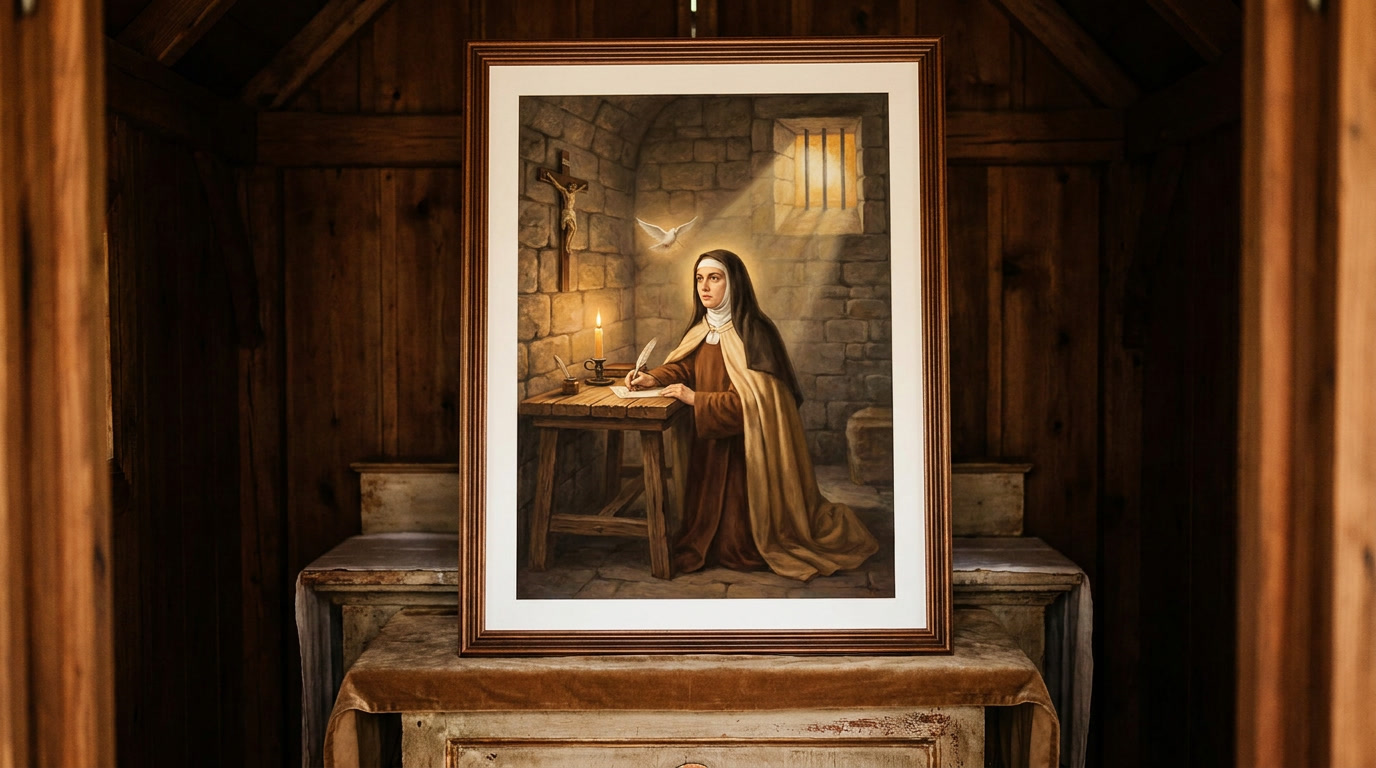
"Let nothing disturb you. All things pass. God does not change. Patience obtains all. Whoever has God lacks nothing. God alone suffices."
Saint Teresa of Avila understood the dwelling places of God in ways that illuminate Christ's promise in today's Gospel. When Jesus speaks of preparing a place for us in the Father's house, Teresa's mystical vision of the soul as an interior castle reveals how this divine dwelling begins within us. Her profound journey into the depths of prayer shows the way Christ speaks of—not merely a destination, but a relationship.
Born Teresa Sánchez de Cepeda y Ahumada in 1515, this Spanish mystic transformed from a worldly young woman into one of the Church's greatest spiritual teachers. After twenty years of lukewarm religious life, she experienced a profound conversion at age 39. The rest of her days were devoted to reforming the Carmelite order and mapping the soul's journey toward union with God.
The Interior Castle: God's Dwelling Place in the Soul
Teresa's masterwork, "The Interior Castle," describes the soul as a crystal castle with seven mansions. Each mansion represents a deeper level of prayer and intimacy with God. When Jesus tells His disciples He goes to prepare a place for them, Teresa understood this preparation happens within the human heart. The troubled hearts Jesus addresses find peace not through escape, but through entering more deeply into God's presence already dwelling within.
Her mystical experiences taught her that the way to the Father requires surrendering earthly attachments. Like Thomas in the Gospel, we often cannot see the path clearly. Teresa's guidance through the mansions of prayer offers practical steps for those seeking the way Jesus describes.
Trusting Through Spiritual Dryness
Teresa knew intimately the struggles that trouble our hearts. For nearly twenty years, she endured what spiritual directors call "dryness"—periods when prayer felt empty and God seemed distant. Yet she persevered, discovering that these desert experiences often precede deeper union with Christ. When Jesus says "do not let your hearts be troubled," Teresa's life demonstrates how trust grows through difficulty, not despite it.
Her practical advice for spiritual aridity speaks directly to modern disciples facing doubt or discouragement. She encouraged persistence in prayer even when feelings fade, knowing that God works beyond our immediate perception. This wisdom transforms how we understand Christ's call to faith in both God and Himself.
Living the Way in Daily Life
Teresa's mystical heights never divorced her from practical concerns. She founded seventeen convents, wrote extensively, and navigated complex Church politics. Her integration of contemplation with action shows how Christ's way extends beyond private devotion into service of others. The dwelling place Jesus prepares includes mission in the world.
Her famous prayer, "Christ has no body now but yours," reminds us that following the way Jesus describes requires becoming that way for others. Teresa's life exemplifies how mystical union with God flows naturally into love of neighbor. The Ignatian Contemplation method can help us follow her example of finding God in all things.
Pray in the Spirit of Saint Teresa
Enter prayer today with Teresa's confidence that God dwells within you. Begin with her simple practice of speaking to Christ as a friend. Share your troubles honestly, remembering that Jesus has already prepared your place in the Father's house. Let Teresa's courage in spiritual dryness strengthen your own perseverance when the way seems unclear.
Ask Saint Teresa to intercede for growth in mental prayer and trust in divine providence. Her feast day reminder that "God alone suffices" can anchor turbulent hearts in the peace Christ promises to those who follow His way.
Frequently Asked Questions
What is Saint Teresa of Avila known for?
Saint Teresa of Avila is known for her mystical writings, particularly "The Interior Castle," her reform of the Carmelite order, and her profound teachings on mental prayer and union with God.
How can Saint Teresa of Avila help with spiritual dryness?
Saint Teresa experienced spiritual dryness for twenty years yet persevered in prayer, teaching that God often works invisibly during difficult periods and that persistence in prayer leads to deeper union with Christ.