
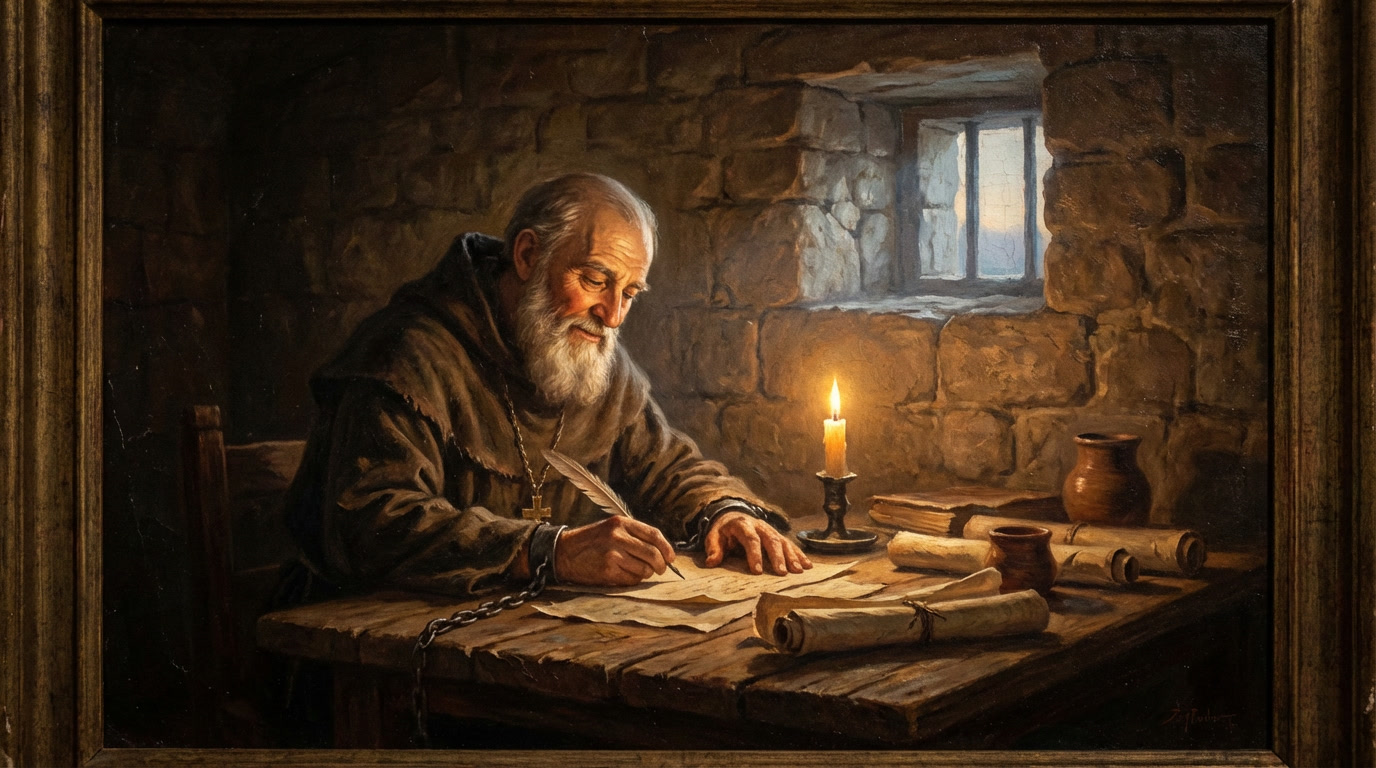
"I am the wheat of God, and am ground by the teeth of the wild beasts, that I may be found the pure bread of Christ."
Saint Ignatius of Antioch faced the Roman amphitheater with these words, understanding what Jesus meant when He spoke of eating His flesh and drinking His blood. The early bishop grasped the profound mystery that scandalized the crowds in Capernaum—that true life comes through complete union with Christ, even unto death.
Ignatius served as the third Bishop of Antioch in the late first and early second centuries. Arrested during Emperor Trajan's persecution, he was transported to Rome under guard around 108 AD. During this final journey, he wrote seven letters that became treasures of early Christian theology, revealing a soul completely surrendered to Christ's Eucharistic presence.
The Eucharistic Heart of Martyrdom
When Jesus declared "whoever eats my flesh and drinks my blood has eternal life," Ignatius understood this wasn't metaphor but reality. The Eucharist became his source of strength as he approached martyrdom. He saw his coming death not as destruction but as the ultimate participation in Christ's sacrifice.
"Come fire and cross and grapplings with wild beasts," he wrote, "let there come upon me wrenching of bones, mangling of limbs, crushing of my whole body." This wasn't morbid desire but Eucharistic logic—the grain must be crushed to become bread.
His witness challenges comfortable Christianity. The Jews in Capernaum questioned how Christ could give His flesh to eat. Ignatius answers through lived experience: by becoming what we receive.
Union Beyond Understanding
"Whoever eats my flesh and drinks my blood remains in me and I in him." Ignatius lived this mutual indwelling. His letters overflow with Christ-centered language, showing a soul so united with the Savior that suffering became privilege, death became birth.
This wasn't fanaticism but mature faith. Ignatius served his church for decades before his arrest. He governed wisely, taught faithfully, shepherded carefully. Yet when the moment came to prove his words through blood, he embraced the call with joy.
Modern disciples face different challenges—workplace pressures, family tensions, cultural hostility to faith. Ignatius shows that Eucharistic union provides strength for every trial. The bread of life nourishes courage, hope, perseverance.
Living the Eucharistic Life Today
Ignatius wrote, "The Eucharist is the flesh of our Savior Jesus Christ." He didn't separate Sunday Mass from daily discipleship. The reception of Christ in Communion became the pattern for receiving whatever God allowed in life.
This perspective transforms ordinary struggles. Traffic jams, difficult colleagues, health concerns—all become opportunities for deeper union with Christ. When filled with His life, external circumstances lose their power to define our peace.
Practicing Ignatian contemplation helps cultivate this Eucharistic consciousness. By placing ourselves within Gospel scenes, imagination serves faith, drawing hearts closer to the mystery Ignatius embraced completely.
Pray in the Spirit of Saint Ignatius
Lord Jesus, like Saint Ignatius, help us understand the gift of Your Body and Blood. When we receive You in the Eucharist, transform our fears into trust, our complaints into praise. Grant us courage to live as wheat willing to be ground, that others might find the bread of life through our witness. Through the intercession of Saint Ignatius of Antioch, who chose union with You over personal comfort, strengthen our resolve to follow wherever You lead. Amen.
Frequently Asked Questions
What is Saint Ignatius of Antioch known for?
Saint Ignatius of Antioch is known for his seven letters written while being transported to Rome for martyrdom around 108 AD. These letters reveal deep Eucharistic theology and unwavering commitment to Christ. He's also remembered for coining the term "Catholic Church" and his famous declaration about being "the wheat of God."
How did Saint Ignatius of Antioch die?
Saint Ignatius of Antioch was martyred in Rome around 108 AD, likely in the Colosseum. Historical sources indicate he was thrown to wild beasts, fulfilling his own prophecy about being "ground by the teeth of wild beasts" to become "the pure bread of Christ."