
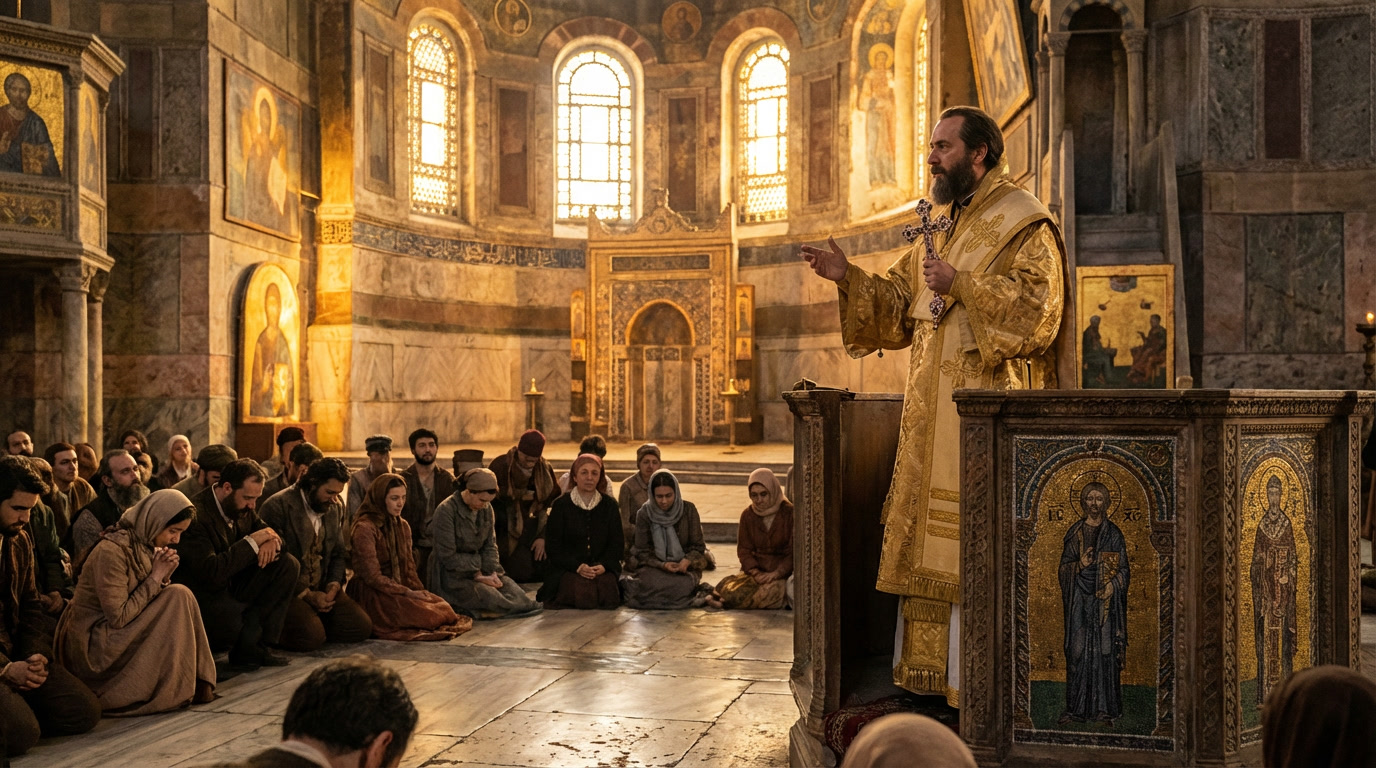
"What is this bread? It is the Body of Christ. What do those who receive it become? The Body of Christ—not many bodies, but one body."
Saint John Chrysostom understood the profound mystery that Jesus reveals in today's Gospel: the Father draws souls to Christ through the living bread of the Eucharist. This fourth-century archbishop recognized that divine attraction surpasses human understanding, working through sacramental grace to transform hearts.
Born in Antioch around 349, John earned the title "Chrysostom"—golden-mouthed—for his eloquent preaching. As Archbishop of Constantinople, he fearlessly proclaimed Gospel truth, even when it cost him exile. His homilies on Scripture remain treasured guides for understanding Christ's presence in the Eucharist.
The Father's Irresistible Call
John Chrysostom taught that the Father's drawing mentioned in today's Gospel operates through grace, not force. "God does not drag the unwilling," he explained, "but He draws those who are willing." The archbishop saw this divine attraction working through Scripture, prayer, and the sacraments.
When Jesus declares that no one comes to Him unless drawn by the Father, Chrysostom recognized the mystery of divine initiative. The Father plants seeds of longing in human hearts, creating a spiritual hunger that only Christ can satisfy. This drawing respects human freedom while awakening supernatural desire.
Living Bread That Transforms
The golden-mouthed preacher understood that Christ's identification as "living bread" transforms how believers approach the Eucharist. Unlike manna that sustained physical life temporarily, this bread offers eternal nourishment. Chrysostom emphasized that receiving communion properly requires preparation, reverence, and faith.
"When you approach this sacred table," he taught, "banish all worldly concerns." The saint recognized that the Eucharist both requires and creates the spiritual appetite Jesus describes. Through contemplative reading of Scripture, believers prepare hearts to receive this supernatural bread.
Practical Wisdom for Daily Life
Chrysostom's insights offer practical guidance for recognizing the Father's draw in ordinary circumstances. He taught that God speaks through conscience, Scripture, and the Church's teaching. When faced with moral decisions, believers can discern the Father's voice by examining which choices align with Christ's example.
The saint also emphasized that receiving the Eucharist worthily requires ongoing conversion. Just as physical bread nourishes the body daily, spiritual bread demands daily preparation through prayer, confession, and acts of charity. Chrysostom saw the Christian life as continuous response to divine invitation.
Pray in the Spirit of Saint John Chrysostom
Let Chrysostom's reverence for the Eucharist inspire deeper appreciation for Christ's presence. Before Mass, ask the Father to draw your heart toward His Son. During communion, remember that you receive not mere bread, but the living Christ who transforms souls into His mystical body.
The golden-mouthed saint reminds us that the Father's drawing continues throughout life. Each day offers opportunities to respond to divine invitation through acts of love, moments of prayer, and reception of the sacraments. Trust that the same Father who drew you to faith continues calling you toward deeper union with Christ.
Frequently Asked Questions
Why is Saint John Chrysostom called the "golden-mouthed"?
Saint John Chrysostom received the title "Chrysostom" (meaning golden-mouthed in Greek) because of his exceptional eloquence in preaching. His homilies were renowned for their clarity, beauty, and power to move hearts toward God. This gift made him one of the greatest biblical commentators in Church history.
What did Saint John Chrysostom teach about the Eucharist?
Saint John Chrysostom taught that the Eucharist truly contains Christ's Body and Blood, not symbolically but substantially. He emphasized that proper preparation through prayer, fasting, and confession enables believers to receive this sacred bread worthily. His liturgy, still used in Eastern Churches, reflects his deep Eucharistic theology.