
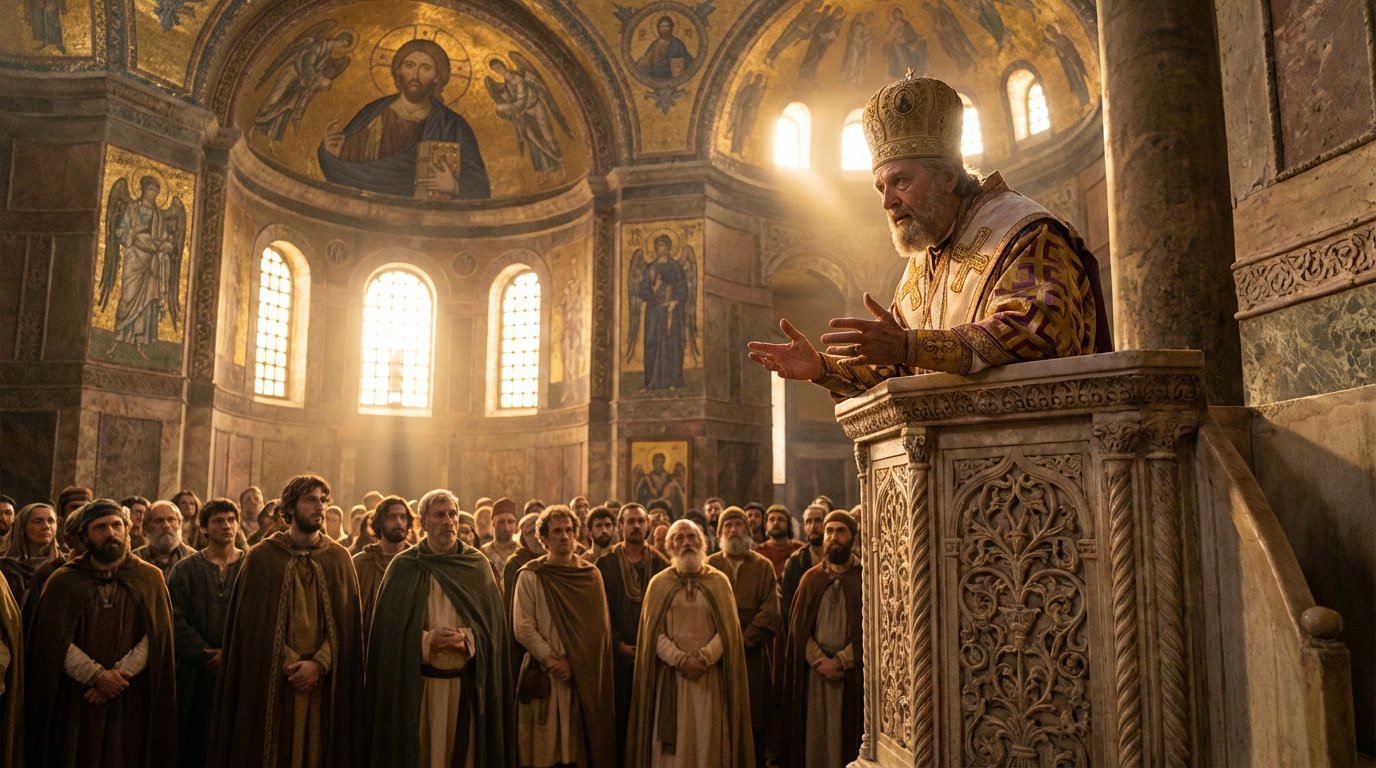
"Let us not ask whether we are able to speak about heavenly things, but whether we are able to hear them." — Saint John Chrysostom
Saint John Chrysostom understood the weight of speaking divine truth in today's Gospel passage. Like Christ who "comes from above" and "speaks the words of God," this fourth-century bishop proclaimed heavenly wisdom to earthly hearts. His golden voice carried the same divine authority that John the Baptist witnessed in Jesus.
Born around 349 AD in Antioch, John earned the title "Chrysostom" — meaning "golden-mouthed" — for his eloquent homilies that pierced hearts and challenged consciences. As Archbishop of Constantinople, he fearlessly preached against corruption among clergy and nobility alike. His exile and eventual death in 407 AD came precisely because he spoke truth that earthly powers could not accept.
The Testimony That Few Accept
Chrysostom's life echoes today's Gospel: "He testifies to what he has seen and heard, but no one accepts his testimony." The saint's powerful sermons on Scripture drew crowds, yet his moral challenges emptied palaces. Empress Eudoxia banished him twice for preaching against vanity and excess.
This rejection mirrors humanity's response to divine testimony. Chrysostom recognized that heavenly truth often conflicts with earthly comfort. His homilies consistently called listeners beyond surface religion toward genuine conversion.
Speaking God's Words Without Ration
The Gospel declares that God "does not ration his gift of the Spirit." Chrysostom embodied this abundance through his prolific preaching ministry. Over 600 of his sermons survive, each one flowing with scriptural insight and pastoral care.
His commentary on Matthew's Gospel reveals how divine wisdom transforms daily life. Chrysostom never spoke from mere human learning but drew from the inexhaustible well of God's truth. This approach can deepen our own engagement with Scripture through Lectio Divina, where we listen for God's unrationed voice.
Choosing Eternal Life Over Earthly Approval
Today's Gospel concludes with stark choice: eternal life through belief in the Son, or remaining under God's wrath through disobedience. Chrysostom faced this choice repeatedly. He could have softened his message, enjoyed imperial favor, lived comfortably.
Instead, he chose fidelity to divine truth over human approval. His exile became his crown. Death in remote Pontus became his victory. Chrysostom demonstrates that accepting Christ's testimony requires concrete decisions that earthly wisdom cannot understand.
Pray in the Spirit of Saint John Chrysostom
Chrysostom's golden tongue emerged from a listening heart. Before each homily, he spent hours in prayer, allowing God's word to penetrate his own soul first. His preaching flowed from contemplation, not mere study.
Follow his example by approaching Scripture with reverent attention. Let divine truth challenge earthly attachments. Ask for courage to speak and live God's word, even when acceptance seems unlikely. Remember that the Spirit's gift flows without ration to those who receive Christ's testimony.
Frequently Asked Questions
Why is Saint John Chrysostom called the "Golden-Mouthed"?
The title "Chrysostom" comes from Greek words meaning "golden mouth." Church historians gave him this name because of his exceptional eloquence in preaching and his ability to explain Scripture with clarity and power that moved hearts toward conversion.
What can we learn from Saint John Chrysostom's homilies today?
Chrysostom's homilies teach practical Christianity rooted in deep scriptural knowledge. His works on Matthew, John, and Paul's letters show how to apply Gospel truths to daily moral decisions, social justice, and spiritual growth in ways that remain relevant for modern Catholics.