
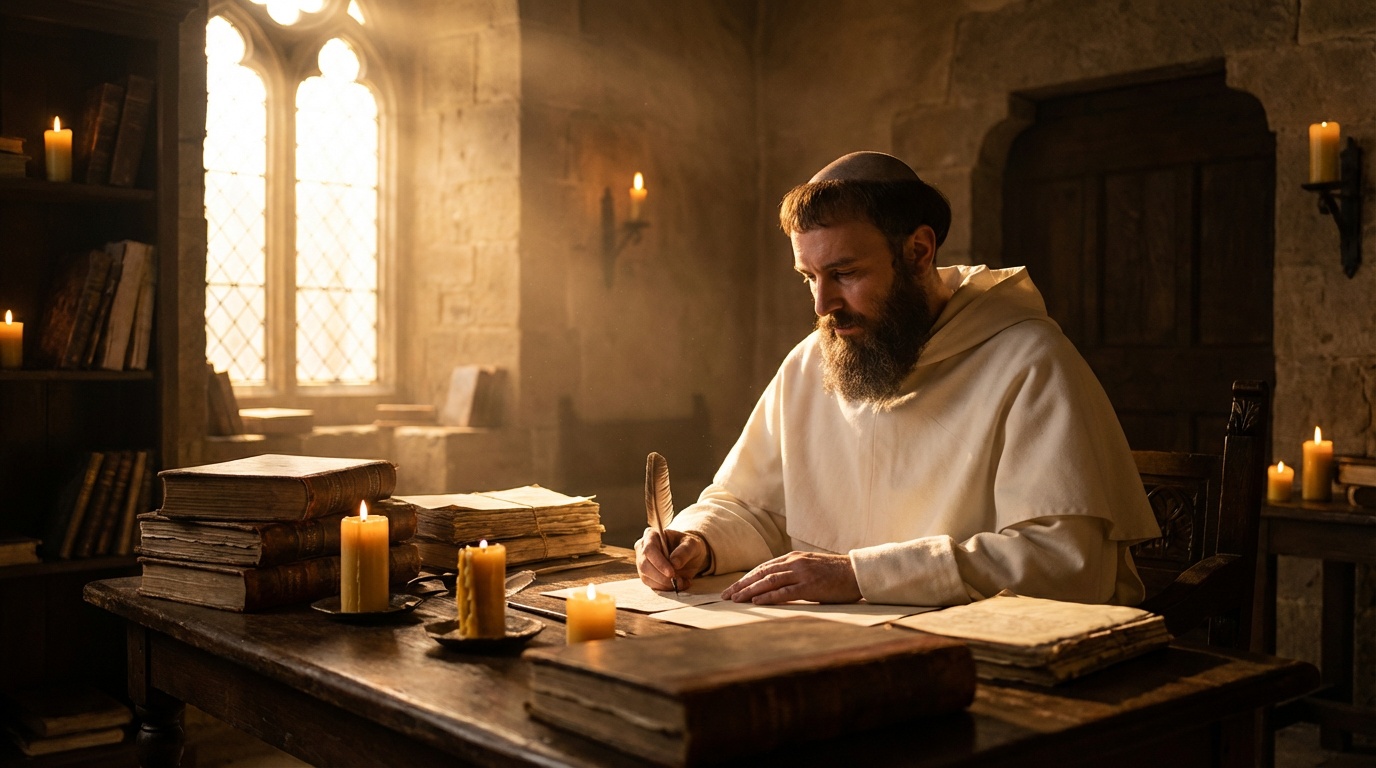
"To one who has faith, no explanation is necessary. To one who has no faith, no explanation is possible."
When Jesus faced stones and accusations of blasphemy in today's Gospel from John 10:31-42, He met doubt with divine logic. The crowd demanded proof. Christ offered His works as evidence. This tension between faith and reason finds its greatest Catholic voice in Saint Thomas Aquinas, the Angelic Doctor who spent his life demonstrating that truth cannot contradict truth.
Thomas Aquinas lived in 13th-century Europe when Aristotelian philosophy threatened to undermine Christian faith. Born into Italian nobility around 1225, he shocked his family by joining the Dominican friars. His massive intellect would reshape Catholic theology forever. The Summa Theologica remains the cornerstone of Catholic philosophical thought.
When Faith Encounters Opposition
The Jews in today's Gospel could not reconcile Jesus' human appearance with His divine claims. Similarly, Thomas Aquinas faced intellectual opposition from those who believed reason and faith were enemies. His response mirrors Christ's approach: demonstrate truth through works and logic.
Aquinas taught that reason leads to faith, not away from it. When skeptics challenge Catholic beliefs today, his method remains sound. Present evidence. Show consistency. Let truth speak for itself. The saint's Five Ways of proving God's existence follow this pattern—careful reasoning that supports revelation.
The Works That Prove the Word
Jesus told His opponents: "If you do not believe me, believe the works." Saint Thomas Aquinas believed divine truth manifests through both reason and miracle. His theological works serve as intellectual miracles, demonstrating that faith enhances rather than diminishes human understanding.
The Angelic Doctor spent countless hours in prayer before writing. His secretary reported that Thomas would weep during Mass, overwhelmed by divine mysteries. This combination of rigorous study and deep prayer offers a model for modern Catholics facing intellectual challenges to faith.
When confronted with doubt—whether from others or within ourselves—we can follow Aquinas' method of prayerful study through Lectio Divina, allowing Scripture and reason to work together in revealing truth.
Daily Wisdom for Intellectual Battles
Modern Catholics encounter skepticism about faith regularly. Social media debates, university classrooms, workplace conversations—all present opportunities to embody Saint Thomas Aquinas' approach to defending truth. The saint never abandoned charity while pursuing clarity.
Aquinas taught that truth has nothing to fear from investigation. When someone challenges Catholic teaching, respond with patience and precision. Study the faith deeply enough to give reasonable answers. Pray for wisdom before engaging in difficult conversations. The Angelic Doctor's example shows that intellectual rigor and humble devotion complement each other perfectly.
Pray in the Spirit of Saint Thomas Aquinas
Before important decisions or challenging conversations about faith, ask Saint Thomas Aquinas for intercession. The Angelic Doctor understood that divine wisdom surpasses human learning. His prayer before study can guide our own intellectual struggles:
"Grant me, O Lord, a steadfast heart that no unworthy affection may drag downward; give me an unconquered heart that no tribulation can wear out; give me an upright heart that no unworthy purpose may tempt aside."
Frequently Asked Questions
What is Saint Thomas Aquinas the patron saint of?
Saint Thomas Aquinas is the patron saint of students, schools, and universities. Pope Leo XIII declared him the patron of all Catholic educational institutions in 1880.
How did Saint Thomas Aquinas die?
Saint Thomas Aquinas died on March 7, 1274, at the Cistercian monastery of Fossanova while traveling to the Council of Lyon. He was 49 years old and had recently experienced a mystical vision that made him declare all his writings "like straw."