
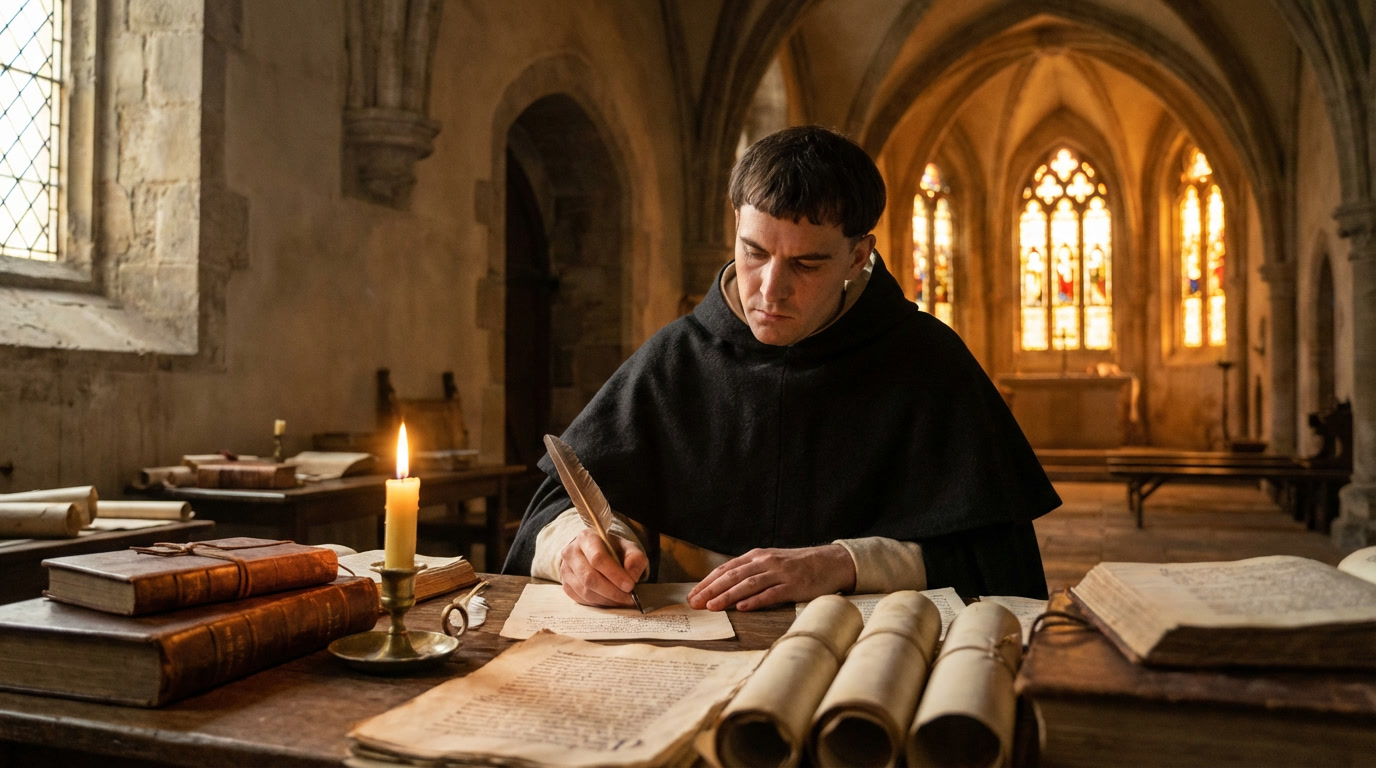
"Truth is the correspondence of the mind with reality. When we know God, we touch the source of all truth."
Saint Thomas Aquinas understood what Jesus meant when He told the Jews that Abraham rejoiced to see His day. The Angelic Doctor spent his life demonstrating that divine truth and human reason need not conflict — they illuminate each other.
Born into Italian nobility around 1225, Thomas shocked his family by joining the Dominican order instead of pursuing worldly advancement. His massive intellect, channeled through prayer and study, produced the Summa Theologica and countless other works that still guide the Church today.
Embracing Truth Without Fear
The Jews in today's Gospel rejected Christ's claim to divine authority. They could not reconcile His humanity with His divine nature. Thomas Aquinas faced similar challenges from those who feared that philosophical reasoning threatened faith.
Yet Thomas showed that truth cannot contradict truth. When Christ declares "before Abraham came to be, I AM," He reveals the eternal reality that reason can approach but only faith can fully embrace. Thomas taught that human intellect, properly ordered, leads toward God rather than away from Him.
The Humility of Authentic Knowledge
"If I glorify myself, my glory is worth nothing," Jesus says. Thomas embodied this principle throughout his scholarly career. Despite his towering intellect, he approached each theological question with profound humility.
Near the end of his life, after a mystical experience during Mass, Thomas declared all his writings "like straw" compared to what had been revealed to him. This wasn't intellectual pride crumbling — it was the natural response of a mind that had touched ultimate reality.
Living the Truth We Know
Jesus tells the crowd, "I know [the Father] and I keep his word." Knowledge without obedience remains sterile. Thomas demonstrated that authentic theological study must lead to deeper prayer and holier living.
When we encounter divine truth — whether through Scripture, reason, or contemplation — our response matters. Like Abraham, we can rejoice in recognizing God's presence. Or like the hostile crowd, we can resist truths that challenge our assumptions. Thomas shows us a third way: careful study joined to humble worship.
This balance between mind and heart finds expression in contemplative prayer. Lectio Divina particularly embodies Thomas's approach — bringing our full intellectual capacity to Scripture while remaining open to the Spirit's deeper movements.
Pray in the Spirit of Saint Thomas Aquinas
Approach today's Gospel with the mind of Thomas Aquinas. Read Christ's words slowly, allowing both reason and faith to engage the text. Notice where Jesus claims divine authority. Consider how Abraham's faith prepared him to "see" Christ's day across the centuries.
Ask the Holy Spirit to grant the humility that marked Thomas's greatest insights. Truth serves love, not pride. When we encounter God's reality — whether in study, prayer, or daily experience — let wonder rather than defensiveness be our first response.
Frequently Asked Questions
What is Saint Thomas Aquinas most famous for?
Saint Thomas Aquinas is most renowned for his Summa Theologica, a comprehensive synthesis of Christian theology and Aristotelian philosophy. His "Five Ways" of demonstrating God's existence and his integration of faith and reason earned him recognition as one of the Church's greatest theologians.
How did Saint Thomas Aquinas influence Catholic education?
Saint Thomas Aquinas revolutionized Catholic education by demonstrating that faith and reason complement rather than contradict each other. His scholastic method became the foundation for Catholic philosophical and theological education, and he remains the patron saint of Catholic schools and universities worldwide.