
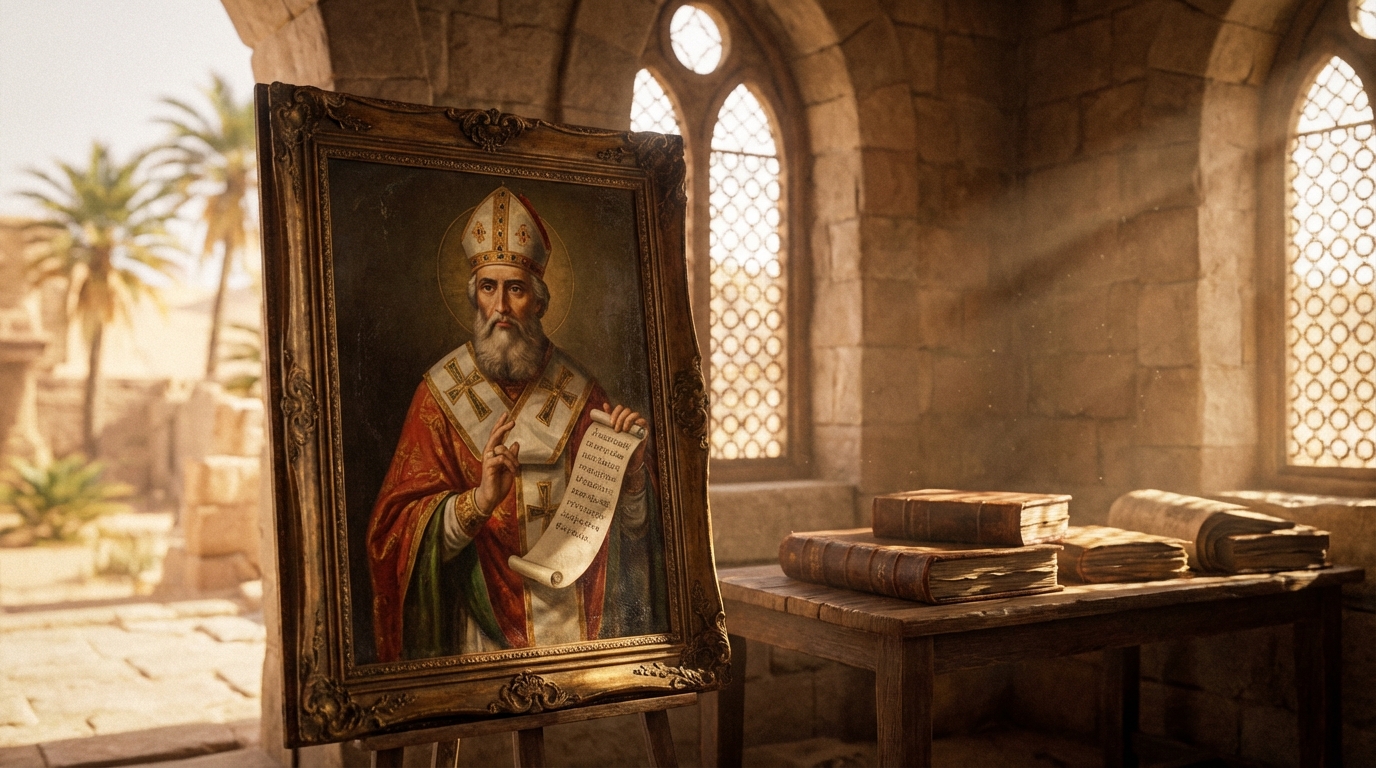
"The Word was not degraded by receiving a body, so as to seek to receive a glory which He did not have; but rather He deified that which He put on, and more than that, gave it graciously to the race of man." —Saint Athanasius
When Jesus declared "My Father is at work until now, so I am at work" in today's Gospel, the religious leaders understood exactly what He meant. Christ claimed divine authority, making Himself equal with God. This bold assertion of divine sonship echoes through the centuries in the witness of Saint Athanasius, who spent his life defending Christ's true divinity against those who would diminish it.
Athanasius served as Bishop of Alexandria from 328 to 373 AD, during the height of the Arian controversy. The Arian heretics taught that Christ was merely the greatest of creatures, denying His equal divinity with the Father. Like the Jewish leaders in John's Gospel who sought to kill Jesus for claiming divine authority, the Arians and their supporters persecuted Athanasius relentlessly for upholding orthodox teaching.
Standing Firm Against the World
"Athanasius contra mundum"—Athanasius against the world. This phrase captures the saint's unwavering defense of Christ's divinity when even emperors and fellow bishops wavered. Five times he was exiled from his see, spending seventeen years in banishment. Yet he never compromised the truth that Jesus Christ is "true God and true man."
The Gospel reveals Jesus performing works that only God can do—giving life, exercising judgment, commanding honor equal to the Father's. Athanasius recognized that if Christ were merely a creature, as Arians claimed, then our salvation would be impossible. Only God can bridge the infinite gap between divine and human nature.
The Father's Work Through the Son
Jesus declares, "The Son cannot do anything on his own, but only what he sees the Father doing." This unity of will and action between Father and Son demonstrates not subordination, but perfect divine harmony. Saint Athanasius explained this mystery: the Son shares the Father's essence completely while remaining a distinct person.
This theological precision mattered for everyday believers then and now. When facing opposition, illness, or doubt, Christians can turn to Christ knowing they encounter true God, not merely an exalted creature. The practice of Lectio Divina helps us meditate deeply on these truths, following Athanasius's example of careful study and prayerful reflection.
Divine Authority in Daily Life
Modern believers face subtle forms of the Arian heresy—cultural messages that reduce Christ to merely a good teacher or moral example. Saint Athanasius reminds us that watering down Christ's divinity undermines the Gospel entirely. When Scripture presents difficult teachings about forgiveness, sacrifice, or moral standards, we cannot dismiss them as merely human wisdom.
The saint's courage in exile teaches another lesson. Speaking truth often brings opposition, even from unexpected sources. Yet like Jesus in today's Gospel, who continued His Father's work despite death threats, faithful Catholics must persist in living and proclaiming orthodox faith.
Pray in the Spirit of Saint Athanasius
Saint Athanasius spent years in the Egyptian desert, learning from the monks about prayer and persecution. His spirituality combined intellectual rigor with deep contemplation. When praying today's Gospel, ask for his intercession to recognize Christ's true divinity in every encounter—whether in Scripture, Eucharist, or daily trials.
Remember that the same divine authority Jesus claimed in Jerusalem continues working through His Church today. Just as the Father showed the Son "everything that he himself does," Christ reveals His nature to those who seek Him with sincere hearts.
Frequently Asked Questions
Why was Saint Athanasius exiled so many times?
Saint Athanasius was exiled five times by various Roman emperors who supported Arianism or sought political compromise with Arian bishops. His unwavering defense of Christ's divinity threatened the imperial desire for religious unity at the expense of doctrinal truth.
What is Saint Athanasius known for writing?
Saint Athanasius is best known for his theological treatises "Against the Arians" and "On the Incarnation." His "Life of Saint Anthony" also became a foundational text for Christian monasticism, inspiring countless souls to pursue deeper union with God.