
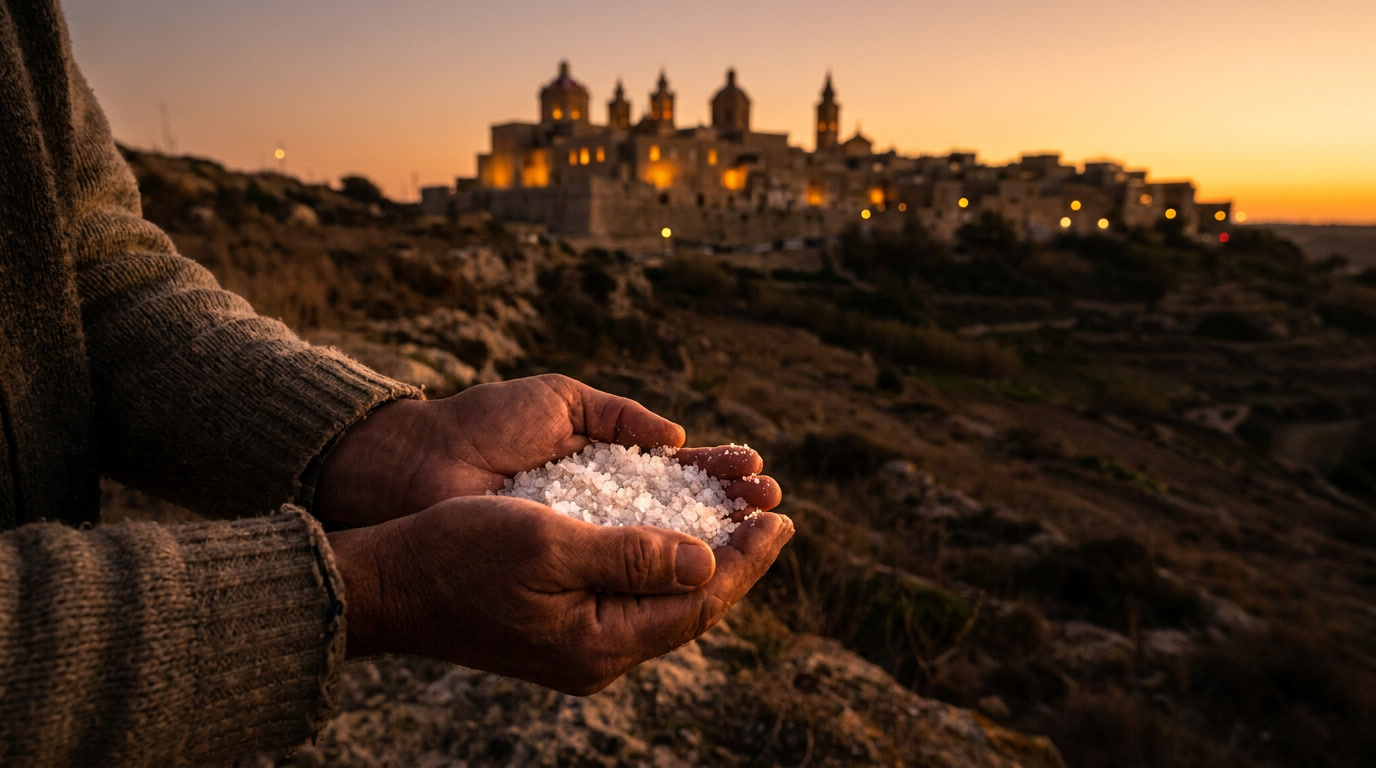
"You are the salt of the earth. But if salt loses its taste, with what can it be seasoned? It is no longer good for anything but to be thrown out and trampled underfoot. You are the light of the world. A city set on a mountain cannot be hidden. Nor do they light a lamp and then put it under a bushel basket; it is set on a lampstand, where it gives light to all in the house. Just so, your light must shine before others, that they may see your good deeds and glorify your heavenly Father." — Matthew 5:13-16
Christ speaks not of what we might become, but what we already are. Salt of the earth. Light of the world. These words carry the weight of divine identity, spoken over each disciple who chooses to follow.
The Lord uses two simple household items to reveal our deepest calling. Salt preserves. Light reveals. Both transform whatever they touch.
The Preserving Power of Salt
Salt penetrates. It cannot fulfill its purpose from a distance. In Christ's time, salt preserved meat from corruption, made food flavorful, and sealed covenants. The disciples understood: their presence must penetrate the world around them.
Yet salt can lose its savor. The Greek word suggests salt mixed with impurities, rendered useless. When disciples compromise their distinctiveness, they forfeit their preserving power. The world needs followers who maintain their saltiness — their capacity to prevent moral decay through faithful presence.
Saint John Chrysostom taught that Christians become the world's salt through virtue that refuses to conform. The preserving work happens in ordinary moments: the honest word when others bend truth, the patient response when others react, the mercy shown when others demand justice.
The Revealing Nature of Light
Light cannot hide its nature. A city on a hill proclaims its existence to every traveler. Christ reminds His followers that concealment contradicts their very essence.
The bushel basket represents our tendency to hide our faith — to keep our light private, contained, safe. Yet light exists for others. The lamp serves the entire household, not just the one who tends it.
This illumination through Franciscan Prayer reveals how Saint Francis understood this call. He became light not through grand gestures but through radical Gospel living. His joy, simplicity, and love for creation made Christ visible to a world grown dark with materialism and violence.
Good Deeds That Point Beyond Themselves
Christ specifies the purpose: "that they may see your good deeds and glorify your heavenly Father." The light we shine reveals not our goodness but God's goodness working through us.
This distinction guards against spiritual pride. Our works point beyond ourselves to the Source. When others see our kindness, patience, or generosity, they should glimpse the Father's character, not our moral superiority.
The Catechism reminds us that good works done in grace participate in God's own goodness. Our deeds become windows through which others see divine love at work in the world.
Living as Salt and Light Today
The call remains urgent in our time. Society needs preserving salt — Christians who maintain their distinctiveness while engaging their culture. The world needs revealing light — believers whose lives make God's love tangible and attractive.
This happens in concrete ways: the parent who forgives repeatedly, the employee who works with integrity, the neighbor who offers help without expecting return. Salt and light work quietly, consistently, transforming whatever they touch.
The danger lies in losing our savor or hiding our light. When Christians blend so completely with culture that no distinction remains, the preserving power vanishes. When we privatize our faith so thoroughly that others never glimpse Christ through our lives, the light fails its purpose.
Pray With This Reading
Consider entering this passage through Lectio Divina. Allow the words "You are the salt of the earth" to settle deeply. Notice where Christ calls you to be salt — preserving, flavoring, healing — in your particular circumstances. Ask for grace to shine without hiding, to preserve without compromising.
Frequently Asked Questions
What does it mean to be salt of the earth in Matthew 5:13?
Being salt of the earth means living with such Gospel distinctiveness that your presence preserves others from moral decay, brings flavor to relationships, and heals divisions. Salt must maintain its essential nature to fulfill its purpose.
How can Christians be light of the world without being prideful?
Christians shine as light when their good deeds point others to God rather than to themselves. The goal is glorifying the heavenly Father, not displaying personal goodness. True light reveals God's character through ordinary acts of love.
What does Jesus mean by not hiding light under a bushel?
Christ warns against privatizing faith or keeping Gospel values confined to religious settings. Light exists to serve others, so believers must live their faith visibly in daily life, allowing others to see God's love through their actions.