
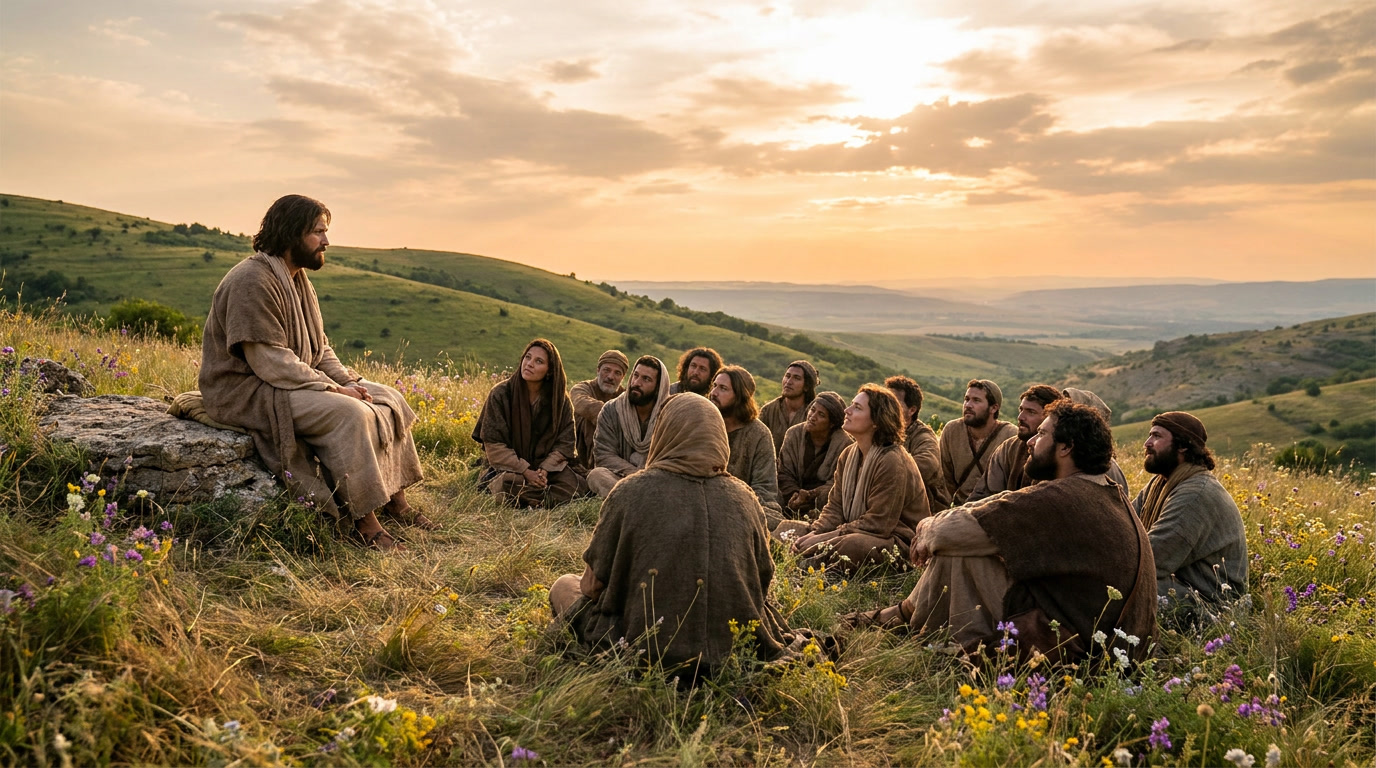
When Jesus saw the crowds, he went up the mountain, and after he had sat down, his disciples came to him. He began to teach them, saying: "Blessed are the poor in spirit, for theirs is the Kingdom of heaven. Blessed are they who mourn, for they will be comforted. Blessed are the meek, for they will inherit the land. Blessed are they who hunger and thirst for righteousness, for they will be satisfied. Blessed are the merciful, for they will be shown mercy. Blessed are the clean of heart, for they will see God. Blessed are the peacemakers, for they will be called children of God. Blessed are they who are persecuted for the sake of righteousness, for theirs is the Kingdom of heaven. Blessed are you when they insult you and persecute you and utter every kind of evil against you falsely because of me. Rejoice and be glad, for your reward will be great in heaven. Thus they persecuted the prophets who were before you."— Matthew 5:1-12
The Beatitudes from Matthew's Gospel stand as Christianity's great reversal. Where the world sees weakness, Christ proclaims strength. Where society dismisses the lowly, heaven opens wide. This sacred mountain discourse reveals the heart of Christian discipleship through eight declarations that transform our understanding of blessedness.
The Poor in Spirit: Emptiness That Receives Everything
Christ begins with spiritual poverty, the foundation of all other beatitudes. The poor in spirit recognize their complete dependence on God's mercy. They carry no spiritual pride, claim no righteousness of their own.
Saint Thérèse of Lisieux embodied this poverty perfectly. Her Little Way embraced spiritual childhood, acknowledging that everything good comes from the Father's hand. The kingdom belongs to those who approach God with empty hands and open hearts.
This poverty differs from material destitution. It speaks to the soul's recognition of its need for divine grace. Those who mourn understand loss deeply. The meek inherit through surrender, not conquest.
Mercy and Purity: The Heart's True Vision
The merciful receive mercy because they participate in God's own nature. Mercy flows from those who have experienced forgiveness firsthand. Saint Faustina's devotion to Divine Mercy reminds us that mercy triumphs over judgment.
Purity of heart enables divine vision. Saint John of the Cross taught that the soul must be purified of all attachments to see God clearly. This purity goes beyond external actions to the heart's deepest intentions.
The clean of heart see God not only in the beatific vision but in daily life. They recognize Christ in the stranger, the suffering, the forgotten. Their vision penetrates beyond appearances to perceive divine presence everywhere.
Peacemakers and the Persecuted: Children of God
Peacemakers earn the title "children of God" because they imitate the Father's reconciling work. True peace requires more than absence of conflict. It demands active engagement in healing division and building unity.
Saint Francis of Assisi exemplified this beatitude. His prayer for peace and his ministry to lepers demonstrated that peacemaking often requires embracing what others reject. The Franciscan prayer tradition continues this legacy of radical peacemaking.
Those persecuted for righteousness sake share in Christ's own suffering. The early martyrs understood that following Jesus sometimes demands everything. Yet their joy remained unshaken because their treasure lay in heaven.
Living the Beatitudes Today
The Beatitudes challenge modern assumptions about success and happiness. They call disciples to find joy in service, strength in vulnerability, and victory in surrender. Each beatitude builds upon the others, creating a complete portrait of Christian character.
These are not mere moral guidelines but descriptions of transformed life. They reveal what human existence looks like when touched by divine grace. The blessed life flows naturally from union with Christ.
Through contemplative prayer, the Beatitudes take root in daily experience. Lectio Divina with this passage allows each beatitude to speak personally, revealing areas where grace seeks to transform.
Pray With This Reading
The Beatitudes invite deep contemplation through Lectio Divina. Begin by slowly reading each beatitude, pausing to let the words settle. Notice which blessing resonates most strongly today. Allow that particular beatitude to become a prayer, asking how God might be calling you to live it more fully. The ancient practice of sacred reading helps these kingdom values take root in the heart, transforming how we see ourselves and our world.
Frequently Asked Questions
What does "poor in spirit" mean in the Beatitudes?
Poor in spirit describes those who recognize their complete spiritual dependence on God. Unlike material poverty, this refers to humility and acknowledgment that all good things come from divine grace, not personal merit or achievement.
How can someone be blessed when they're persecuted?
Persecution for righteousness connects believers to Christ's own suffering. The blessing comes from sharing in His mission and knowing that earthly trials cannot touch the eternal reward awaiting the faithful. Joy transcends circumstances when rooted in divine promise.
Are the Beatitudes meant to be taken literally?
The Beatitudes describe real spiritual attitudes and conditions, not metaphorical concepts. They reveal how God's kingdom operates and what discipleship looks like in practice. Each beatitude calls for concrete transformation in how followers of Christ live and love.