
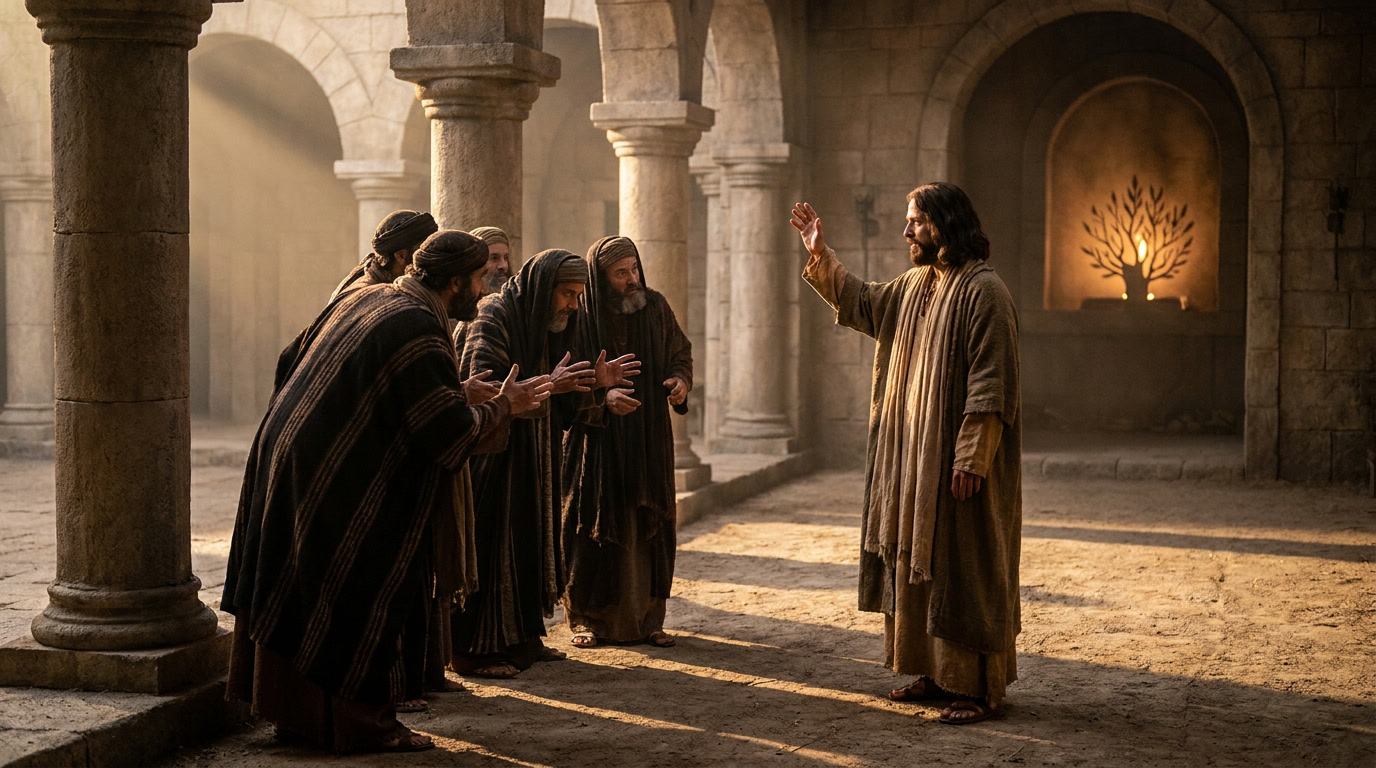
"Jesus said to them, 'Are you not misled because you do not know the Scriptures or the power of God? When they rise from the dead, they neither marry nor are given in marriage, but they are like the angels in heaven.'" - Mark 12:24-25
On this memorial of Saint Charles Lwanga and Companions, who faced death with unwavering faith in the resurrection, the Gospel presents Jesus confronting the Sadducees' denial of eternal life. Their elaborate scenario about seven brothers and one wife reveals not cleverness, but a profound misunderstanding of God's nature.
The Sadducees crafted their question to expose what they saw as logical impossibilities in resurrection belief. Yet Jesus cuts through their hypothetical maze with surgical precision, revealing two fundamental errors that plague human understanding of divine mysteries.
The Error of Limited Scripture Knowledge
Jesus first addresses their incomplete grasp of Scripture. The Sadducees accepted only the Torah, rejecting later writings that spoke more clearly of resurrection. This selective approach to God's word creates dangerous blind spots.
Christ points them to Moses himself, whom they claimed to follow. In the burning bush encounter, God declares: "I am the God of Abraham, the God of Isaac, and the God of Jacob." Present tense. Not "I was their God" when they lived, but "I am" their God still.
The patriarchs live before God. Death does not sever the covenant relationship. This truth echoes through every Mass, where the Church Militant joins the Church Triumphant in worship. The saints we commemorate today knew this reality intimately as they faced martyrdom.
What Scripture Reveals About Eternal Life
The Hebrew Scriptures contain seeds of resurrection hope that bloom fully in Christ. Daniel speaks of those who sleep in the dust awakening to everlasting life. The Psalms declare that God will not abandon the faithful to Sheol.
Jesus reveals the deeper pattern: God's faithfulness transcends earthly limitations. The covenantal "I am" encompasses past, present, and future in the eternal now of divine love.
The Error of Underestimating God's Power
The Sadducees' second error cuts deeper. They could not imagine existence beyond current earthly categories. Marriage, procreation, family structures—these good gifts of earthly life become their prison when projected onto eternity.
Jesus speaks of the risen being "like the angels in heaven." Not that humans become angels, but that resurrection life transcends biological necessities. The intimate union marriage represents finds its fulfillment in perfect communion with God and all the redeemed.
Saint Charles Lwanga and his companions demonstrate this truth. Their martyrdom revealed love stronger than death, hope beyond earthly comfort. They chose the eternal over the temporal because they grasped what the Sadducees could not: God's power to create entirely new modes of existence.
Resurrection Life Transforms Everything
Resurrection does not simply restore what was, but transforms it into something unimaginably greater. The risen Christ bears the marks of crucifixion, yet passes through locked doors. Continuity and radical transformation unite in divine mystery.
This reality should shape how Catholics approach earthly relationships and responsibilities. Marriage, family, work—all participate in eternal significance while remaining penultimate goods. Lectio divina on resurrection passages can deepen this understanding.
The Living God Who Conquers Death
Jesus' final declaration strikes at the heart of Sadducee materialism: "He is not God of the dead but of the living." Death appears final only from limited human perspective. In God's sight, those who die in grace enter fuller life.
This truth sustained the Ugandan martyrs as they faced King Mwanga's fury. They knew their deaths would birth new life in the Church. Their blood became seed, their witness a bridge between earthly pilgrimage and heavenly homeland.
The memorial today reminds us that resurrection faith is not philosophical speculation but lived reality. Christians face persecution, suffering, and death differently because they know death's sting has been removed.
Living With Resurrection Hope
Resurrection hope transforms daily existence. Grief remains real, but despair loses its grip. Earthly losses hurt deeply, yet cannot define ultimate reality. The God who raised Jesus from the dead continues His work of bringing life from death.
This hope should mark Catholic living with distinctive joy and courage. Not the shallow optimism of positive thinking, but the deep peace of those who know the final chapter has already been written in Christ's victory.
Pray With This Reading
The profound mystery of resurrection calls for contemplative prayer that moves beyond intellectual analysis. St. John of the Cross method offers a pathway into the darkness of faith where such mysteries dwell. Allow the Spirit to kindle hope that transcends earthly categories, embracing the God who is not of the dead but of the living.
Frequently Asked Questions
What did Jesus mean by being "like the angels" in heaven?
Jesus indicates that resurrection life transcends biological functions like marriage and procreation. Angels serve God in perfect communion without need for earthly relationships that ensure species survival. The risen enjoy direct relationship with God that fulfills all human longings.
Why did the Sadducees reject belief in resurrection?
The Sadducees were religious conservatives who accepted only the Torah as Scripture, rejecting later writings that spoke more clearly of afterlife. They also embraced Greek philosophical materialism that viewed the soul as inseparable from the body, making survival after death impossible.
How does resurrection hope affect Christian living today?
Resurrection faith provides ultimate perspective on suffering, loss, and death. While earthly pain remains real, it cannot define final reality. This hope enables Christians to face persecution, serve sacrificially, and maintain joy amid trials because they know God's victory is assured.