
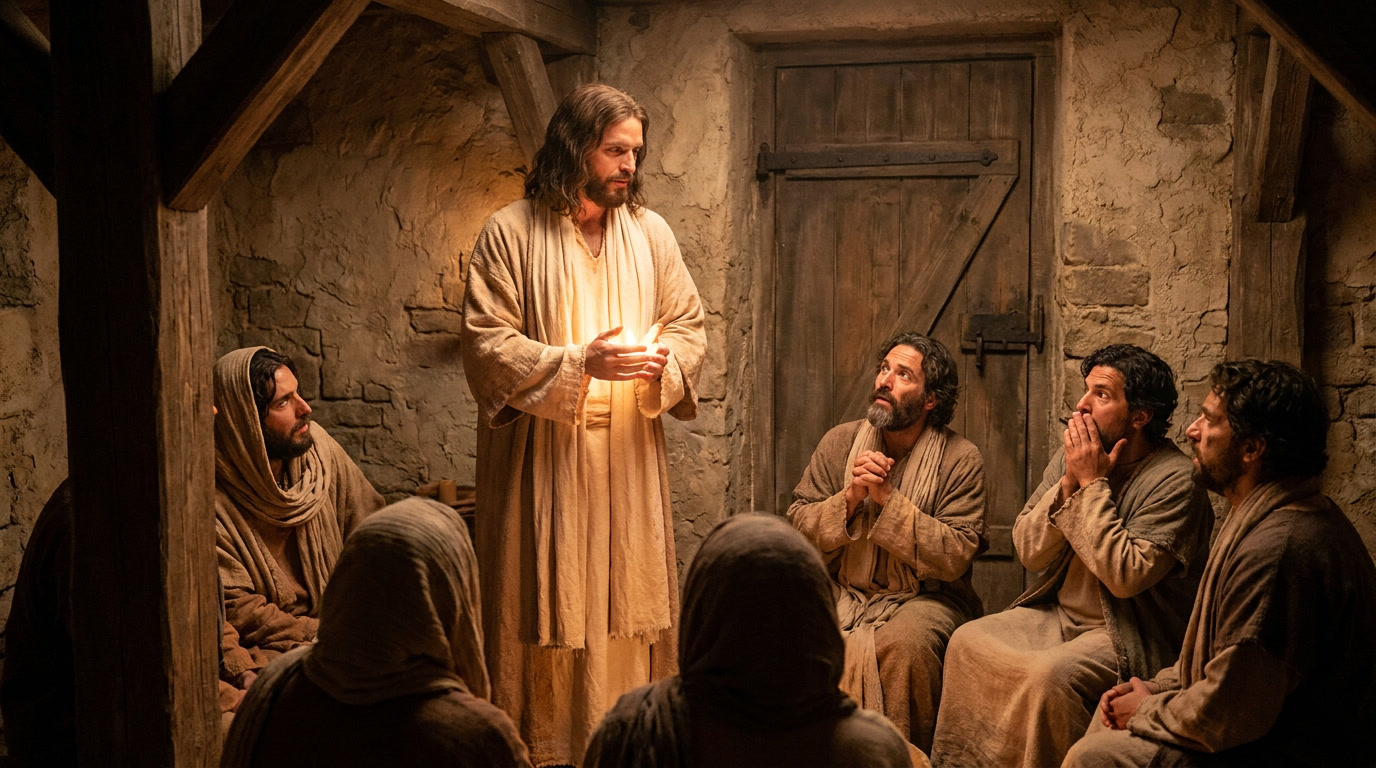
On the evening of that day, the first day of the week, the doors being shut where the disciples were, for fear of the Jews, Jesus came and stood among them and said to them, "Peace be with you." When he had said this, he showed them his hands and his side. Then the disciples were glad when they saw the Lord. Jesus said to them again, "Peace be with you. As the Father has sent me, even so I send you." And when he had said this, he breathed on them, and said to them, "Receive the Holy Spirit. If you forgive the sins of any, they are forgiven; if you retain the sins of any, they are retained."
— John 20:19-23
Behind locked doors, fear grips the disciples. The crucifixion has shattered their hopes. Yet into this sealed chamber of terror, Christ enters with peace. This Pentecost Gospel reveals how the Holy Spirit transforms cowering hearts into courageous ministers of reconciliation.
Peace That Penetrates Fear
Christ's first word pierces the disciples' terror: "Peace be with you." This is not mere greeting but divine proclamation. The peace of Christ transcends human understanding, entering spaces where fear has barred every door.
The disciples had witnessed their Master's brutal death. They huddle in darkness, expecting persecution. Yet Christ's presence dissolves their panic with supernatural calm. His wounds become proof not of defeat but of victory over death itself.
Saint John Chrysostom teaches that this peace flows from Christ's passion. The marks in his hands and side testify to love stronger than death. When we encounter Christ in prayer, especially through Ignatian Contemplation, we too receive this peace that transforms anxiety into trust.
The Divine Breath of Mission
"As the Father has sent me, even so I send you." These words establish the Church's apostolic foundation. Christ's mission becomes the disciples' mission. His sending becomes their sending.
Then comes the pivotal moment: Christ breathes on them. This divine breath echoes Genesis, when God breathed life into Adam. Now the risen Lord breathes resurrection life into his Church. The Holy Spirit transforms frightened followers into fearless evangelizers.
This breathing is intimate, personal. Each disciple receives the Spirit individually. Yet this personal gift creates communal mission. The Church is born not from human courage but from divine breath.
The Power to Bind and Loose
"If you forgive the sins of any, they are forgiven." Christ grants his disciples authority over sin itself. This power of forgiveness becomes the sacrament of reconciliation, where Christ continues to breathe mercy through his priests.
The authority to retain sins serves mercy, not vengeance. It protects the penitent from false forgiveness that ignores genuine repentance. True mercy requires true conversion.
Saint Thomas Aquinas explains that this power flows from Christ's sacrifice. The disciples become instruments of his redemption. Through them, the risen Lord continues his ministry of reconciliation until the end of time.
From Fear to Faith
The transformation is complete. Disciples who cowered behind locked doors will soon proclaim Christ in Jerusalem's streets. The Holy Spirit has turned their fear into faith, their hiding into heralding.
This same Spirit breathes life into our own paralyzed hearts. When anxiety locks us behind doors of doubt, Christ enters with peace. When fear silences our witness, the Spirit empowers our voice. The Pentecost Gospel continues today in every believer who receives the divine breath.
Pray With This Reading
This Gospel invites deep contemplation of Christ's breathing upon his disciples. Consider praying with Lectio Divina, slowly savoring each word of Christ's commission. Allow the Spirit to breathe new life into your own mission as his disciple.
Frequently Asked Questions
What is the significance of Jesus breathing on the disciples?
Jesus breathing on the disciples echoes God breathing life into Adam in Genesis. This divine breath imparts the Holy Spirit, transforming the disciples from fearful followers into apostolic ministers. It establishes the sacramental priesthood and the Church's mission of reconciliation.
How does this Gospel passage relate to Pentecost?
While Acts describes the dramatic Pentecost with wind and fire, John's Gospel shows Jesus giving the Holy Spirit on Easter evening. Both passages reveal the same truth: the risen Christ empowers his Church through the Spirit. This breathing prefigures the full Pentecost outpouring that launches the Church's universal mission.
What does the power to forgive or retain sins mean?
Christ grants his apostles sacramental authority to absolve or withhold absolution from sins. This becomes the foundation of the sacrament of reconciliation. The power to retain sins protects both penitent and community, ensuring genuine repentance accompanies forgiveness.