
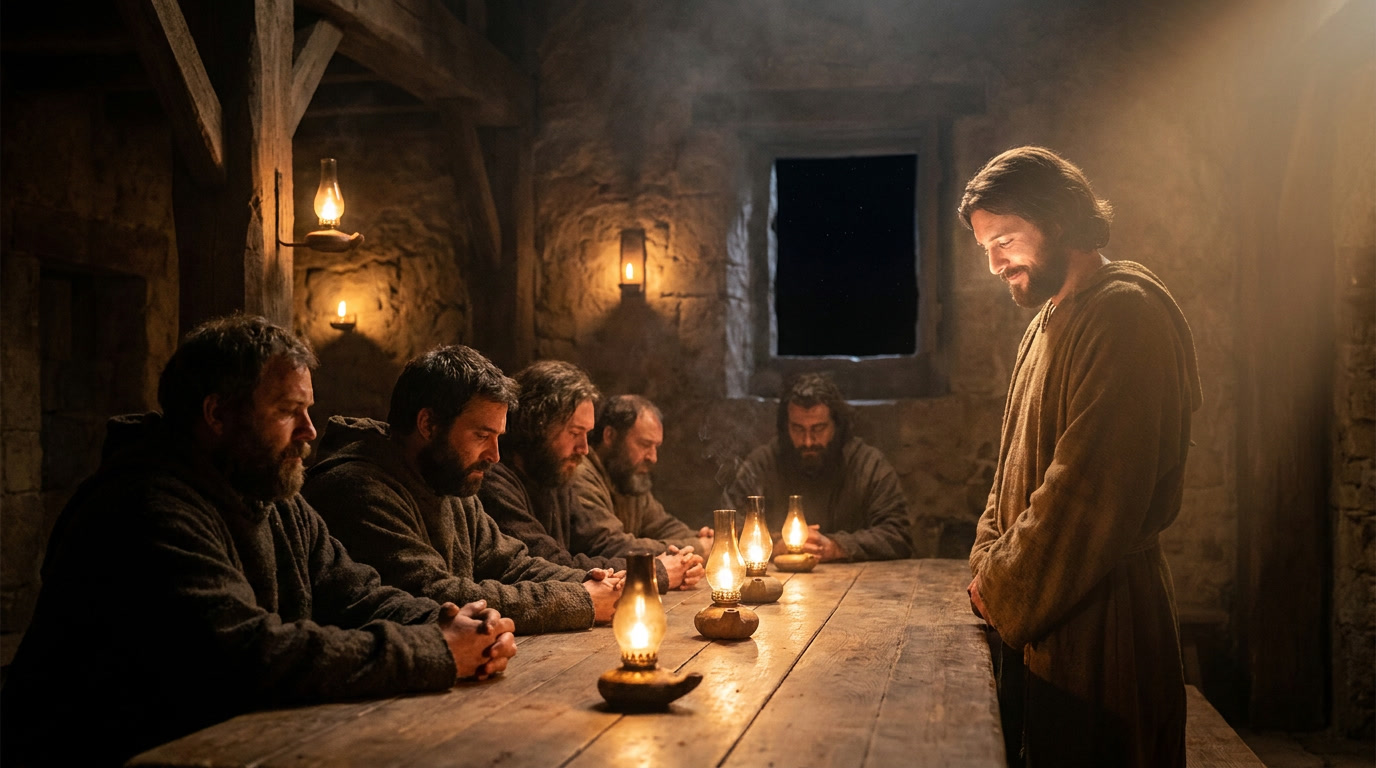
The disciples said to Jesus, "Now you are talking plainly, and not in any figure of speech. Now we realize that you know everything and that you do not need to have anyone question you. Because of this we believe that you came from God." Jesus answered them, "Do you believe now? Behold, the hour is coming and has arrived when each of you will be scattered to his own home and you will leave me alone. But I am not alone, because the Father is with me. I have told you this so that you might have peace in me. In the world you will have trouble, but take courage, I have conquered the world." — John 16:29-33
The disciples speak with confident certainty. They understand now. They believe. Yet Jesus knows what they do not: belief tested by fire reveals its true nature. Within hours, these same men who declare their faith will flee into the night, leaving the One they claim to follow hanging alone on a cross.
This moment captures the tender realism of Christ's love. He does not shatter their confidence or mock their declaration. Instead, He offers what they will need most: the promise of peace and the assurance of His victory over a world that brings trouble to every human heart.
The Scattering That Reveals Our Need
"Each of you will be scattered to his own home." These words predict not just the disciples' flight on Holy Thursday night, but the universal human experience of isolation when faith meets its greatest tests. The scattering happens whenever suffering strips away our spiritual confidence and sends us running to whatever feels safe.
Yet Jesus speaks of this scattering without condemnation. He knows the weakness of human hearts. The disciples who boldly proclaim their belief are the same ones who will soon discover the gap between intellectual assent and the costly discipleship that endures persecution.
Saint John of the Cross understood this dynamic well. In his writings on the dark night of the soul, he describes how God permits periods of spiritual dryness and apparent abandonment to purify our faith. What feels like scattering often becomes the pathway to deeper union with Christ.
The Solitude That Is Never Empty
"I am not alone, because the Father is with me." In speaking these words, Christ reveals the secret of peace that surpasses understanding. His solitude differs fundamentally from human isolation because it rests in perfect communion with the Father.
This divine companionship becomes the source of the peace He promises to His followers. When the world's troubles overwhelm and human support fails, the same Father who sustained Jesus through His passion remains present to those who seek Him in prayer.
The saints found this truth tested and proven in their own lives of prayer. St. John of the Cross Method teaches us to embrace these moments of apparent spiritual emptiness as invitations to trust in God's hidden presence. Even when we cannot feel Him, He remains closer than our own breath.
Peace in the Promise of Victory
"In the world you will have trouble, but take courage, I have conquered the world." Christ offers no false comfort about the difficulty of earthly life. Trouble comes. It finds every human heart. The promise is not escape but peace within the struggle.
This conquest over the world does not mean the elimination of suffering but its transformation. Through His death and resurrection, Jesus has broken the power of sin and death to have the final word. What appears as defeat becomes the pathway to victory.
The early martyrs understood this paradox. They faced lions and flames with songs on their lips because they grasped that Christ's victory had already secured their ultimate destiny. Present trouble could not touch the deeper reality of their union with the Risen One.
Pray With This Reading
This Gospel passage invites us into contemplative prayer that acknowledges both our weakness and God's strength. Surrender Prayer offers a particularly fitting approach to these verses, allowing us to release our need to understand everything and trust in Christ's promise of peace.
Begin by reading the passage slowly, paying attention to Jesus's tone of gentle realism. Notice how He neither condemns the disciples' future failure nor offers empty reassurance. Instead, He provides what they need most: the promise of His presence and victory.
Place yourself among those disciples, acknowledging your own tendency toward scattering when faith becomes costly. Ask Christ to help you receive His peace not as an escape from trouble but as strength within it.
How can I find peace when overwhelmed by life's troubles?
Jesus promises peace that comes not from the absence of trouble but from His presence within it. This peace grows through prayer that acknowledges His victory over all that threatens to overwhelm us. Regular contemplative prayer, especially during difficult seasons, cultivates this deeper trust.
What does it mean that Jesus conquered the world?
Christ's victory over the world refers to His triumph over sin, death, and all powers that separate us from God's love. This conquest was accomplished through His death and resurrection, breaking the ultimate power of evil while not eliminating present struggles.
Why does faith sometimes feel weak during trials?
The disciples' experience shows that intellectual belief differs from tested faith. Trials reveal the difference between knowing about God and truly knowing Him. These seasons of apparent weakness often become opportunities for deeper spiritual growth and authentic trust.