
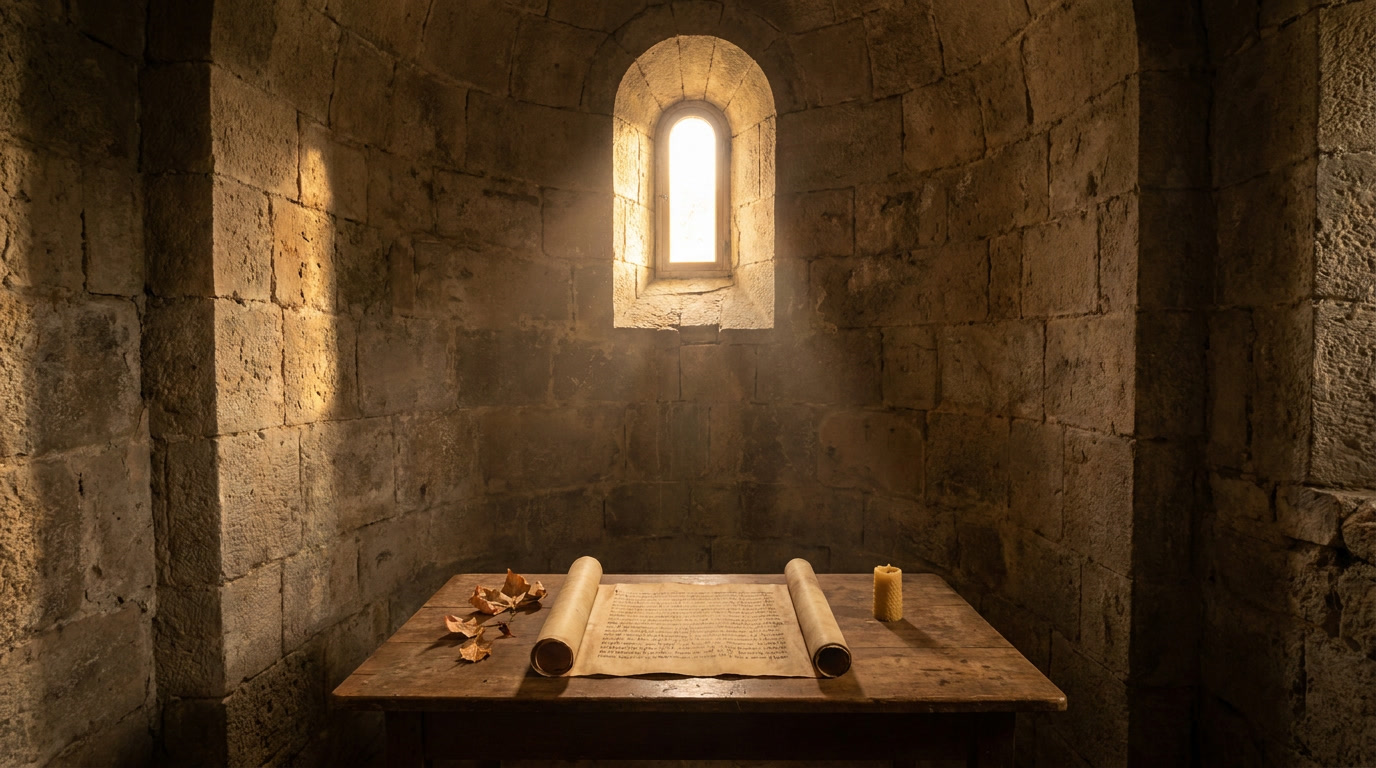
"If you love me, you will keep my commandments. And I will ask the Father, and he will give you another Advocate to be with you always, the Spirit of truth, whom the world cannot accept, because it neither sees nor knows him. But you know him, because he remains with you, and will be in you." — John 14:15-21
Christ speaks these words on the eve of His passion, knowing His disciples face abandonment and fear. The Spirit of Truth becomes not merely a consolation but the very presence of God dwelling within the faithful heart. This promise transforms the Christian life from external observance to intimate union.
Love Expressed Through Obedience
"If you love me, you will keep my commandments." Christ establishes the foundation: love proves itself through action. This is not the burden of law but the freedom of relationship. When love motivates obedience, commandments become pathways to deeper union rather than external constraints.
The saints understood this paradox. St. John of the Cross wrote that the soul in love finds Christ's yoke sweet and His burden light. Observance flows from affection, not fear. The commandments guide the lover toward the Beloved.
This love-obedience relationship shapes the entire Christian journey. Each act of faithfulness opens the heart wider to receive God's presence. Each moment of surrender prepares the soul for the Spirit's indwelling.
The Advocate Who Remains Forever
Christ promises another Advocate—the Spirit of truth who abides always. Unlike human consolers who come and go, this divine Advocate dwells permanently within the believing heart. The world cannot recognize this Spirit because it seeks only what the senses can grasp.
The Paraclete brings both comfort and conviction. He consoles the grieving and convicts the complacent. He teaches from within, writing God's law on hearts of flesh rather than tablets of stone. This interior teacher surpasses all external instruction.
St. Teresa of Avila described this divine indwelling as the soul's interior castle where God waits to meet His beloved. The Spirit makes this mystical marriage possible, preparing the soul for union through prayer and purification.
Not Orphaned but Adopted
"I will not leave you orphans; I will come to you." Christ's ascension does not mean abandonment but transformation of presence. Through the Spirit, He comes closer than breath itself. The external Jesus becomes the internal Christ, dwelling in the very center of the soul.
This divine adoption surpasses human understanding. Orphans lack both parents and inheritance. Yet Christ's disciples receive the fullness of divine sonship. They inherit not worldly goods but participation in God's own life.
The promise extends beyond comfort to transformation. "You will realize that I am in my Father and you are in me and I in you." This mutual indwelling—perichoresis—invites the soul into the very life of the Trinity.
Love Revealed in Intimate Knowledge
"Whoever has my commandments and observes them is the one who loves me." Christ repeats the love-obedience theme, then adds a profound promise: "I will love him and reveal myself to him." Divine revelation comes not through intellectual study alone but through lived faithfulness.
This self-revelation happens gradually. As the soul grows in obedience, Christ unveils more of His mystery. The faithful heart becomes capable of receiving deeper revelations. Each act of love prepares for greater intimacy.
The mystics testify to this progressive unveiling. St. Catherine of Siena received profound visions only after years of faithful service. St. Faustina's revelations came through simple obedience to daily duties. Faithfulness in small things prepares for extraordinary grace.
Pray With This Reading
This Gospel passage invites St. John of the Cross Method for prayer. His mystical approach helps the soul recognize the Spirit's subtle movements within. Allow the darkness of not-knowing to lead toward the light of divine union.
Consider also Lectio Divina with these verses. Let Christ's promise of the Spirit penetrate slowly into consciousness through repeated meditation on His words of comfort and challenge.
What does it mean that the Spirit of Truth will be in us?
The Spirit dwelling within means God's presence becomes intimate and permanent rather than external and occasional. This interior presence transforms the heart from within, making possible the very life of grace.
How do we know if we truly love Jesus according to this passage?
Love proves itself through keeping Christ's commandments. This obedience flows from affection rather than fear, creating a cycle where love leads to faithfulness and faithfulness deepens love.
Why can't the world accept the Spirit of Truth?
The world relies only on what the senses can perceive and reason can grasp. The Spirit operates in the realm of faith and grace, which requires spiritual sight that comes only through surrender to God.