
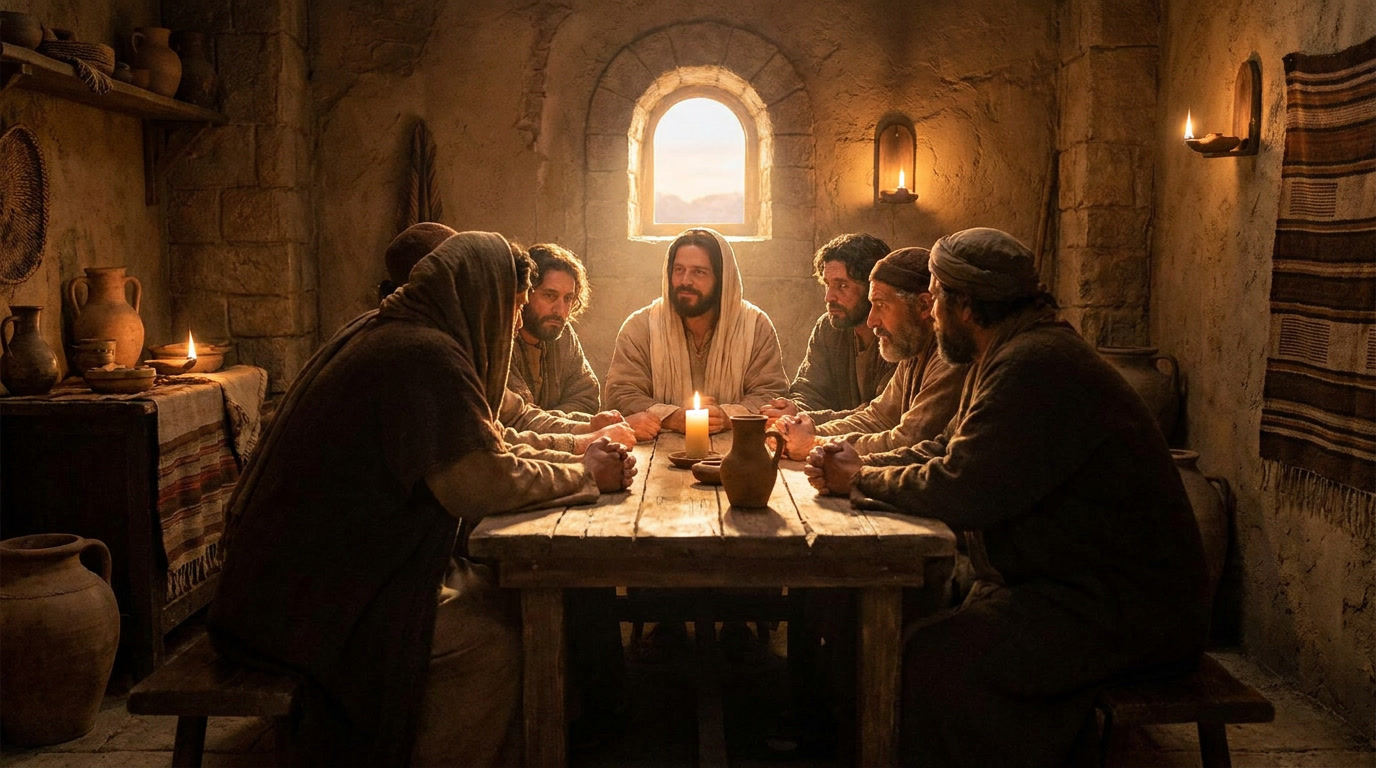
"Peace I leave with you; my peace I give to you. Not as the world gives do I give it to you. Do not let your hearts be troubled or afraid. You heard me tell you, 'I am going away and I will come back to you.' If you loved me, you would rejoice that I am going to the Father; for the Father is greater than I. And now I have told you this before it happens, so that when it happens you may believe. I will no longer speak much with you, for the ruler of the world is coming. He has no power over me, but the world must know that I love the Father and that I do just as the Father has commanded me." — John 14:27-31a
Christ's peace stands distinct from every comfort the world offers. In this farewell discourse, Jesus speaks to hearts already heavy with approaching loss. His disciples face the unthinkable—their Teacher, their Hope, will soon depart. Yet in this moment of impending separation, Christ offers not consolation but transformation.
The Peace That Conquers Fear
"My peace I give to you." These words carry the weight of divine promise. Christ's peace flows from union with the Father, not from favorable circumstances. This peace sustained the martyrs in arena sand. It strengthened saints through persecution and exile.
The world's peace depends on absence of conflict, accumulation of security, fulfillment of desires. Christ's peace transcends these temporal foundations. It rests in complete surrender to the Father's will, even unto death. Surrender Prayer helps us enter this same abandonment to divine providence.
"Do not let your hearts be troubled or afraid." This command reveals peace as choice, not feeling. Fear arises when hearts cling to what must pass away. Christ's peace flows from anchoring hope in what endures forever—the Father's love.
Love That Rejoices in Departure
"If you loved me, you would rejoice that I am going to the Father." These words pierce through natural affection to divine love. Human love grasps and holds. Divine love releases for greater good.
The disciples loved Jesus according to their understanding. They treasured His physical presence, His daily teaching, His protective power. Christ calls them beyond this natural attachment to participation in His mission. His return to the Father ensures the Spirit's coming. His glorification enables their apostolic calling.
Saint John of the Cross understood this purification of love. He taught that attachment, even to spiritual consolations, can hinder union with God. True love seeks God's glory above personal comfort.
The Ruler of This World Has No Power
"The ruler of the world is coming. He has no power over me." Christ faces Satan's final assault with complete confidence. This assurance flows not from superior strength but from perfect obedience to the Father.
The devil's power operates through temptation to disobedience, to self-will, to fear of suffering. Christ remains untouchable because He wills only what the Father wills. His human will aligns perfectly with divine will. No gap exists for temptation to enter.
This same protection extends to all who live in Christ. Satan can assault from without but cannot penetrate hearts surrendered to God. The saints knew this security. They walked through trials untouched in their depths.
Believing Before It Happens
"I have told you this before it happens, so that when it happens you may believe." Christ prepares His disciples for scandal. The cross will shatter their expectations. Death will seem to defeat love.
Yet He plants seeds of understanding before the storm. Memory of these words will sustain them through dark hours. The Spirit will bring these teachings to remembrance when hearts need them most.
This pattern continues in our lives. God prepares us for trials through Scripture, through the saints' examples, through quiet interior movements. Grace works ahead of need, strengthening souls before testing comes.
Pray With This Reading
This passage invites deep contemplation of Christ's inner peace. Ignatian Contemplation allows us to enter the scene, to witness Jesus's serene confidence, to receive His peace personally. Place yourself among the disciples. Notice their anxiety. Observe Christ's calm. Let His words speak directly to your fears.
Frequently Asked Questions
What is the difference between God's peace and worldly peace?
God's peace flows from union with His will, remaining constant through all circumstances. Worldly peace depends on external conditions and fades when troubles arise. Christ's peace transforms the heart rather than changing situations.
How can we experience Christ's peace during difficult times?
Christ's peace comes through surrender to God's will and trust in His love. Regular prayer, meditation on Scripture, and abandonment to divine providence open hearts to receive this supernatural peace that surpasses understanding.
Why did Jesus say His disciples should rejoice in His departure?
Jesus's return to the Father would send the Holy Spirit and complete our redemption. His glorification enables our participation in divine life. True love seeks the beloved's highest good, even when it requires temporary separation.