
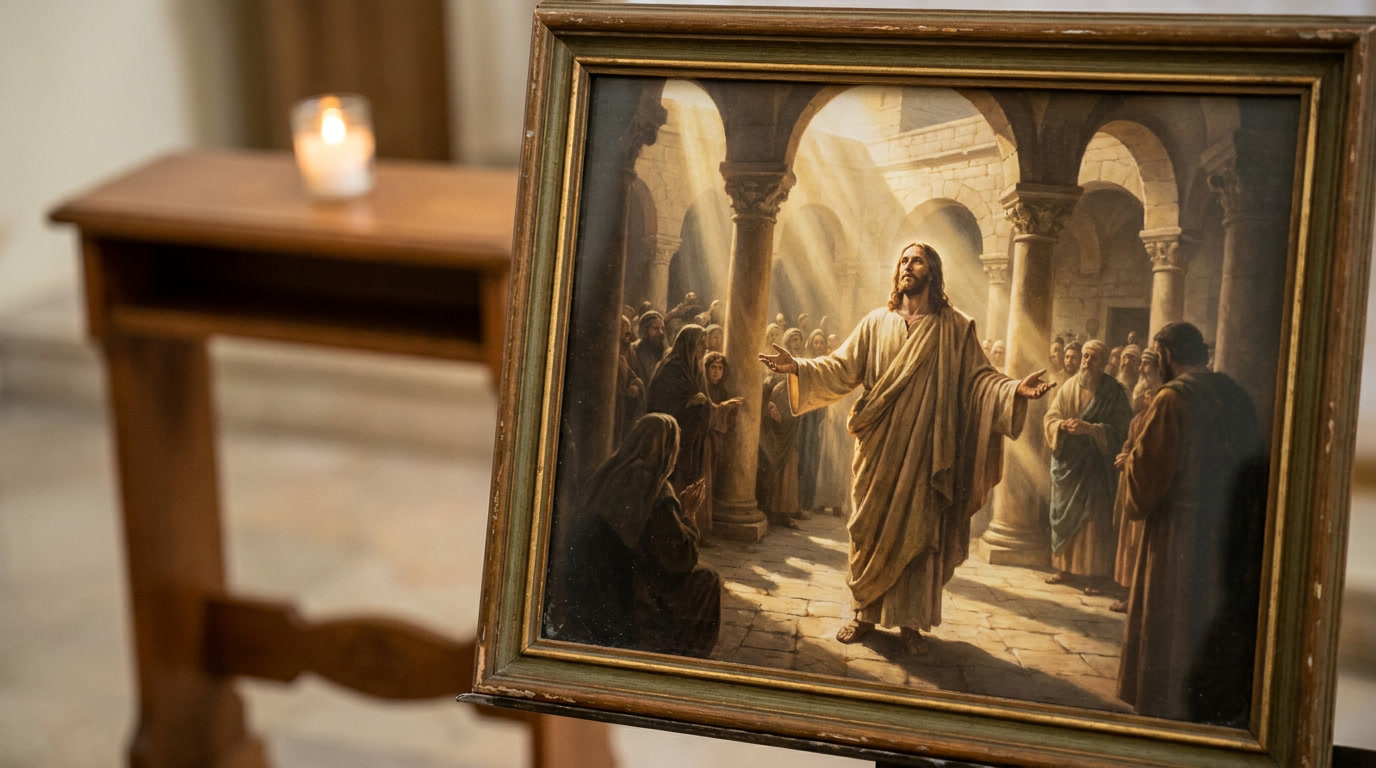
"Jesus cried out and said, 'Whoever believes in me believes not only in me but also in the one who sent me, and whoever sees me sees the one who sent me. I came into the world as light, so that everyone who believes in me might not remain in darkness.'" - John 12:44-46
Christ's final public discourse in John's Gospel carries urgent weight. These words echo with the voice of perfect obedience to the Father. On this Memorial of Saint Catherine of Siena, we encounter Jesus not as judge but as light piercing the world's darkness.
Christ as Perfect Revelation of the Father
"Whoever sees me sees the one who sent me." These words reveal the heart of the Incarnation. Christ does not merely represent God—He is God made flesh. When the centurion looked upon Jesus crucified, when Mary Magdalene encountered Him risen, when the disciples walked with Him to Emmaus, they glimpsed the Father's face.
Saint Catherine of Siena understood this profound truth. In her Dialogue, she records the Father speaking of Christ: "He is the bridge that leads from earth to heaven." Through Jesus, the invisible God becomes visible, the unknowable becomes known.
The Father's nature shines through every word Jesus speaks, every gesture He makes. His compassion for sinners reflects divine mercy. His tears over Jerusalem echo heaven's sorrow for lost souls.
Light Conquering Darkness
"I came into the world as light." This declaration recalls the first words of creation: "Let there be light." Christ brings new creation, dispelling the darkness of sin and death that has shrouded humanity since the Fall.
Darkness here means more than ignorance. It represents separation from God, the spiritual blindness that prevents souls from recognizing truth. Christ's light penetrates this darkness not through force but through invitation.
Those who choose to remain in darkness do so freely. The light shines, but it does not coerce. This respect for human freedom reflects the Father's own heart—love that invites rather than compels.
Words of Life, Not Condemnation
"I did not come to condemn the world but to save the world." Here lies the Gospel's revolutionary message. Where human nature expects judgment, Christ offers salvation. Where fear anticipates wrath, love extends mercy.
Yet Christ's words carry consequence. Those who reject His message will find themselves judged by the very words they refused to hear. This judgment comes not from divine vengeance but from the natural result of choosing darkness over light.
The Father's commandment through Christ is eternal life. Every word Jesus speaks serves this single purpose—to draw souls into the life of the Trinity.
Perfect Obedience to the Father's Will
"I did not speak on my own, but the Father who sent me commanded me what to say." Christ's perfect obedience stands in stark contrast to human pride and self-will. He speaks only what the Father commands, acts only as the Father directs.
This obedience flows from love, not fear. The Son delights in the Father's will because Their will is one. Saint Catherine witnessed this truth in mystical prayer, seeing how Christ's human will became perfectly aligned with His divine will.
For disciples, Christ's example shows the path to freedom. True liberty comes not from asserting our own will but from surrendering to God's perfect plan for our lives.
Pray With This Reading
This Gospel passage invites deep contemplation of Christ's identity and mission. Consider approaching it through Ignatian Contemplation, placing yourself among the crowd hearing Jesus' final public words. Notice His tone, His urgency, His love.
Allow the Spirit to illuminate how Christ continues to serve as light in your own life, revealing the Father's heart through Scripture, sacrament, and prayer.
Frequently Asked Questions
What does it mean that Jesus came as light into the world?
Christ as light means He reveals truth about God and humanity while dispelling the spiritual darkness of sin. His presence illuminates the path to eternal life and shows us the Father's true nature.
Why doesn't Jesus condemn those who reject His words?
Jesus came primarily to save, not condemn. Those who reject His message condemn themselves by choosing darkness over light. The judgment comes from their own choice rather than divine wrath.
How do we see the Father through Jesus?
Every aspect of Christ's life—His mercy, justice, love, and sacrifice—perfectly reveals the Father's character. Through the Incarnation, the invisible God becomes visible in human form.