
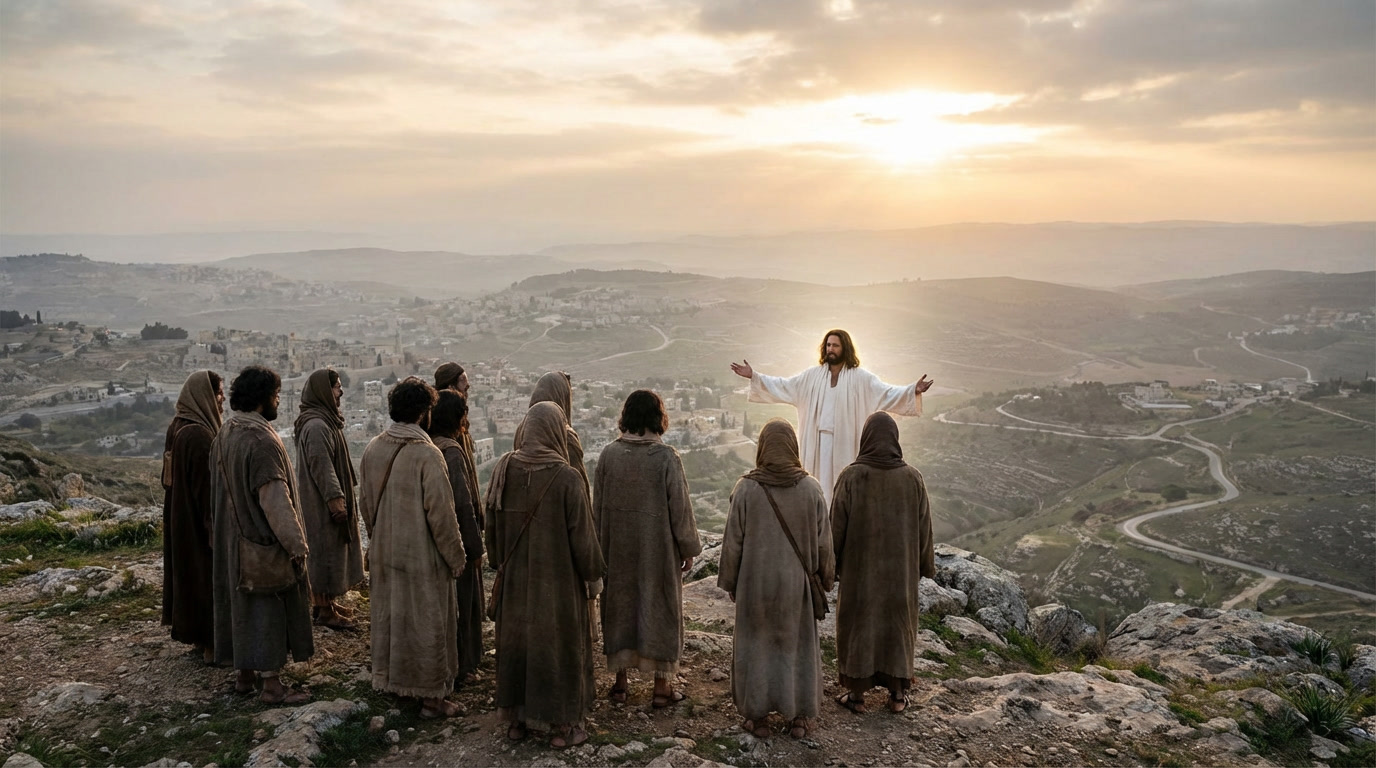
Jesus appeared to the Eleven and said to them: "Go into the whole world and proclaim the Gospel to every creature. Whoever believes and is baptized will be saved; whoever does not believe will be condemned. These signs will accompany those who believe: in my name they will drive out demons, they will speak new languages. They will pick up serpents with their hands, and if they drink any deadly thing, it will not harm them. They will lay hands on the sick, and they will recover." Then the Lord Jesus, after he spoke to them, was taken up into heaven and took his seat at the right hand of God. But they went forth and preached everywhere, while the Lord worked with them and confirmed the word through accompanying signs. — Mark 16:15-20
On this feast of Saint Mark, the evangelist who recorded these words, Christ's Great Commission echoes across the centuries. The risen Lord appears to his apostles not for comfort alone, but for mission. His words ring with divine authority: proclaim the Gospel to every creature.
Mark the evangelist understood this call intimately. Tradition tells us he accompanied Peter and Paul on their missionary journeys, faithfully recording Peter's memories of Christ. Today's Gospel passage captures the very heart of apostolic witness — the imperative to share what has been received.
The Universal Call to Evangelization
"Go into the whole world" — these words shatter the boundaries of tribe, nation, and culture. Christ sends his disciples beyond the familiar confines of Jerusalem, beyond the synagogues of their youth, into the vast expanse of human experience.
The scope astounds: "every creature." Not merely the righteous, not only the chosen few, but all of creation awaits this proclamation. Saint Paul would later write that creation itself groans in expectation of redemption. Here, Christ reveals that the Gospel touches everything God has made.
This missionary mandate belongs not only to the Eleven. Every baptized person inherits this commission. The call echoes in the words of Saint John Paul II: "The Church exists to evangelize." Through our baptism, each of us becomes a herald of the Gospel.
The Promise of Divine Power
Christ does not send his apostles empty-handed. He promises signs and wonders that will accompany their preaching. These supernatural works serve not as entertainment, but as confirmation of the Gospel's truth.
The signs — casting out demons, speaking in new tongues, healing the sick — reveal the Kingdom's power breaking into human history. They demonstrate that the Gospel is not mere philosophy or moral teaching, but the living word of God that transforms reality itself.
Saint Mark himself witnessed many of these signs through his association with the apostles. His Gospel records Christ's own miracles with vivid detail, preparing readers to expect God's continued intervention through his witnesses.
The Ascension and Ongoing Presence
The passage concludes with Christ's ascension and the disciples' immediate response. The Lord takes his place at the Father's right hand, but his work continues through his followers. They "went forth and preached everywhere, while the Lord worked with them."
This partnership between divine and human action defines all authentic evangelization. The apostles speak, but Christ confirms their words through signs. They proclaim, but God opens hearts to receive the message. Human effort and divine grace intertwine seamlessly.
Reflecting on this passage through Ignatian Contemplation can help us place ourselves among the apostles, hearing Christ's commission personally and sensing our own call to witness.
Saint Mark's Example of Faithful Witness
Saint Mark embodies the spirit of today's Gospel. Though not one of the Twelve, he embraced the missionary call with remarkable dedication. His Gospel, likely the first written, preserves Peter's eyewitness accounts for future generations.
Mark's ministry extended far beyond writing. He traveled with Barnabas to Cyprus, served Paul during his imprisonment, and tradition places him as the founder of the Church in Alexandria. His life demonstrates that the Great Commission takes many forms — not all are called to distant lands, but all are called to faithful witness.
The evangelist's courage particularly shines in his Gospel's ending. While other accounts soften the disciples' fears and failures, Mark presents them honestly. This authenticity serves the Gospel's credibility — these were ordinary men transformed by extraordinary grace.
Pray With This Reading
This passage invites deep personal reflection on our own response to Christ's missionary call. Consider approaching it through Lectio Divina, allowing God to speak through these words about your particular vocation to evangelization.
Begin by reading the passage slowly, noting which phrases draw your attention. Perhaps Christ's words "Go into the whole world" stir something within you. Or maybe the promise that "the Lord worked with them" offers encouragement for your own witness.
Spend time imagining yourself among the apostles, receiving this commission directly from the risen Christ. What fears arise? What hopes? How does Christ's promise of accompanying power address your concerns about sharing your faith?
Frequently Asked Questions
What does it mean to "proclaim the Gospel to every creature"?
This phrase emphasizes the universal scope of Christian evangelization. "Every creature" includes all people without exception, but also suggests that the Gospel's redemptive power extends to all creation. We proclaim through words, actions, and the witness of transformed lives.
Are the miraculous signs mentioned still expected today?
The Catholic Church teaches that God continues to work miracles and that the gifts of the Holy Spirit remain active. However, these signs serve to confirm the Gospel's truth, not to display power for its own sake. They occur according to God's will and timing, often in connection with evangelization and the growth of faith.
How can ordinary Catholics fulfill the Great Commission?
Every Catholic participates in evangelization through baptismal grace. This includes living authentic Christian lives, sharing faith experiences with others, supporting missionary work through prayer and donations, and creating welcoming parish communities. The commission adapts to each person's circumstances, talents, and calling.