
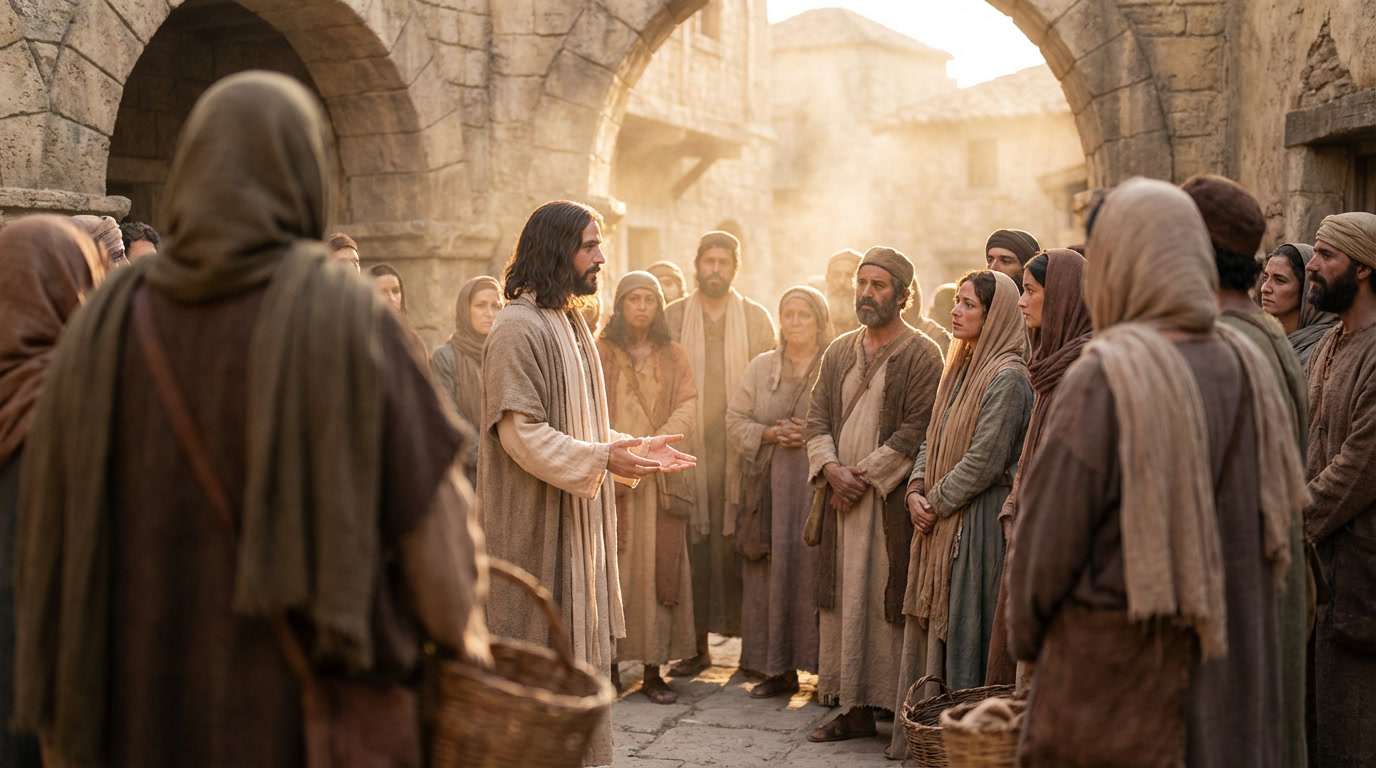
"The crowd said to Jesus: 'What sign can you do, that we may see and believe in you? What can you do? Our ancestors ate manna in the desert, as it is written: He gave them bread from heaven to eat.' So Jesus said to them, 'Amen, amen, I say to you, it was not Moses who gave the bread from heaven; my Father gives you the true bread from heaven. For the bread of God is that which comes down from heaven and gives life to the world.' So they said to Jesus, 'Sir, give us this bread always.' Jesus said to them, 'I am the bread of life; whoever comes to me will never hunger, and whoever believes in me will never thirst.'"
— John 6:30-35
The crowd's demand for signs reveals our persistent hunger for proof. They point to manna, bread that sustained their ancestors through forty years of wilderness wandering. Yet Christ redirects their gaze beyond temporary provisions to eternal nourishment.
When Signs Become Barriers to Faith
The people ask Jesus for credentials. They want spectacle, something Moses-sized. Their ancestors witnessed manna falling from heaven each morning. Surely this carpenter's son can match such wonder.
Christ's response cuts to the heart of their misunderstanding. Moses provided nothing. The Father gave manna then, just as the Father gives true bread now. Physical bread sustains for hours. Divine bread transforms forever.
This distinction matters for our spiritual life. Signs can become substitutes for surrender. Miracles can replace relationship. The crowd seeks proof when they should seek presence.
The Father's True Bread from Heaven
Jesus shifts the conversation from past provision to present reality. The Father offers bread that comes down from heaven and gives life to the world. Not temporary satisfaction but permanent transformation.
Saint John Chrysostom notes that Christ does not say "bread for the world" but "bread that gives life to the world." This bread contains the power to animate, to enliven, to make alive what was dead. Every soul touched by this bread finds resurrection.
The crowd's response reveals their spiritual hunger: "Sir, give us this bread always." They sense something beyond their understanding. Their request echoes the Samaritan woman's plea for living water. Human hearts recognize divine provision even when minds resist divine claims.
I Am the Bread of Life
Christ's declaration stands as one of seven "I am" statements in John's Gospel. Here Jesus reveals himself as the source of spiritual nourishment that satisfies completely. No other bread can make this promise. No other food can deliver eternal satisfaction.
"Whoever comes to me will never hunger." The Greek word for "hunger" suggests not just appetite but the gnawing emptiness that drives desperate searching. Christ promises to fill this void completely. Not temporarily. Forever.
Saint Teresa of Avila understood this hunger intimately. In her mystical experiences, she discovered that human desires find their ultimate fulfillment in union with Christ. No earthly pleasure, no matter how intense, could satisfy the soul's deepest longings.
Approaching the Bread of Life Through Prayer
This passage invites contemplative engagement with Christ's self-revelation. Ignatian Contemplation allows us to enter the scene imaginatively, witnessing the crowd's demands and Christ's patient responses.
Consider the hunger in their voices. Feel the weight of their skepticism. Watch Jesus transform their material expectations into spiritual invitation. Place yourself among them, recognizing your own hunger for signs versus your need for the Sign himself.
Pray With This Reading
This Gospel particularly suits Lectio Divina, allowing Christ's words "I am the bread of life" to penetrate deeply through repeated meditation. Let this declaration resonate within your heart's hungers and your soul's searchings.
Frequently Asked Questions
What does it mean that Jesus is the bread of life?
Jesus as the bread of life means he provides spiritual nourishment that satisfies the soul's deepest hunger for meaning, purpose, and connection with God. Unlike physical bread that temporarily fills the body, Christ offers eternal sustenance that transforms the human heart.
Why did the crowd ask for signs from Jesus?
The crowd demanded signs because they wanted proof of Jesus' authority before believing in him. They compared him to Moses, who provided manna in the wilderness, seeking similar miraculous credentials to validate his claims about being sent from God.
How can we receive the bread of life today?
We receive the bread of life through faith in Jesus Christ, participation in the Eucharist, prayer, and surrender to his will. Christ offers himself continuously to those who approach him with open hearts, seeking spiritual rather than merely material satisfaction.