
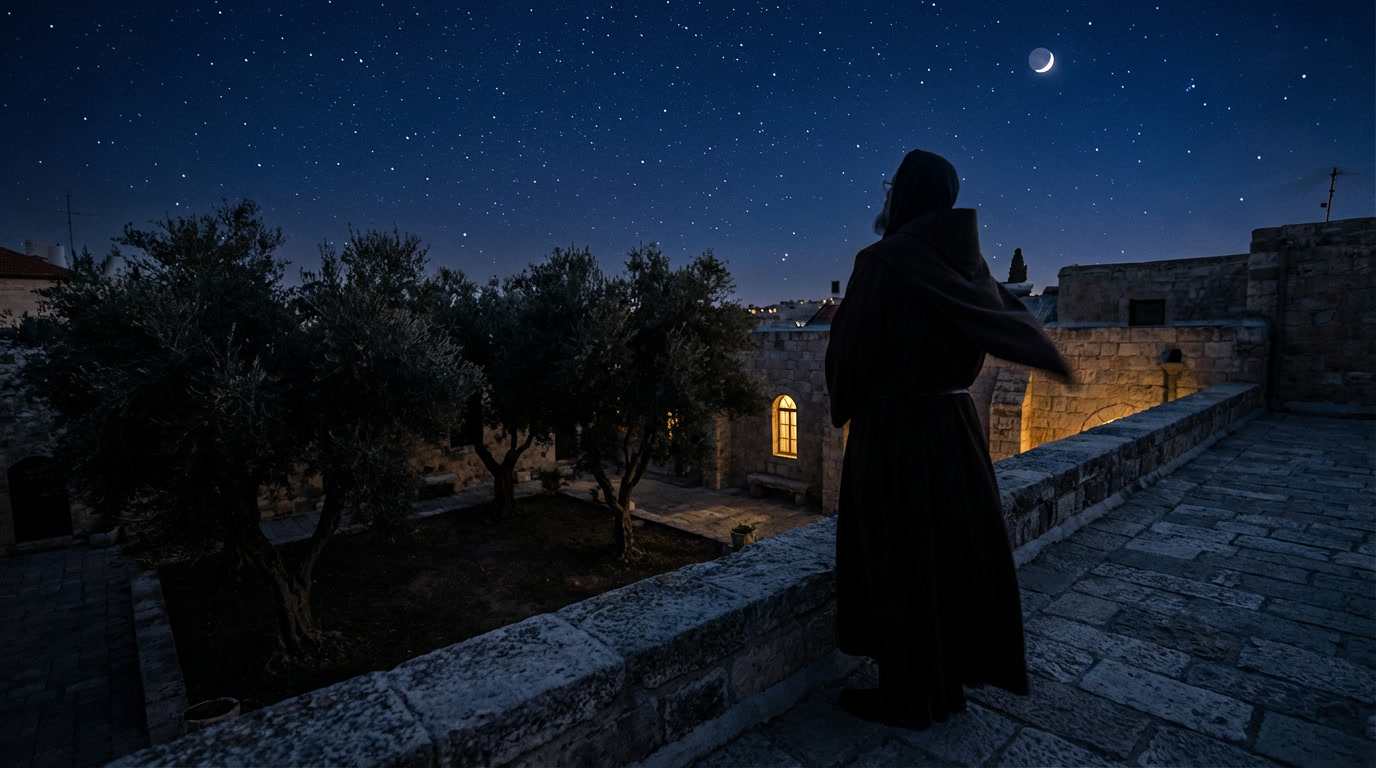
"'You must be born from above.' The wind blows where it wills, and you can hear the sound it makes, but you do not know where it comes from or where it goes; so it is with everyone who is born of the Spirit." — John 3:7b-15
In the darkness of night, Nicodemus seeks Jesus with questions that echo through centuries. This encounter reveals the mystery of spiritual rebirth and the incomprehensible movement of the Spirit in our lives. The teacher of Israel confronts truths that transcend human understanding.
The Wind of the Spirit
Jesus speaks of wind to describe the Spirit's action. Wind moves without permission. It arrives unannounced and departs without explanation. The Spirit operates beyond human control or comprehension.
Saint John of the Cross knew this mystery intimately. His contemplative approach to prayer embraces the Spirit's unpredictable movement. The soul learns to wait in faith rather than demand understanding.
Nicodemus represents the religious mind seeking certainty. Yet Jesus offers mystery. The Spirit's work cannot be mapped or manufactured. It can only be received.
Beyond Human Teaching
"You are the teacher of Israel and you do not understand this?" Christ's words pierce through scholarly pride. Religious knowledge, however extensive, cannot grasp divine mysteries through intellect alone.
The saints discovered this truth repeatedly. Saint Thérèse embraced spiritual childhood precisely because adult reasoning proved insufficient. Her Little Way teaches trust over understanding.
Nicodemus must release his need to comprehend before he can receive. The Spirit births souls through surrender, not study.
Lifted Up for Life
Jesus points to Moses' bronze serpent as a prefiguring of His own crucifixion. The remedy for spiritual death comes through looking upon the lifted Christ. This gaze transforms.
The cross becomes the place of new birth. What appears as defeat reveals itself as victory. Death becomes the doorway to eternal life.
Nicodemus must learn to see beyond appearances. The Spirit's work often contradicts human expectations. Weakness becomes strength. Suffering becomes salvation.
The Gift of Belief
"Everyone who believes in him may have eternal life." Belief here means more than intellectual assent. It requires complete trust in Christ's person and work.
This faith emerges as the Spirit's gift, not human achievement. The wind of grace creates the capacity to believe. Hearts open to receive what minds cannot fully grasp.
Eternal life begins now, not just after death. The believer experiences divine life in the present moment through the Spirit's indwelling presence.
Pray With This Reading
This Gospel passage invites contemplative prayer that embraces mystery rather than demanding clarity. The prayer method of St. John of the Cross offers a pathway into this darkness of faith, teaching the soul to rest in God's presence beyond understanding.
Frequently Asked Questions
What does it mean to be born of the Spirit?
Being born of the Spirit means receiving new life from God through faith in Christ. This spiritual rebirth transforms the heart, creating capacity for divine relationship and eternal life. It happens through God's grace, not human effort.
Why did Jesus use the wind analogy for the Spirit?
Wind illustrates the Spirit's invisible yet powerful presence. Like wind, the Spirit moves freely, cannot be controlled, and produces visible effects while remaining mysterious. This teaches believers to trust the Spirit's work even when they cannot fully understand it.
What can we learn from Nicodemus' confusion?
Nicodemus represents the limitation of human wisdom in spiritual matters. His confusion teaches that divine mysteries require faith more than intellectual understanding. Even religious expertise cannot substitute for humble openness to God's grace and the Spirit's work.