
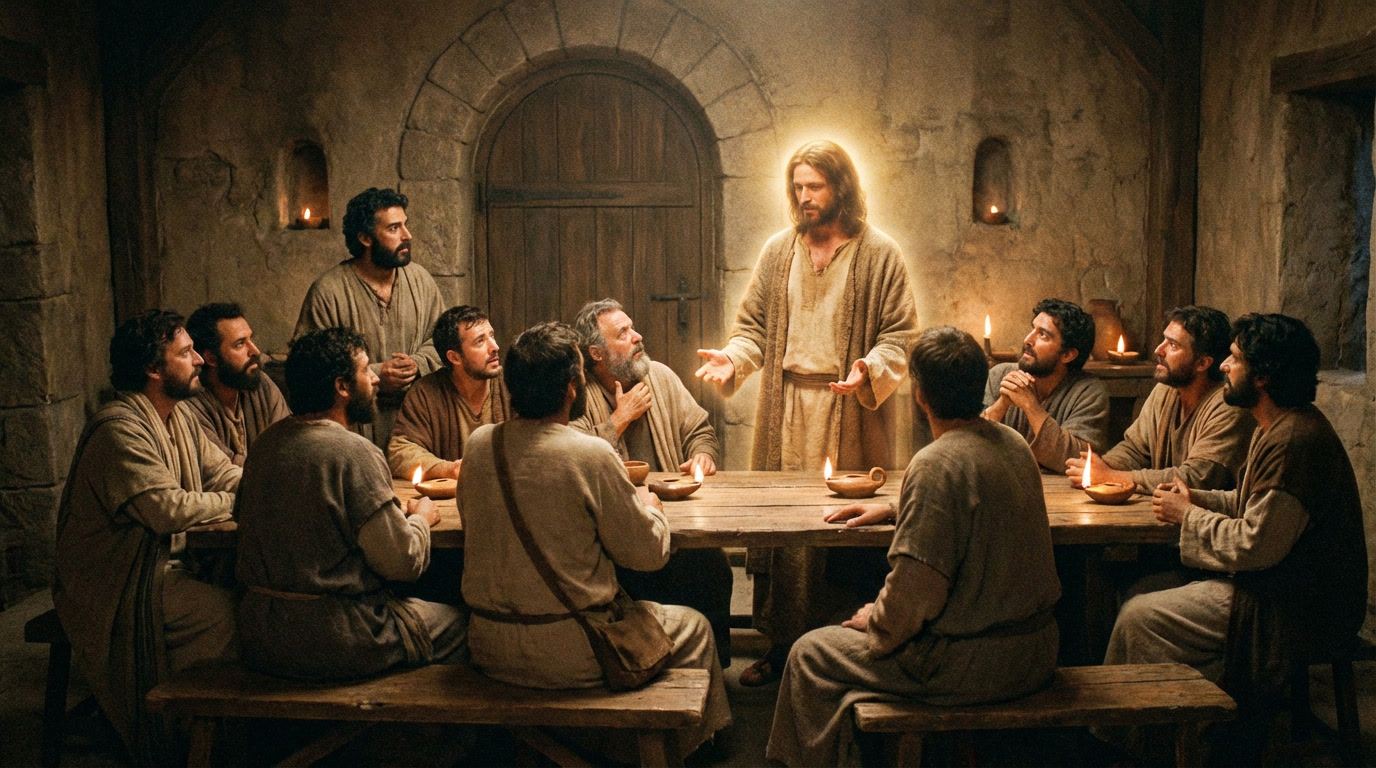
When Jesus had risen, early on the first day of the week, he appeared first to Mary Magdalene, out of whom he had driven seven demons. She went and told his companions who were mourning and weeping. When they heard that he was alive and had been seen by her, they did not believe. After this he appeared in another form to two of them walking along on their way to the country. They returned and told the others; but they did not believe them either. But later, as the Eleven were at table, he appeared to them and rebuked them for their unbelief and hardness of heart because they had not believed those who saw him after he had been raised. He said to them, "Go into the whole world and proclaim the Gospel to every creature."
—Mark 16:9-15
Mark's Gospel presents a stark portrait of resurrection encounters marked by disbelief and divine patience. The disciples' repeated failure to believe Mary Magdalene's testimony reveals how even those closest to Christ struggled with the reality of resurrection. Yet Christ's response transforms doubt into mission, unbelief into proclamation.
Mary Magdalene: The First Apostle
Christ appears first to Mary Magdalene, the woman from whom He had driven seven demons. This choice reveals divine preference for the broken and healed. Mary becomes the apostle to the apostles, carrying news that changes everything.
The disciples' refusal to believe her testimony reflects the cultural dismissal of women's witness in first-century Palestine. Yet Christ honors her voice above their skepticism. Her experience of liberation from demonic oppression prepared her to recognize the One who conquers death itself.
Saint Augustine wrote that Mary's tears of mourning became the first proclamation of joy. Her faithfulness in grief positioned her for resurrection encounter.
The Pattern of Divine Revelation
Christ appears in "another form" to the two disciples traveling to the country, likely the Emmaus road encounter recorded more fully in Luke's Gospel. Their witness also meets with disbelief from the Eleven.
This pattern reveals how God accommodates human weakness through multiple revelations. Christ does not abandon the disciples to their doubt but persists in self-disclosure. Each appearance builds upon the previous, creating a crescendo of evidence that even hardened hearts cannot ultimately resist.
The progression from individual witness to communal encounter shows how faith spreads through testimony, even when initially rejected. Divine revelation often comes through unexpected messengers and surprising forms.
Christ's Rebuke and Commission
When Christ finally appears to the Eleven at table, He rebukes their unbelief and hardness of heart. This rebuke carries both judgment and mercy—exposing their failure while preparing them for mission.
The phrase "hardness of heart" echoes Old Testament descriptions of Pharaoh's stubbornness against God's will. Yet unlike Pharaoh, the disciples' hardness yields to resurrection reality. Their very weakness becomes the foundation for empathy in future ministry.
Christ's commission follows immediately: "Go into the whole world and proclaim the Gospel to every creature." The same mouths that refused belief become instruments of proclamation. Weakness transformed into strength characterizes the Gospel message itself.
From Doubt to Mission
The disciples' journey from disbelief to apostolic mission mirrors every Christian's call to evangelization. Their initial skepticism does not disqualify them but rather qualifies them to reach other doubters with compassion.
Saint Thomas Aquinas observed that the apostles' doubts serve divine purpose—they provide additional evidence for resurrection truth while showing how Christ works through human frailty. Their transformation from skeptics to martyrs testifies to resurrection power.
The universal scope of their mission—"every creature"—breaks down all boundaries. The Gospel transcends cultural barriers, religious traditions, and human limitations. What begins with a small group of doubtful disciples extends to encompass the world.
Pray With This Reading
This Gospel passage invites contemplation of Christ's patient persistence with human doubt and His transformative call to mission. Consider using Ignatian Contemplation to place yourself among the disciples, experiencing their disbelief and eventual encounter with the risen Christ.
Allow yourself to feel the weight of their skepticism and the power of Christ's presence. Notice how He transforms their weakness into apostolic strength. The same Christ who appeared to doubting disciples continues to reveal Himself to hearts open to transformation.
Frequently Asked Questions
Why did the disciples not believe Mary Magdalene's testimony about the resurrection?
The disciples' disbelief stemmed from cultural prejudices against women's testimony and the seemingly impossible nature of resurrection. Their grief and despair also clouded their ability to hope. Christ used their very skepticism to provide additional evidence for His resurrection through multiple appearances.
What does Christ's rebuke of the disciples teach us about doubt and faith?
Christ's rebuke shows that persistent unbelief can harden the heart against divine truth. However, His immediate commission to preach the Gospel demonstrates that past failures do not disqualify from future service. Weakness acknowledged and surrendered becomes strength for ministry.
How does this passage relate to modern evangelization?
The disciples' transformation from doubters to proclaimers mirrors every Christian's call to share the Gospel despite personal struggles with faith. Their experience of Christ's patience with doubt equips them to reach others with compassion rather than condemnation.