
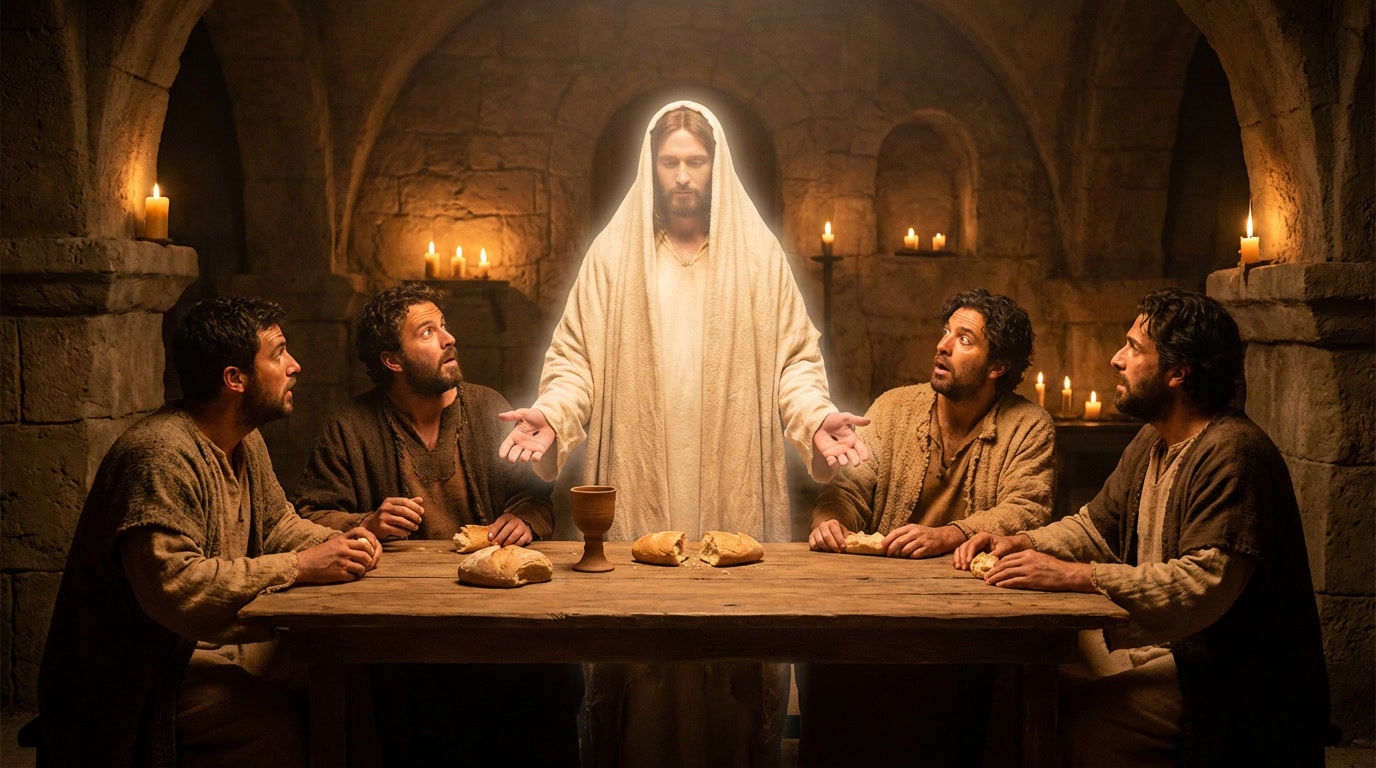
"Peace be with you." But they were startled and terrified and thought that they were seeing a ghost. Then he said to them, "Why are you troubled? And why do questions arise in your hearts? Look at my hands and my feet, that it is I myself. Touch me and see, because a ghost does not have flesh and bones as you can see I have."
— Luke 24:35-48
The disciples huddle in that upper room, still processing the Emmaus encounter, when Christ appears among them. Their terror speaks to something deeper than surprise. Even after hearing testimony of His resurrection, doubt clings to the human heart like morning mist. Yet Christ meets their fear not with rebuke, but with wounds made visible.
Christ's Wounds as Proof of Love
"Look at my hands and my feet," Jesus says, extending pierced flesh as evidence. The wounds that should have healed completely remain. Christ chooses to keep these marks of His passion, transforming them from signs of defeat into badges of victory. Saint Thomas Aquinas teaches that Christ retained His wounds to prove His identity and to intercede eternally for us before the Father.
These sacred wounds become our consolation. When doubt assails our prayer, when suffering seems meaningless, when God feels distant—we can look to those marked hands. They declare that our pain has been assumed, carried, and transformed by divine love.
The Reality of the Resurrection Body
Christ eats fish before the disciples' eyes. This detail matters. He demonstrates that resurrection transcends mere spirit—it encompasses the whole human person, body and soul united. The early Church fathers fought vigorously against those who claimed the resurrection was merely spiritual, understanding that our eternal hope depends on this truth.
Saint Augustine reminds us that Christ's eating was not from necessity but from power—the power to show that His risen body, though glorified, remains truly human. This offers profound comfort to those who struggle with physical suffering or aging. Our bodies, too, are destined for resurrection glory.
Opening Minds to Understand Scripture
"Then he opened their minds to understand the Scriptures." This divine action transforms everything. The same texts the disciples had read countless times suddenly radiate with meaning. Moses, the prophets, the psalms—all point toward this moment of suffering and resurrection.
This opening of understanding comes as pure gift. No amount of study alone can unlock Scripture's deepest mysteries. The same Christ who stood among those first disciples desires to illumine our reading of His word. Through Lectio Divina, we position ourselves to receive this gift of understanding, allowing Scripture to become prayer.
Witnesses Called to Mission
"You are witnesses of these things." The disciples move from terror to testimony. Their fear dissolves when they encounter the risen Christ's peace and understand their calling. They are not merely observers but participants in salvation history, commissioned to proclaim repentance and forgiveness to all nations.
This witness begins in Jerusalem—right where they stand. The Gospel spreads from the place of Christ's death and resurrection outward to embrace the world. Each believer receives this same commission: to bear witness to what we have seen and heard of God's mercy.
Pray With This Reading
This passage invites contemplative prayer that engages both intellect and imagination. Ignatian Contemplation offers a powerful way to enter this scene. Place yourself in that upper room. Feel the disciples' initial terror, then their growing recognition. Watch Christ extend His wounded hands. Notice how His presence transforms fear into peace, doubt into faith, confusion into clarity.
Frequently Asked Questions
Why did Jesus keep His wounds after the resurrection?
Christ retained His wounds as permanent signs of His love and sacrifice. They prove His identity to the disciples and serve as eternal intercession before the Father. The wounds become glorious rather than shameful—transformed by resurrection power.
What does it mean that Jesus opened their minds to understand Scripture?
This refers to a divine gift of understanding that transcends mere human study. Christ illumined the disciples' hearts to see how all Scripture pointed to His passion and resurrection. This same grace is available to believers who approach Scripture with faith and humility.
How can we be witnesses like the apostles today?
Witnessing begins with personal encounter with Christ through prayer and Scripture. Like the apostles, we testify to what we have experienced of God's mercy. This witness takes many forms—through words, actions, and the transformed life that flows from authentic faith.